The 10 Best Nikon Camera Lenses of 2026
Choosing the right Nikon lens can define your photography. Our 2026 roundup evaluates prime and zoom options for both DSLR and mirrorless systems.
 By Elvis Dicki
Updated November 5, 2026

Choosing the right lens can feel overwhelming. You might be stuck with a kit lens that lacks sharpness, struggling to capture portraits with beautiful background blur, or missing the versatility to shoot both wide landscapes and distant subjects. The key decisions come down to your camera’s mount compatibility, the focal length that matches your shooting style, and the optical quality you need for your photography.

For most photographers seeking exceptional image quality, the Nikon NIKKOR Z 50mm f/1.8 S is our top recommendation for its sharpness and versatility. If you specialize in portraiture and demand stunning bokeh, the Nikon NIKKOR Z 85mm f/1.8 S is an outstanding choice. For more insights into getting the most from your tech gear, explore our Tech Gear hub.
The 3 Best Nikon Camera Lenses on Our Shortlist (November 2026)

- Best for: Overall Sharpness & Versatility
- Mount: Z Mirrorless
- Aperture: f/1.8
- Focal Length: 50mm Prime

- Best for: Extreme Telephoto Reach
- Mount: Z Mirrorless
- Zoom Range: 180-600mm
- VR: 5.5-Stop Stabilization

- Best for: Budget-Friendly DSLR Prime
- Mount: F-Mount DSLR
- Aperture: f/1.8
- Focal Length: 50mm Prime
This post may contain affiliate links. As an Amazon Associate we earn from qualifying purchases.
Quick Comparison
| Award | Product | CSL Score About CSL ScoreThe CSL Score is our own rating from 0 to 10, based on performance, design and build, ease of use, and value. It reflects independent research and is never influenced by manufacturers, retailers, or affiliate commissions. Learn more › | |
|---|---|---|---|
| Best Overall |
Nikon AF-S 50mm f/1.8G Lens
|
9.1/10 | Check price |
| Best Value |
Nikon NIKKOR Z 50mm f/1.8 S
|
9.1/10 | Check price |
| Best Premium |
Nikon NIKKOR Z 85mm f/1.8 S Lens
|
9.1/10 | Check price |
| Top Rated |
 Nikon NIKKOR Z 14-30mm f/4 S |
9.1/10 | Check price |
| Best Budget |
 Nikon 35mm f/1.8G AF-S DX Lens (Renewed) |
8.9/10 | Check price |
| Also Great |
 Nikon NIKKOR Z 40mm f/2 Prime Lens |
8.9/10 | Check price |
| Also Great |
 Nikon AF-S 18-140mm f/3.5-5.6G ED VR DX Lens |
8.8/10 | Check price |
| Also Great |
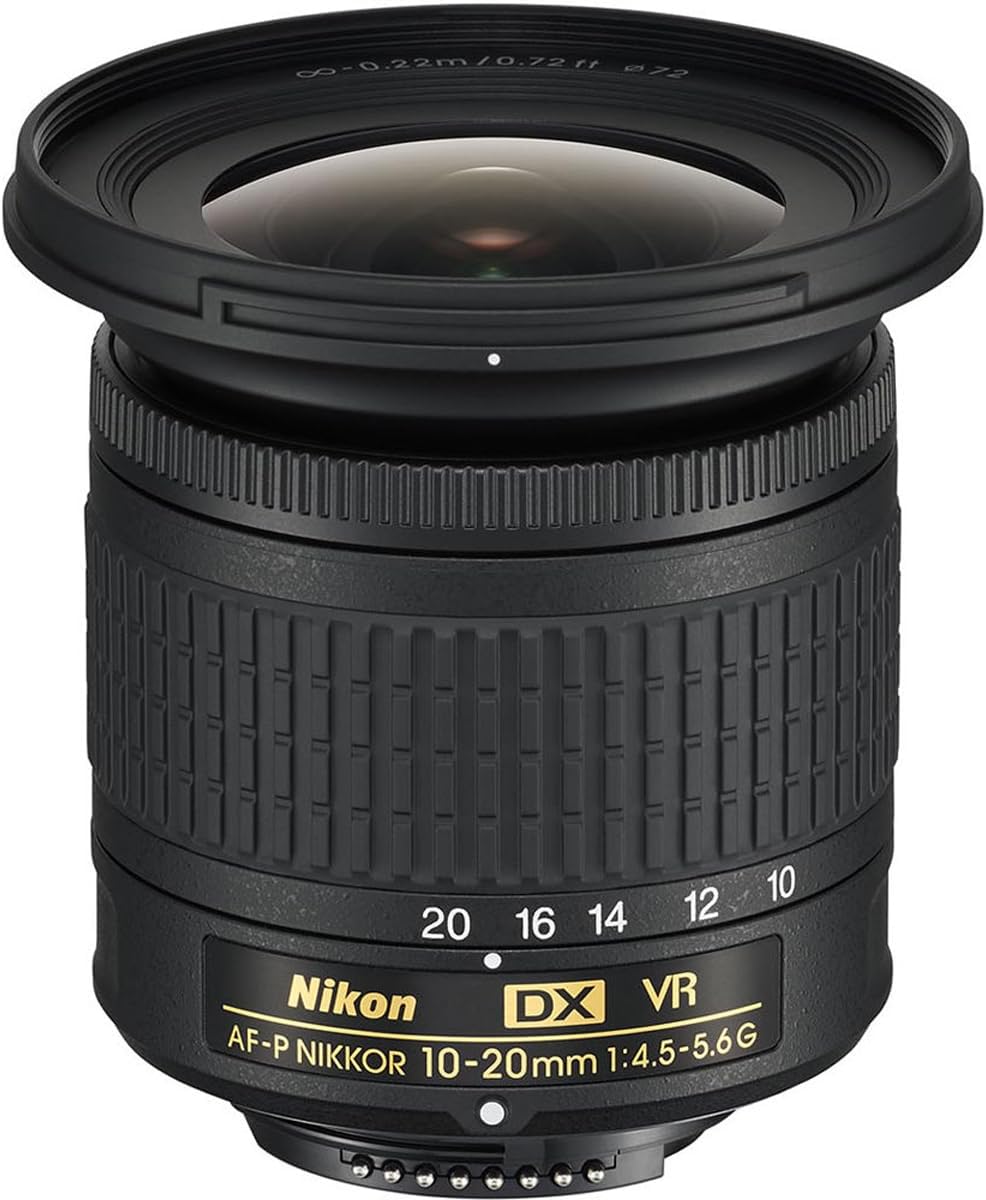 Nikon AF-P DX NIKKOR 10-20mm f/4.5-5.6G VR |
8.8/10 | Check price |
| Most Popular |
 Nikon AF-S DX 55-300mm f/4.5-5.6G ED VR Lens |
8.8/10 | Check price |
| Also Great |
Nikon NIKKOR Z 180-600mm f/5.6-6.3 VR
|
8.8/10 | Check price |
Nikon AF-S 50mm f/1.8G Lens
A fast 50mm prime for Nikon F-mount DSLRs, with an f/1.8 aperture, aspherical element, and Silent Wave Motor autofocus. Its compact 185g build and M/A focus switch make it a practical everyday option for FX and DX shooters who want a fixed focal length lens.
Pros
- Fast f/1.8 aperture for low light and subject separation
- Compact and lightweight 185g prime design
- Aspherical lens element and Silent Wave Motor autofocus
- M/A focus mode switch for quick manual override
- Optimized for edge to edge sharpness on FX and DX DSLRs
Cons
- Fixed 50mm focal length, so framing depends on moving closer or farther
- Not water resistant
Nikon NIKKOR Z 50mm f/1.8 S
A fast 50mm f/1.8 prime for Nikon Z mirrorless cameras, built for sharp results across the entire frame and quiet autofocus. The wide aperture and short focus distance make it useful for low light, stills, and video work. The included hood, case, and caps add practical protection for daily use.
Pros
- Fast f/1.8 aperture supports low light shooting and background separation.
- Sharpness across the entire frame with virtually zero distortion even wide open.
- Ultra-quiet stepping motor is well suited for video.
- Compact, lightweight 14.56 ounce body with included hood, case, and caps.
Cons
- Fixed 50mm focal length limits framing flexibility compared with zoom lenses.
- Stabilization depends on compatible Nikon Z camera body features.
- Nikon F mount use requires a separately sold FTZ adapter.
Nikon NIKKOR Z 85mm f/1.8 S Lens
This premium S-Line prime lens is engineered for Nikon Z mirrorless cameras, delivering a flattering perspective ideal for portraiture. It combines a fast f/1.8 aperture with exceptional sharpness and beautiful bokeh, backed by robust weather sealing.
Pros
- Excellent image quality with high resolution and lifelike accuracy
- Fast f/1.8 maximum aperture for low-light performance and soft background blur
- Dust and drip-resistant construction for reliability
- Customizable control ring for quick adjustments
- Includes useful accessories like lens hood and case
Cons
- Fixed focal length requires moving physically to frame shots
- Lacks built-in image stabilization, relying on the camera body
Nikon NIKKOR Z 14-30mm f/4 S
A compact ultra-wide zoom for Nikon Z mirrorless cameras, built around a constant f/4 aperture and a retractable barrel that collapses to 3.5 inches. Its STM autofocus and filter support suit travel, events, and video work where wide framing, depth, and portability matter.
Pros
- Constant f/4 aperture keeps exposure consistent across the 14-30mm zoom range.
- Retractable barrel collapses to 3.5 inches for compact packing.
- STM autofocus is smooth, fast, and quiet for stills and video.
- The lens accepts filters, which is useful for landscape and video work.
- Built to correct aberrations and maintain sharpness across the frame.
Cons
- The f/4 maximum aperture is slower than faster wide zooms for low-light or shallow depth of field.
- The 14-30mm range is limited to ultra-wide, so it does not replace a standard zoom.
Nikon 35mm f/1.8G AF-S DX Lens (Renewed)
A factory-refurbished, affordable prime lens for Nikon DX-format DSLRs. It's prized for its bright f/1.8 aperture, which excels in low light and creates attractive background blur. Its compact, lightweight build makes it a versatile everyday lens.
Pros
- Bright f/1.8 maximum aperture for low-light performance and shallow depth of field
- Compact and lightweight design enhances portability
- Silent Wave Motor provides quiet autofocus operation
- Includes a full manufacturer's warranty for peace of mind
- Super Integrated Coating helps reduce flare and ghosting
Cons
- Designed for DX sensor cameras, not full-frame (FX) models
- Not water-resistant, limiting use in adverse weather
Nikon NIKKOR Z 40mm f/2 Prime Lens
This compact 40mm prime lens offers a versatile field of view for Nikon Z mirrorless cameras, pairing a fast f/2 aperture with quiet autofocus. It's a strong, budget-friendly choice for street photography, environmental portraits, and everyday shooting where a natural background blur is desired.
Pros
- Compact and lightweight design for easy portability.
- Fast f/2 aperture enables excellent subject separation and low-light performance.
- Near-silent autofocus is well-suited for both photo and video work.
- Versatile 40mm focal length (60mm equivalent on DX) works for many scenarios.
- Customizable control ring adds manual adjustment flexibility.
Cons
- Lacks built-in image stabilization (VR).
- Not weather-sealed or water-resistant.
Nikon AF-S 18-140mm f/3.5-5.6G ED VR DX Lens
This renewed, all-in-one zoom lens offers a versatile 18-140mm range for Nikon DX-format DSLRs, making it a convenient grab-and-go option. Its 4-stop Vibration Reduction helps achieve sharper handheld shots in various conditions.
Pros
- Versatile 7.8x zoom range from wide-angle to telephoto
- Effective 4-stop Vibration Reduction (VR) for image stabilization
- Includes a 90-day warranty from Nikon USA
- Compact and lightweight design for an all-in-one lens
- Favorable user rating based on numerous reviews
Cons
- Variable maximum aperture (f/3.5-5.6) limits low-light performance at longer focal lengths
- Not water-resistant
Nikon AF-P DX NIKKOR 10-20mm f/4.5-5.6G VR
This ultra-wide-angle zoom lens for Nikon DX cameras offers a versatile creative range, from expansive landscapes to tight interiors. Its compact design and near-silent autofocus make it well-suited for travel and video work. Built-in Vibration Reduction helps stabilize handheld shots.
Pros
- Ultra-wide 109-degree field of view for creative compositions
- Compact and lightweight design, ideal for travel
- Near-silent autofocus stepping motor is excellent for video
- Vibration Reduction (VR) image stabilization aids handheld and low-light shooting
- High user rating (4.6) based on over two thousand reviews
Cons
- Compatibility is limited to specific Nikon DSLR models and may require firmware updates
- Maximum aperture range (f/4.5-5.6) is not particularly fast for very low-light situations
- Not water-resistant
Nikon AF-S DX 55-300mm f/4.5-5.6G ED VR Lens
A versatile telephoto zoom for Nikon DX-format DSLRs, offering a 5.5x reach from 55-300mm. It's equipped with Vibration Reduction image stabilization and a Silent Wave Motor for quiet autofocus, making it a solid option for hobbyists looking to capture distant subjects.
Pros
- Long 55-300mm focal range provides significant telephoto reach
- Vibration Reduction (VR II) image stabilization helps reduce camera shake
- Silent Wave Motor (SWM) enables fast and quiet autofocus
- Includes High Refractive Index and Extra-low Dispersion elements for optical performance
- Compatible with a wide range of Nikon DSLRs like the D3500 and D7500
Cons
- Variable maximum aperture narrows to f/5.6 at the long end, limiting low-light performance
- Not weather-sealed or water-resistant
- Minimum focus distance of 4.6 feet may be limiting for close-up work
Nikon NIKKOR Z 180-600mm f/5.6-6.3 VR
For Nikon Z mirrorless users, this super-telephoto zoom reaches 600mm with built-in optical VR rated for 5.5 stops of stabilization. Internal zooming keeps balance, and close focus with 0.25x magnification makes it practical for wildlife, sports, and aircraft. Teleconverter compatibility can extend reach further, though those accessories are sold separately.
Pros
- 180-600mm zoom range with 3.33:1 ratio supports flexible framing.
- Built-in optical VR helps reduce blur during handheld panning.
- Minimum focus distance of 4.27 ft and 0.25x reproduction ratio allow closer telephoto subjects.
- Compatible with Nikon Z teleconverters for up to 2x additional reach.
- Internal zoom design maintains size and center of gravity.
Cons
- Variable f/5.6-6.3 maximum aperture limits speed compared with faster telephoto lenses.
- At 4.7 pounds, the lens may feel heavy for long handheld sessions.
- Nikon Z mount compatibility excludes non-Z cameras.
How We Picked
To build this list, we analyzed specifications, professional reviews, and aggregated user feedback from 21945 reviews across 10 models. Our goal was to provide an objective, data-driven overview of the top-performing lenses available for Nikon shooters. We focused on identifying the standout options for different needs and budgets based on these key criteria:
- Optical Performance: Sharpness, distortion control, and color rendition.
- Build Quality & Features: Weather sealing, control rings, and focus motors.
- Mount Compatibility: Clear distinction between F-mount (DSLR) and Z-mount (mirrorless) systems.
- Value Proposition: Performance relative to price point.
- Versatility: Focal length range and suitability for various photography genres.
Buying Guide: Making Sense of Best Nikon Camera Lenses
Mount Compatibility Is Everything
The first and most critical step is knowing your camera’s lens mount. Nikon’s newer Z-mount mirrorless cameras cannot natively use older F-mount DSLR lenses without an adapter. Conversely, Z-mount lenses are not compatible with F-mount DSLR bodies. If you own a Z-series camera, investing in native Z glass like the Nikon NIKKOR Z 14-30mm f/4 S unlocks the full potential of the system with superior autofocus and optical design. For DSLR users, the F-mount ecosystem offers a vast selection of proven lenses.
Prime vs. Zoom: Understanding Focal Length
Prime lenses have a fixed focal length (like 50mm) and are renowned for sharper images, wider apertures, and better low-light performance. Zooms, like the Nikon AF-S DX NIKKOR 18-140mm f/3.5-5.6G ED, offer incredible flexibility by covering a range of focal lengths in one lens, making them ideal for travel and situations where changing lenses isn’t practical. Your choice depends on whether you prioritize ultimate image quality and speed (prime) or convenience and versatility (zoom).
Aperture and Image Stabilization
A wider maximum aperture (a lower f-number like f/1.8) allows more light to hit the sensor. This is crucial for shooting in low light without a flash and for achieving a shallow depth of field, which isolates your subject with creamy background blur (bokeh). Vibration Reduction (VR) or Optical Image Stabilization is a lens-based technology that counteracts camera shake, allowing you to shoot at slower shutter speeds handheld. This is especially valuable in telephoto zooms and in low-light conditions.
Quick Checklist
- Confirm the lens mount matches your Nikon camera (Z or F).
- Decide if a prime lens or a zoom lens better fits your primary photography style.
- Check the maximum aperture for your low-light and depth-of-field needs.
- Verify if Vibration Reduction (VR) is included, especially for longer focal lengths.
- Review the filter thread size if you plan to use lens filters.
Related reading: For more detailed analysis on specific tech categories, check out our guide on The 10 Best Nikon Camera Lenses for November 2026.
FAQs
What is the best nikon camera lenses in 2026?
The “best” lens depends entirely on your camera and needs. For a versatile, high-performance prime on a Nikon Z mirrorless camera, the Nikon NIKKOR Z 50mm f/1.8 S is an exceptional all-rounder. For DSLR users, the Nikon AF-S FX NIKKOR 50mm f/1.8G offers fantastic value and image quality.
Can I use my old Nikon DSLR lenses on a new mirrorless camera?
Yes, but you will need Nikon’s FTZ Mount Adapter. This allows you to use F-mount DSLR lenses on Z-mount mirrorless bodies, though autofocus performance may vary. For the best experience, native Z-mount lenses are recommended.
What’s the difference between DX and FX format lenses?
FX lenses are designed for full-frame sensors, while DX lenses are for APS-C (cropped) sensors. An FX lens can be used on a DX camera, but a DX lens will cause vignetting on an FX body. The Nikon AF-P DX NIKKOR 10-20mm f/4.5-5.6G VR Lens is an example of a lens built for DX-format cameras.
Is image stabilization necessary in a lens?
It’s highly beneficial, especially for handheld shooting at slower shutter speeds or with longer focal lengths. It helps prevent blur from camera shake. Many modern Nikon cameras also have in-body stabilization (IBIS) that works in tandem with lens-based VR.
How important is weather sealing?
If you shoot outdoors in challenging conditions (rain, dust, snow), weather sealing is a valuable feature that protects the lens’s internal elements. It’s commonly found on higher-end professional lenses. For more on protecting your gear investments, browse our in-depth reviews.
What should I look for in a portrait lens?
Portrait lenses typically have focal lengths between 50mm and 135mm, which provide a flattering perspective. A wide aperture (f/1.8 or f/1.4) is key for creating soft, out-of-focus backgrounds that make your subject stand out.
Final Thoughts
Our shortlist highlights three distinct paths. The Nikon NIKKOR Z 50mm f/1.8 S is the best for overall sharpness and versatility, offering a perfect balance for everyday shooting on mirrorless cameras. For photographers who need extreme telephoto reach for wildlife or sports, the NIKON NIKKOR Z 180-600mm f/5.6-6.3 VR provides incredible range and stabilization. And for DSLR shooters on a budget, the Nikon AF-S FX NIKKOR 50mm f/1.8G delivers classic prime lens performance without a high cost. When your new lens arrives, inspect it for any damage, attach it securely to your camera body, and take some test shots at various apertures to familiarize yourself with its character. For the latest tech insights, visit our blog.
About the author

Elvis Dicki writes reviews and buying guides for CyberSecLabs.