Seagate ST8000VNZ04 Review: A 256MB Cache NAS Drive for 8-Bay Arrays
The Seagate IronWolf 8TB is a purpose-built NAS hard drive offering reliable, high-capacity storage optimized for multi-user environments and RAID setups.
 By Elvis Dicki
Updated October 21, 2026
In the realm of network-attached storage, the choice of internal hard drive is critical for performance, reliability, and data integrity. The Seagate ST8000VNZ04 is a member of the IronWolf series, a line of mechanical hard drives engineered explicitly for NAS enclosures. This 8TB model is targeted at small to medium teams and home users who require consistent, shared access to files within a multi-bay NAS system. It is designed to deliver robust performance while minimizing the wear and tear common in always-on storage environments.

Built for up to 8-bay configurations, this drive aims to balance high capacity with features that support 24/7 operation, such as enhanced vibration tolerance and integrated health monitoring. Its bottom line is straightforward: it provides a specialized storage component for users who prioritize a stable, long-term foundation for their network storage over raw, peak desktop performance. For those building or upgrading a NAS, understanding the specific capabilities of this drive is essential.
Seagate IronWolf 8TB NAS HDD 3.5 Inch SATA 7200


As an Amazon Associate we earn from qualifying purchases. Product prices and availability are accurate as of the date/time indicated.
Seagate ST8000VNZ04 at a Glance
| Specification | Detail |
|---|---|
| Model | Seagate IronWolf ST8000VNZ04 |
| Form Factor | 3.5-inch |
| Interface | SATA 6.0 Gb/s |
| Rated Speed | 7200 RPM |
| Cache Size | 256 MB |
| Capacity | 8 TB |
| Designed For | NAS, up to 8 bays |
| Key Feature | IronWolf Health Management |
| Rated Transfer Speed | Up to 180 MB/s |
| Warranty | Limited product warranty plan |
Design and Build
The physical design of the Seagate IronWolf 8TB follows the standard 3.5-inch form factor, with dimensions of 5.79 inches in length, 4.01 inches in width, and 1.03 inches in thickness. The drive is constructed with an aluminum enclosure, a common material choice that aids in heat dissipation during continuous operation. A key aspect of its design philosophy is its optimization for NAS environments, which translates to engineering focused on reducing vibration and acoustic noise. This is not merely a desktop drive repurposed for server duty; its internal mechanics are tuned to operate reliably when placed alongside other drives in a multi-bay enclosure, a scenario where vibration from neighboring units can impact performance and longevity.
The drive arrives in frustration-free packaging, which is a benefit for users who prioritize minimal environmental waste. While the external appearance is utilitarian, the significant design work is internal, aimed at ensuring stable operation over long periods. The build is centered on endurance, with specifications like a high Mean Time Between Failures (MTBF) rating indicating a focus on long-term reliability. It is a component designed to be installed and forgotten, functioning as a dependable workhorse within a larger storage system.
Performance and Features
Core Performance Specifications
At its heart, the ST8000VNZ04 is a 7200 RPM mechanical hard drive with a SATA 6.0 Gb/s interface and a substantial 256 MB cache. The manufacturer lists a sustained data transfer rate of up to 180 MB/s. This performance profile is tailored for the sequential read/write patterns often found in file sharing and media streaming scenarios within a NAS, rather than the random access performance critical for operating systems. The 8TB capacity provides ample space for team documents, multimedia libraries, and backups, fitting well within the needs of a small office or a sophisticated home media server. Its suitability for RAID arrays is a stated strength, as its vibration tolerance helps maintain integrity when drives are packed closely together.
NAS-Optimized Features
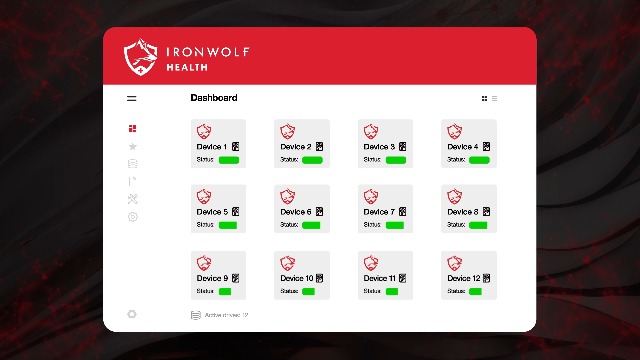
The “IronWolf” designation signifies a suite of features beyond basic storage. Chief among these is the integrated IronWolf Health Management (IHM) system. This software-compatible feature allows users to monitor the drive’s vitals proactively, potentially alerting them to issues before they lead to data loss or downtime. This aligns with the drive’s role in always-on systems where preemptive maintenance is valuable. Furthermore, the drive is engineered for lower power consumption during operation, a consideration for systems that run continuously. The combination of reduced wear and tear, minimized noise and vibration, and a focus on consistent file-sharing performance defines its feature set. It is built to deliver no lags or downtime, which is essential for multi-user environments where accessibility is key.
Compatibility and Use Case
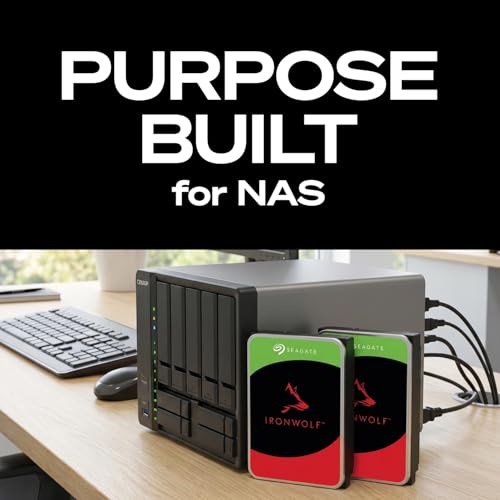
This drive is purpose-built for NAS enclosures. Its performance characteristics and health management tools are designed to integrate seamlessly with compatible NAS hardware and software. The manufacturer specifies it is ideal for up to 8-bay configurations, making it a candidate for a wide range of popular desktop and small business NAS units. It is not marketed as a general-purpose desktop or gaming drive; its firmware and optimization are directed at the sustained, multi-user workloads typical of network storage. For insights into building a complete storage solution, readers might explore our guide on the best enterprise computer servers for network security management.
Setup, Support and Ownership
Setup is straightforward for anyone familiar with installing an internal SATA hard drive. The user must have a compatible NAS enclosure or desktop bay with SATA power and data connections. Once physically installed, the drive should be recognized by the NAS operating system, where it can be formatted and configured into a storage pool, often in a RAID array for redundancy. The IronWolf Health Management system typically requires software provided by the NAS manufacturer or Seagate to access its full diagnostic capabilities.
Support and ownership benefits are notable aspects of this product. It includes a limited product warranty protection plan. Perhaps more significantly, Seagate includes a Rescue Data Recovery Services plan, offering an added layer of security against data loss. This service can be a decisive factor for users storing critical business or personal data. The long-term reliability claim of 1 million hours MTBF suggests a confidence in its construction for continuous operation. Owners should note that, like all mechanical drives in dense configurations, ensuring adequate airflow for cooling is important to maintain performance and lifespan during high-load periods.
What Owners Say
Overall feedback for the Seagate IronWolf 8TB is strongly positive, reflected in its high average rating. The majority of reviewers award it the highest score, with a significant portion giving a four-star rating. This suggests widespread satisfaction with its performance and reliability in NAS applications. The smaller percentages of lower ratings indicate that, as with any mass-produced electronic component, there can be instances of drive failure or performance that does not meet expectations, but these appear to be in the minority based on the distribution. The consensus among owners points to a reliable drive that performs as advertised for network storage tasks.
Pros and Cons
Pros
- Strong fit for RAID arrays in small to medium NAS systems
- Enhanced vibration tolerance for extended drive lifespan in multi-drive setups
- Seamless compatibility with IronWolf health monitoring tools
- Balanced speed and high capacity for team workflows and media storage
- Includes data recovery services for added data protection
- Designed for 24/7 operation with lower power consumption
Cons
- Optimized specifically for NAS, not ideal for use as a primary desktop drive
- Requires a compatible NAS enclosure or system for full functionality
- May require additional cooling considerations in densely packed, continuously active bays
- Performance tailored for sequential workloads, not peak random access speeds
Who Should Buy It (and Who Should Skip It)
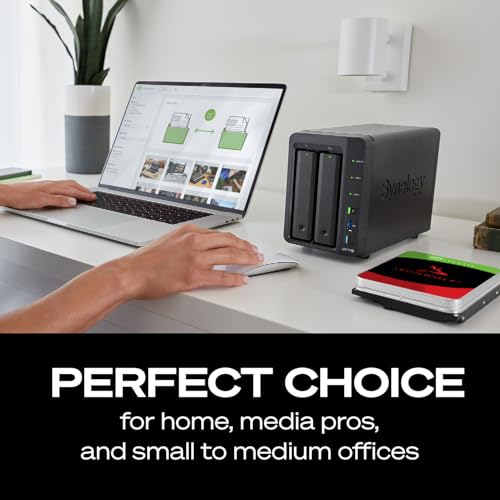
The Seagate ST8000VNZ04 is an excellent choice for users building or upgrading a network-attached storage device with up to eight bays. It is perfectly suited for small business teams needing a centralized repository for files, home users creating a media server, or anyone who values the integrated health monitoring and data recovery services for their stored data. Its design makes it a reliable component in a RAID configuration aimed at data redundancy.
This drive should be skipped by users looking for a high-performance boot drive for a gaming PC or workstation, as its optimizations are not directed at that use case. Similarly, those with NAS enclosures supporting more than eight bays might need to consider other models or product lines designed for higher-bay counts. Individuals seeking the absolute fastest storage solution should look at solid-state drives, though at a different cost-per-gigabyte ratio. For those focused on securing their network infrastructure, which includes storage, our resources on the best VPN routers and cybersecurity fundamentals provide complementary reading.
Final Verdict
The Seagate IronWolf 8TB NAS Internal Hard Drive succeeds as a specialized tool for a specific job. It delivers on its core promise: providing a high-capacity, reliable, and NAS-optimized storage component. Features like the 256MB cache, 7200 RPM spindle speed, and IronWolf Health Management system offer a compelling package for the target user. Its design mitigates common issues in multi-drive environments, such as vibration, which can be a silent killer of drive arrays. When used within its intended scope—a multi-bay NAS enclosure for file sharing and media serving—it represents a solid investment in stable, long-term storage.
While it will not win benchmarks against the latest SSDs, that is not its purpose. Its value lies in its endurance, its focused feature set for health monitoring, and the included safety net of data recovery services. For anyone serious about building a dependable home or small office NAS, the Seagate IronWolf 8TB deserves strong consideration as a workhorse drive that balances performance, capacity, and robustness. It exemplifies the principle that the right tool, designed for the right job, often delivers the most satisfactory results.
FAQs
Is the Seagate IronWolf 8TB good for a RAID array?
Yes, this drive is explicitly designed for use in RAID arrays within NAS enclosures. Its feature set includes enhanced vibration tolerance, which is crucial when multiple drives operate in close proximity, and it is built for the 24/7 operation typical of RAID configurations. It is rated for use in systems with up to eight bays.
What is IronWolf Health Management?
IronWolf Health Management (IHM) is an integrated system within the drive that works with compatible NAS software to monitor drive health. It can provide proactive alerts about potential issues, allowing users to take preventative action before a drive fails, thereby helping to protect data and minimize downtime in a network storage environment.
Can I use this drive in a regular desktop computer?
While physically compatible via its SATA interface, the Seagate IronWolf is optimized for NAS workloads, not for use as a primary desktop or boot drive. Its firmware and performance characteristics are tuned for sequential data transfers and constant operation. For a standard desktop, a different class of hard drive would typically be more appropriate.
What support does Seagate offer with this drive?
Seagate provides a limited product warranty protection plan with this drive. Additionally, it includes a Rescue Data Recovery Services plan, which offers data recovery assistance. Specific terms and duration for these services are outlined by the manufacturer and should be reviewed at the time of purchase.
About the author

Elvis Dicki writes reviews and buying guides for CyberSecLabs.