MikroTik RDS2216-2XG-4S+4XS-2XQ Review: 20 NVMe Bays with 100G Networking
The MikroTik RDS2216 ROSE Data Server is a dense 1U platform integrating high-speed storage, multi-gigabit networking, and compute, aimed at enterprise data centers and IT infrastructure needing consolidated performance.
 By Elvis Dicki
Updated October 20, 2026
The MikroTik RDS2216-2XG-4S+4XS-2XQ is not a typical server; it is an integrated enterprise data platform designed to collapse storage, networking, and compute into a single 1U rackmount unit. This ROSE Data Server targets demanding environments like modern data centers, high-performance IT infrastructure, and organizations that require scalable, ultra-fast storage and networking without external cloud dependencies. It combines support for up to twenty U.2 NVMe drives with a formidable array of high-speed network ports, all managed through MikroTik’s specialized RouterOS ROSE edition. For IT teams and network architects looking to centralize resources and reduce hardware sprawl, this server presents a compelling, all-in-one solution.

This review analyzes the specifications and design of the MikroTik RDS2216 ROSE Data Server to determine its ideal use cases and potential limitations. We will examine its core hardware, including the 16-core ARM processor and massive storage potential, its extensive multi-gigabit connectivity options, and the software features enabled by RouterOS ROSE. The bottom line is that this appliance is built for specialized, high-throughput roles where integrated storage export and network processing are paramount, though it requires specific expertise to deploy effectively.
MikroTik RDS2216 ROSE Data Server 16-Core ARM CPU


As an Amazon Associate we earn from qualifying purchases. Product prices and availability are accurate as of the date/time indicated.
MikroTik RDS2216-2XG-4S+4XS-2XQ at a Glance
| Specification | Detail |
|---|---|
| Form Factor | 1U Rackmount |
| CPU | 16-core ARM64 @ 2 GHz |
| RAM | 32GB DDR4 |
| Storage Bays | 20 x U.2 NVMe |
| High-Speed Ports | 2x 100G QSFP28, 4x 25G SFP28, 4x 10G SFP+ |
| Additional Ports | 2x 10G Ethernet, USB 3.0, Serial Console |
| Operating System | RouterOS v7 ROSE Edition |
| Key Features | NVMe-over-TCP, Btrfs, RAID, Container Support (OCI) |
| Power & Cooling | Dual Hot-Swappable Power Supplies, Enterprise Cooling |
| Primary Use Case | High-speed storage server, network backbone, virtualization host |
Design and Build
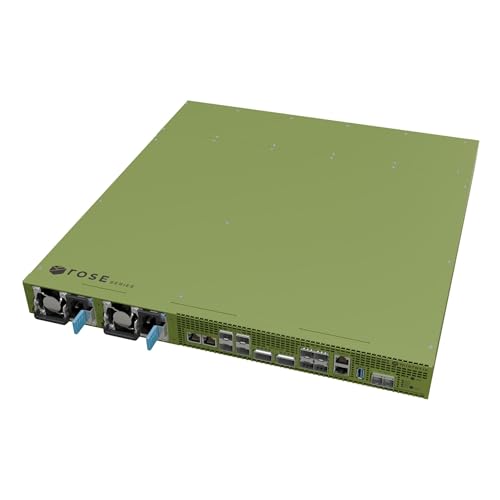
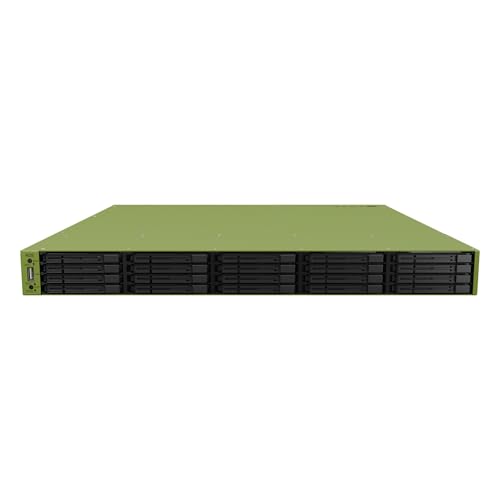
The MikroTik RDS2216 is engineered for density and reliability in a standard 1U rackmount chassis. Its design prioritizes high availability, evident in the inclusion of dual hot-swappable power supplies and multiple cooling fans, which are crucial for maintaining operation in mission-critical environments. The front panel is dominated by the twenty U.2 NVMe drive bays, enabling exceptional storage capacity in a compact space. This high-density layout is intended for data centers and enterprise server rooms where rack space is at a premium.
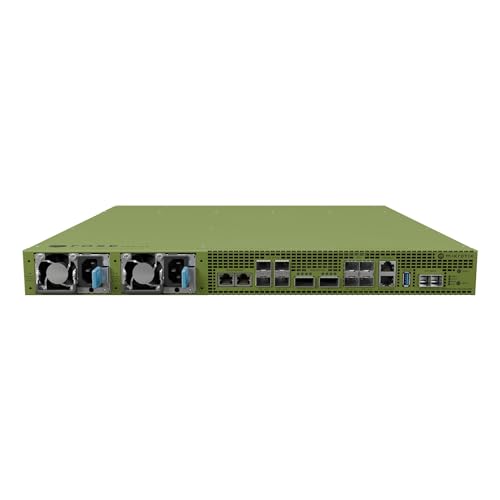
Build quality appears focused on enterprise duty cycles, with features like hot-swappable components designed to minimize downtime. The rear panel houses the extensive networking array, including the two 100G QSFP28 ports, four 25G SFP28 ports, four 10G SFP+ ports, and two 10G Ethernet ports, alongside management interfaces like USB and a serial console. This consolidated design aims to reduce the need for separate switches, storage arrays, and compute servers, potentially simplifying cabling and management for specific deployments. The overall construction is tailored for organizations that need a robust, all-in-one platform for demanding workloads.
Performance and Features
Processing and Storage Capabilities
At its core, the RDS2216 is powered by a 16-core ARM64 processor running at 2 GHz, paired with 32GB of DDR4 RAM. This hardware provides the processing muscle for routing, storage management, and running containerized workloads. The most striking feature is its support for up to twenty U.2 NVMe SSD drives, offering massive potential for high-density, ultra-fast storage. This makes the server suitable for demanding applications such as large database servers, virtualization hosts, backup repositories, and high-speed data processing pipelines. The system leverages NVMe-over-TCP, a key capability that allows this high-performance storage to be shared across the network as a centralized storage area network (SAN) resource.
Connectivity and Networking
Networking is where this server truly distinguishes itself. The port selection is extensive, featuring two 100 Gigabit QSFP28 ports, four 25 Gigabit SFP28 ports, four 10 Gigabit SFP+ ports, and two 10 Gigabit Ethernet ports. This provides exceptional bandwidth for data center interconnects, storage network backbones, and high-performance computing clusters. The hardware is designed with Layer-3 offloading to ensure efficient routing and switching at these high throughput levels. This connectivity suite allows the RDS2216 to function as a high-performance network core or edge device while simultaneously serving storage, reducing the need for additional top-of-rack switches in some scenarios.
Software and Advanced Features
The server runs RouterOS v7 ROSE edition, a specialized version of MikroTik’s operating system. This software integrates advanced routing, storage management, and container capabilities. Key storage features include support for various RAID configurations, encryption layers, and the Btrfs file system, which enables snapshots, compression, and enhanced data integrity. For application deployment, the platform supports OCI-compatible containers, allowing infrastructure tools, monitoring systems, or custom applications to run directly on the server. This container-ready infrastructure adds flexibility, enabling IT teams to consolidate services like network monitoring or storage management platforms onto the same hardware.
Setup, Support and Ownership
Setting up the MikroTik RDS2216 requires specific expertise, as RouterOS ROSE is a specialized environment distinct from general-purpose server operating systems. Administrators will need familiarity with MikroTik’s configuration paradigms for networking, storage pooling, and potentially container management. The server arrives as a hardware platform; the twenty U.2 NVMe drives are not included and must be sourced separately, which is a significant additional investment for achieving maximum performance and capacity. The manufacturer’s specifications list the included components simply as “Hardware,” and no warranty description is provided in the available data, so prospective buyers should investigate support terms directly.
From an ownership perspective, the dual hot-swappable power supplies and enterprise cooling are designed for maintainability and high availability, aiming to reduce operational downtime. The platform’s flexibility for expansion is noted through its PCIe-based storage interfaces and additional USB ports. However, the ARM64 architecture may present a consideration for software compatibility, as some applications are optimized primarily for x86 systems. Organizations should evaluate their specific toolchains and workload requirements against this architecture. For ongoing management, the capabilities for snapshots, compression, and RAID within RouterOS ROSE provide tools for data management and protection.
What Owners Say
Based on the available data, there are no buyer review excerpts or a rating distribution to summarize for the MikroTik RDS2216-2XG-4S+4XS-2XQ at this time. This absence of user feedback means potential buyers are evaluating the product primarily on its published specifications and manufacturer claims. As such, thorough research into the capabilities of RouterOS ROSE and the practicalities of deploying an ARM-based, storage-dense server is advisable before purchase. Prospective users may want to consult professional forums and IT communities for insights on similar MikroTik enterprise platforms to gauge real-world deployment experiences.
Pros and Cons
Pros
- All-in-one integration reduces hardware sprawl by combining storage, networking, and compute.
- Massive high-density NVMe storage capacity supports large-scale backup and processing.
- Exceptional multi-gigabit connectivity with 100G, 25G, and 10G ports for backbone roles.
- Hardware offloading ensures efficient high-throughput routing and switching.
- Container support allows flexible on-server application deployment.
- High-availability design with dual hot-swappable power supplies and enterprise cooling.
Cons
- ARM architecture may limit compatibility with some x86-optimized software.
- RouterOS ROSE requires specific expertise for full feature utilization.
- U.2 drive bays demand separate purchase of compatible high-end SSDs.
- No user reviews are available to validate real-world performance and reliability.
- Specialized nature may not suit general-purpose server needs.
- Setup and configuration have a steeper learning curve than conventional servers.
Who Should Buy It (and Who Should Skip It)
The MikroTik RDS2216 ROSE Data Server is an ideal fit for specialized IT teams and network architects in enterprise or data center environments. It is particularly well-suited for organizations needing to deploy a high-speed, centralized storage server with NVMe-over-TCP capabilities for SAN environments. It also serves those looking to consolidate network backbone functions—such as core routing between 100G, 25G, and 10G segments—with on-site storage and compute for containerized applications. If your projects involve building private cloud infrastructure, high-performance virtualization clusters, or dense backup repositories, this integrated platform warrants serious consideration. For more on infrastructure for specialized fields, see our guide on the best enterprise servers for network security management.
This server is not recommended for small offices, home labs, or general-purpose web hosting. Organizations without dedicated staff experienced with MikroTik’s RouterOS, especially the ROSE edition, should likely skip it due to the configuration complexity. Those whose software stacks are heavily reliant on x86-specific optimizations or who do not require the extreme storage density and ultra-high-speed networking should look at more conventional server options. Similarly, if your budget does not extend to populating twenty U.2 NVMe drives, much of the platform’s core value remains unrealized.
Final Verdict
The MikroTik RDS2216-2XG-4S+4XS-2XQ is a highly specialized and potent appliance that successfully merges three critical data center tiers—storage, network, and compute—into one 1U chassis. Its specification sheet is impressive, boasting twenty NVMe bays, a 16-core ARM CPU, and a versatile mix of 100G, 25G, and 10G networking ports. The integrated RouterOS ROSE software with features like NVMe-over-TCP, Btrfs, and container support creates a unique platform for building efficient, self-contained infrastructure nodes. For the right use case, it can significantly reduce physical footprint and complexity.
However, this is not a plug-and-play solution. Its value is fully unlocked only with significant additional investment in NVMe drives and, more importantly, the requisite administrative knowledge. The ARM architecture and proprietary OS present potential compatibility and learning curve hurdles. Therefore, the final verdict is that the MikroTik RDS2216 ROSE Data Server is an excellent, purpose-built tool for specific, high-performance enterprise scenarios, but it demands careful evaluation against your team’s skills and exact technical requirements. For those exploring other critical tech infrastructure, our Cybersecurity and Tech Gear sections offer further insights.
FAQs
What is the primary use case for the MikroTik RDS2216?
The primary use case is as an all-in-one enterprise data server for environments requiring integrated high-speed storage, networking, and compute. It is designed for roles such as a centralized NVMe-over-TCP storage server, a high-performance network backbone device with 100G connectivity, or a host for virtualization and containerized applications in data centers and large-scale IT infrastructure.
Does the server come with hard drives installed?
No, according to the product data, the twenty U.2 NVMe SSD drive bays are empty. The drives must be purchased separately, which is a significant additional cost to achieve the platform’s full storage capacity and performance potential. The included components are listed simply as “Hardware.”
What are the implications of the ARM64 processor?
The 16-core ARM64 processor provides strong processing power for the integrated workloads of routing, storage management, and containers. However, it may limit compatibility with some software applications that are compiled or optimized specifically for the more common x86-64 architecture. Organizations should verify that their intended workloads and any necessary third-party tools support ARM64.
What high-availability features does it include?
The server is built for high availability with several key features. These include dual hot-swappable power supplies, allowing one to be replaced without shutting down the system, and enterprise cooling with multiple fans. The RouterOS ROSE software also supports RAID configurations for storage redundancy, helping to minimize downtime in critical environments.
About the author

Elvis Dicki writes reviews and buying guides for CyberSecLabs.