MeLE Quieter 4C Review: Triple 4K Fanless PC with N150 Limits
The MeLE Quieter 4C is a silent, ultra-compact fanless mini PC designed for digital signage and industrial IoT, offering triple 4K display support and enterprise connectivity, but its Intel N150 processor constrains demanding workloads.
 By Elvis Dicki
Updated October 22, 2026
The MeLE Quieter 4C is a fanless mini PC that prioritizes silent operation and a compact footprint above all else. It is engineered for deployment in noise-sensitive environments like digital signage systems, office workstations, and industrial IoT applications where 24/7 reliability is key. This review analyzes its specifications, design, and intended use cases to determine if its unique blend of fanless cooling, triple-display support, and enterprise features justifies its position in the crowded mini PC market.

Targeting users who need a discreet, always-on computer for light productivity, media playback, or control dashboards, the Quieter 4C makes significant trade-offs. Its bottom line is clear: it delivers completely silent operation and flexible mounting in a package smaller than a paperback book, but its Intel N150 processor and soldered RAM limit its utility for heavier multitasking or demanding applications.
MeLE Quieter 4C N150 Fanless Mini PC 16GB LPDDR5


As an Amazon Associate we earn from qualifying purchases. Product prices and availability are accurate as of the date/time indicated.
MeLE Quieter 4C at a Glance
| Specification | Detail |
|---|---|
| Processor | Intel Twin Lake N150 (4C/4T, up to 3.6GHz) |
| Memory | 16GB LPDDR5 (4800 MT/s) or DDR4 (randomly shipped) |
| Storage | 512GB SSD (eMMC 5.1 + M.2 NVMe/SATA slot) |
| Graphics | Intel UHD Graphics (Integrated) |
| Display Output | 2x HDMI, 1x USB-C (Triple 4K support) |
| Connectivity | Gigabit LAN, WiFi 5 (1.7Gbps), Bluetooth 5.1 |
| USB Ports | 2x USB 3.1 (10Gbps/5Gbps), 1x USB 2.0 |
| Operating System | Windows 11 Pro |
| Cooling | Fanless (Passive) |
| Dimensions | 131 x 81 x 18.3 mm (0.19L) |
| Power | 12V/2A adapter, ~8W TDP |
| Security | TPM-grade protection, Kensington lock slot |
Design and Build
The defining characteristic of the MeLE Quieter 4C is its fanless design. By eliminating all moving parts, MeLE achieves 100% silent operation, which is its primary selling point. This makes it ideal for libraries, recording studios, digital signage in quiet retail spaces, or any office environment where fan noise is a distraction. The passive cooling system also reduces dust buildup over time, potentially extending the component lifespan, which is critical for the 24/7 industrial use cases the manufacturer promotes.
Physically, the PC is remarkably small, with a 0.19-liter volume that is smaller than a typical paperback book. Its ultrathin profile (18.3mm) and lightweight construction (203 grams) allow for incredibly flexible placement. It can be tucked behind a monitor or television using the included VESA mount, completely clearing the desk. The all-black chassis is functional rather than flashy, aligning with its role as a tool for business and industrial deployment. The build quality, as described, uses industrial-grade components certified for operation in temperatures from 0°C to 30°C, suggesting a focus on durability for challenging environments.
Performance and Features
Processing Power and Memory
At the heart of the MeLE Quieter 4C is the Intel Twin Lake N150 processor. This is a 4-core, 4-thread chip with a maximum burst frequency of 3.6GHz and a low 8W Thermal Design Power (TDP). This low power draw is what enables the fanless design. Performance-wise, the N150 is suited for basic computing tasks: web browsing, office applications, media playback, and running lightweight business or IoT software. It is not designed for video editing, gaming, or heavy multitasking with numerous demanding applications. The RAM is a notable 16GB, which is generous for this class of CPU and excellent for keeping multiple browser tabs and standard apps running smoothly. However, a key limitation is that this RAM is soldered onto the board and is not user-upgradable.
Connectivity and Ports
Connectivity is a strong suit for the Quieter 4C. For displays, it supports a triple-monitor setup via two HDMI ports and one USB-C port, all capable of driving 4K resolution simultaneously. This makes it excellent for digital signage video walls, financial trading dashboards, or multi-screen productivity setups. For network access, it includes both Gigabit Ethernet and dual-band WiFi 5 with a theoretical maximum speed of 1.7Gbps, ensuring stable connections for cloud tools or local network systems. Bluetooth 5.1 allows for pairing with peripherals, sensors, or printers.
The I/O selection is practical: two high-speed USB ports (10Gbps/5Gbps), one USB 2.0 port, a 3.5mm audio combo jack, and the power input. The USB-C port is highlighted as “fully functional,” handling data, video, and power delivery (PD3.0), which can help reduce cable clutter. For those interested in other compact computing options, our guide to fanless mini PCs explores similar silent designs.
Storage and Expandability
The system comes with a 512GB SSD, which uses a combination of eMMC 5.1 storage and an M.2 slot. This base storage is adequate for the operating system and applications but may require expansion for large media libraries or datasets. The major upgrade path is the M.2 2280 slot, which supports adding or swapping in an NVMe SSD up to 4TB or a SATA SSD up to 2TB. There is also a microSDXC slot that supports cards up to 2TB, providing additional flexible storage. This expandability is a crucial feature for future-proofing the device as storage needs grow.
Enterprise and Security Features
MeLE has included several features aimed at IT managers and industrial deployments. The BIOS offers controls for PXE network boot and Wake-on-LAN, enabling centralized imaging and remote power-on in retail or warehouse networks. IT staff can also disable unused ports for security and customize the boot order. TPM-grade security and a physical Kensington lock slot help protect sensitive data in shared environments like factories or offices. These features align it with use in Manufacturing Execution Systems (MES) or Warehouse Management Systems (WMS).
Setup, Support and Ownership
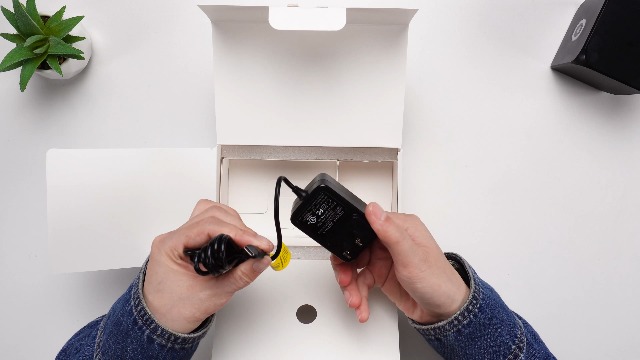
Setup should be straightforward for anyone familiar with desktop computers. It comes with Windows 11 Pro pre-installed, so it largely follows the standard out-of-box Windows setup experience. The included VESA mount and screws allow for easy attachment to the back of a compatible monitor or TV. The power adapter uses a standard Type A plug. For users whose needs lean towards more general home or office use, our overview of mini PCs provides broader context.
Ownership considerations center on its fixed architecture and cooling. The soldered RAM means the 16GB configuration is permanent. The fanless design, while silent, relies on passive heat dissipation, so ensuring adequate ventilation in its installed location is important, even though it’s rated for up to 30°C. The device carries FCC, CE, UKCA, and PSE compliance certifications, which may be relevant for commercial purchasers. Specific details about warranty length or software update policies are not listed in the provided data.
What Owners Say
While detailed review excerpts are not available, the aggregate rating data provides insight. The product holds a high average rating, with the majority of reviews being five-star. A significant portion of the remaining reviews are four-star, with no ratings at three stars or below reported. This suggests that owners are generally very satisfied with the product, likely appreciating its silent operation, compact size, and performance for its intended light-duty tasks. The absence of lower scores indicates few users have encountered critical flaws or severe performance mismatches with their expectations.
Pros and Cons
Pros
- Completely silent fanless operation
- Extremely compact and VESA-mountable
- Supports triple 4K displays simultaneously
- Includes useful enterprise IT features (PXE, Wake-on-LAN)
- Good port selection including functional USB-C
- Storage is expandable via M.2 and microSD slots
- Industrial-grade components for 24/7 operation
Cons
- Intel N150 processor limits heavy multitasking
- RAM is soldered and not user-upgradable
- 512GB base storage may require immediate expansion for some
- WiFi 5 instead of newer WiFi 6
- Performance not suitable for demanding applications or gaming
Who Should Buy It (and Who Should Skip It)
The MeLE Quieter 4C is an excellent choice for specific commercial and light-duty use cases. Buy it if you need a silent computer for digital signage, a kiosk, or a control panel display. It’s also well-suited for a basic, space-constrained office workstation dedicated to email, documents, and web apps, or for an industrial IoT gateway connecting sensors and equipment in a quiet setting. Its triple-display support makes it ideal for dashboard monitoring in security, finance, or manufacturing.
Skip the MeLE Quieter 4C if you require substantial processing power for tasks like video editing, 3D rendering, or modern gaming. Users who anticipate needing more than 16GB of RAM for virtual machines or large development projects should look at mini PCs with upgradeable memory. Similarly, those seeking a living room media center for high-bitrate 4K HDR streaming or a primary computer for demanding creative work should consider models with more powerful processors, like some featured in our look at Intel N100-based systems which offer a different performance profile.
Final Verdict
The MeLE Quieter 4C Fanless Mini PC successfully fulfills a specific niche. It trades raw processing horsepower for silent, reliable, and compact operation. Its design is purpose-built for environments where noise is unacceptable and space is at a premium. The inclusion of triple 4K output, enterprise management features, and storage expandability adds significant value for its target market in digital signage, light office work, and industrial IoT.
Ultimately, this is not a general-purpose powerhouse but a specialized tool. If your needs align with running lightweight applications, displaying content on multiple screens, or operating reliably in the background of a business environment, the Quieter 4C’s strengths are compelling. However, for users whose priorities include higher performance for demanding software, the limitations of the Intel N150 platform are a decisive factor to consider before purchasing.
FAQs
Can the MeLE Quieter 4C handle gaming?
No, the MeLE Quieter 4C is not suitable for gaming. Its Intel N150 processor and integrated Intel UHD Graphics are designed for basic display output and light multimedia, not for rendering modern 3D games. It lacks the graphical power and CPU performance required for a satisfactory gaming experience, even at lower settings.
Is the RAM in the Quieter 4C upgradeable?
No, the 16GB of RAM is soldered onto the motherboard and cannot be upgraded or replaced by the user. The memory configuration you purchase is fixed for the life of the device. This is a common trade-off in ultra-compact, fanless designs to save space and power.
What is the main advantage of a fanless design?
The primary advantage is completely silent operation, as there are no moving fans to generate noise. This is critical for noise-sensitive settings like libraries, recording studios, or quiet retail spaces. Secondary benefits include reduced dust intake, which can improve long-term reliability, and the elimination of a potential mechanical failure point (the fan).
Can I use this PC as a home theater PC (HTPC)?
Yes, it can function as a basic HTPC for streaming services and local video playback, thanks to its 4K output capability and silent operation. However, its performance may struggle with high-bitrate 4K HDR files or advanced audio codec passthrough. For a living room focused on high-fidelity media, a more capable mini PC might be a better fit. Explore other options in our Tech Gear category for different use cases.
About the author

Elvis Dicki writes reviews and buying guides for CyberSecLabs.