Kingston IronKey Keypad 200 Review: OS-Independent Hardware Encryption
The Kingston IronKey Keypad 200 offers robust, hardware-based encryption accessible via a built-in keypad, making sensitive data portable and secure across any operating system without software.
 By Elvis Dicki
Updated October 21, 2026
In an era where data breaches are commonplace, securing portable information is paramount. The Kingston IronKey Keypad 200 addresses this need directly as a hardware-encrypted USB flash drive featuring a built-in alphanumeric keypad. This device is engineered for professionals, government personnel, and anyone who needs to transport highly sensitive data with confidence, independent of the host computer’s security or operating system. Its core proposition is military-grade protection that travels with the data itself.

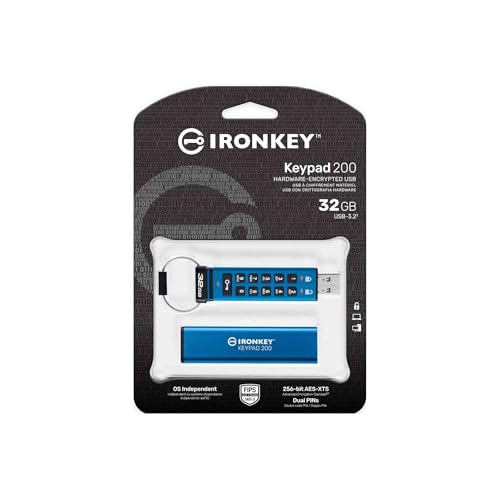
Designed to be OS and device independent, the IronKey Keypad 200 utilizes XTS-AES 256-bit hardware encryption and is pending the rigorous FIPS 140-3 Level 3 certification. This review analyzes its specifications, security features, and design to determine if it lives up to its promise of providing a portable vault for your most critical files. The bottom line is that this drive delivers strong, self-contained security for sensitive data on the move.
Kingston IronKey Keypad 200 32GB FIPS 140-3





As an Amazon Associate we earn from qualifying purchases. Product prices and availability are accurate as of the date/time indicated.
Kingston IronKey Keypad 200 at a Glance
| Specification | Detail |
|---|---|
| Memory Storage Capacity | 32 GB |
| Hardware Encryption | XTS-AES 256-bit |
| Security Certification | FIPS 140-3 Level 3 (Pending) |
| Keypad | Built-in Alphanumeric |
| Interface / Read Speed | USB 3.2 Gen 1 / 145 MB/s |
| Write Speed | 115 MB/s |
| Compatibility | Windows, macOS, Linux, Chrome OS, Android |
| Connectivity | USB Type-A & USB Type-C |
| Key Feature | Multi-PIN (Admin & User) Access |
| Warranty | 3 Years |
Design and Build
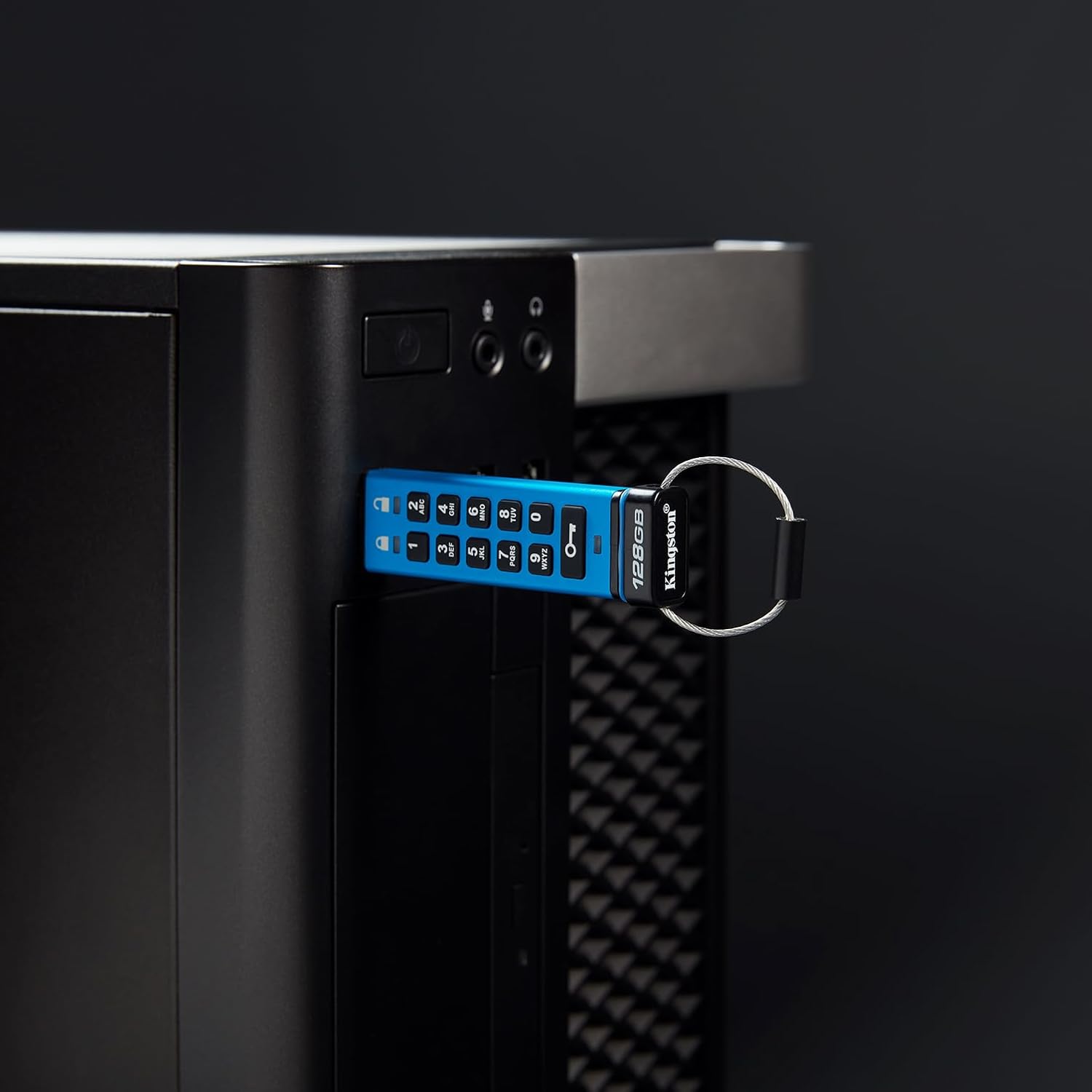
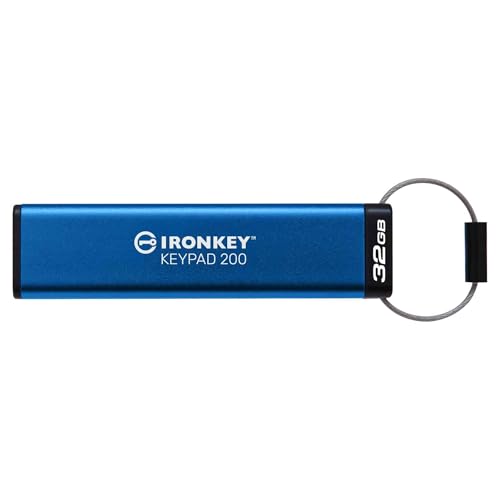
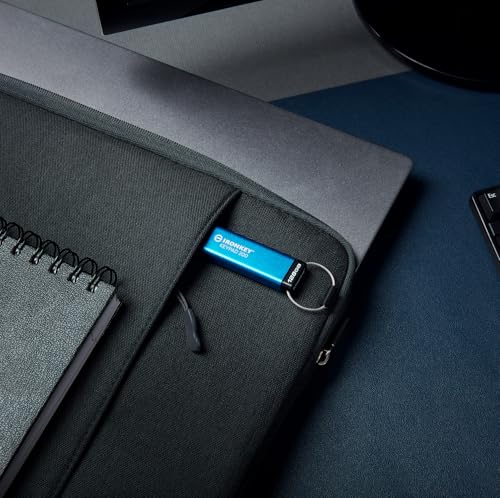
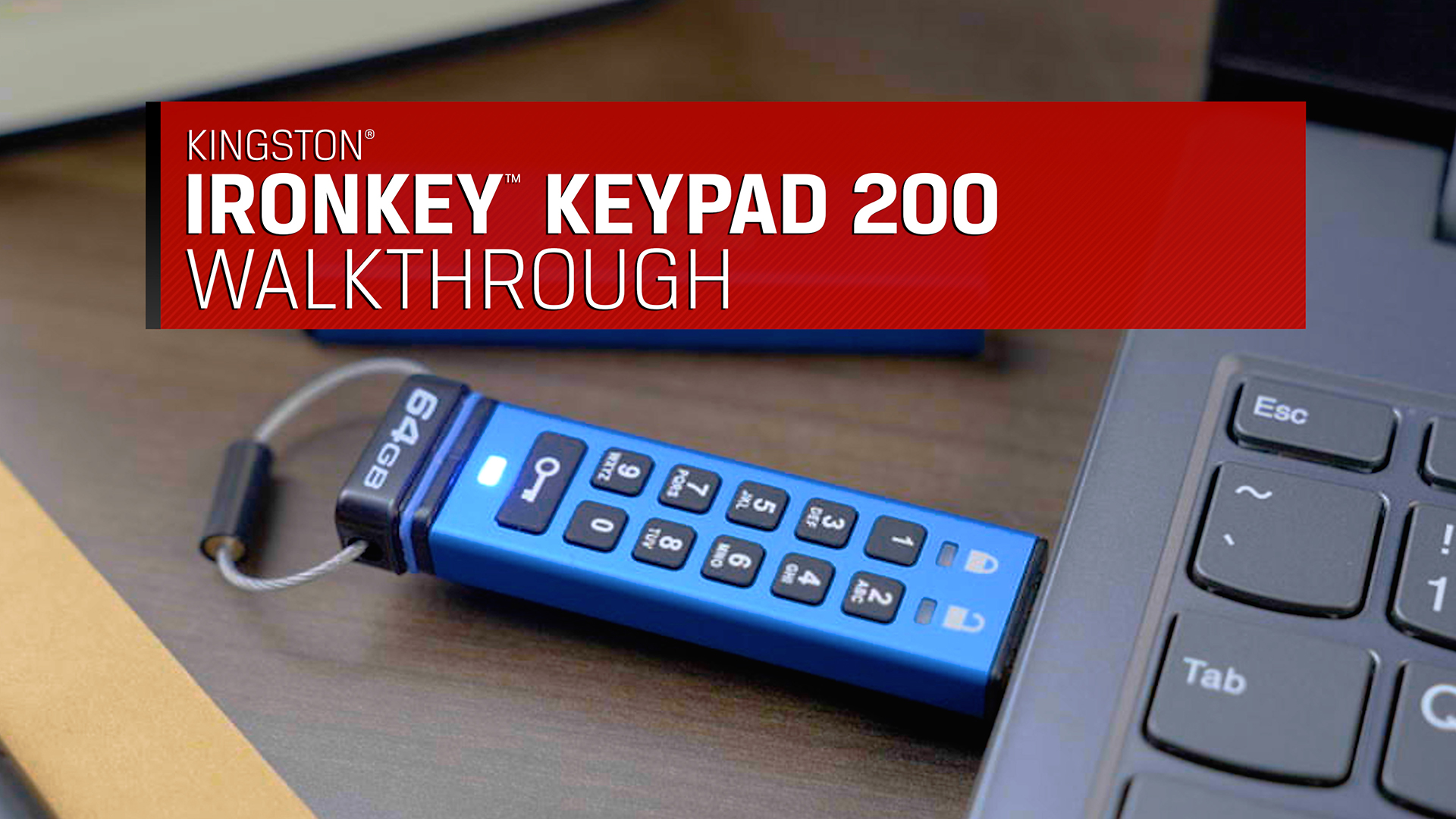
The Kingston IronKey Keypad 200 presents a distinct, utilitarian design centered around its physical keypad. The blue housing contains a numeric keypad with additional function keys, all coated with a polymer layer. This coating serves a dual purpose: it protects the keys from wear and, crucially, helps hide key usage by obscuring fingerprints, a simple yet effective anti-forensic measure. The drive is designed to be tamper-evident, alerting the owner to any physical intrusion attempts.
Physically, the drive’s internal security is arguably more impressive than its exterior. The circuitry is encapsulated in a special epoxy layer, a design choice that makes it virtually impossible to remove components without causing catastrophic damage. This epoxy barrier is a key part of its tamper resistance, directly thwarting attacks aimed at the semiconductor components. The drive’s construction reflects a philosophy where the physical and digital security measures are deeply integrated, a necessity for a device claiming military-grade protection. For those interested in hardware that forms the backbone of secure systems, exploring the best enterprise servers for network security provides context on larger-scale infrastructure.
Performance and Features
Security and Encryption
The heart of the IronKey Keypad 200 is its hardware-based XTS-AES 256-bit encryption engine. All encryption and decryption processes occur on the drive itself, independent of the host computer’s CPU or software. This is a critical distinction from software-encrypted drives, as it isolates the sensitive cryptographic operations from potentially compromised operating systems. The drive is pending certification to FIPS 140-3 Level 3, the latest standard from the National Institute of Standards and Technology (NIST), which would validate its cryptographic module and tamper-resistant design for U.S. government use.
The drive incorporates specific defenses against common attacks. It features brute force protection, which will lock the drive after a configurable number of failed PIN attempts (with a maximum of 10 attempts triggering a lock requiring the Admin PIN). It also includes BadUSB protection through digitally signed firmware, preventing malicious code from being uploaded to the drive’s controller to turn it into an attack tool. This combination of encryption, physical hardening, and attack resistance forms a comprehensive security posture.
Access and Management
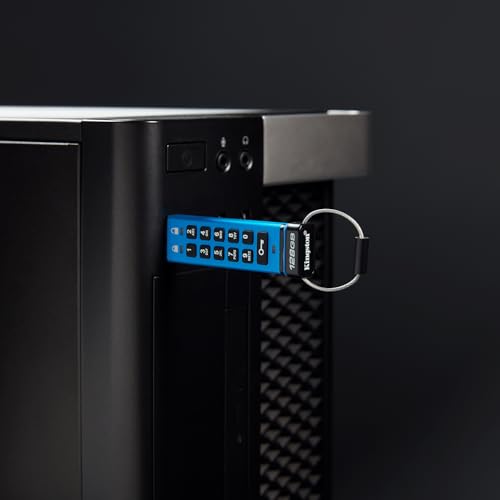
Access is managed entirely through the built-in keypad, which is powered by a rechargeable battery. This enables the drive’s standout feature: complete OS and device independence. A user can unlock the drive using the keypad and then plug it into any system—Windows, macOS, Linux, Chrome OS, or Android—that supports a standard USB mass storage device, with no drivers or software to install. This offers exceptional flexibility for cross-platform workflows.
The Multi-PIN system allows for two distinct modes. In Admin/User mode, an Admin PIN and a User PIN can be set. The Admin has the ability to reset a forgotten User PIN and unlock the drive if the User PIN attempt limit is reached, providing a crucial recovery path and preventing permanent data loss. Both Admin and User can enable a session-based read-only (write-protect) mode to guard against malware on untrusted computers. The Admin can also set a global read-only mode that persists until they disable it. For students building their security toolkit, understanding such access control mechanisms complements the knowledge gained from the best laptops for cybersecurity students.
Speed and Compatibility
Performance-wise, the drive is built for security first, but it offers respectable speeds for a 32GB encrypted device. The manufacturer lists a read speed of 145 MB/s and a write speed of 115 MB/s via its USB 3.2 Gen 1 interface. These speeds are sufficient for transferring documents, presentations, and other typical sensitive work files efficiently. The drive includes both a USB Type-A connector and a USB Type-C connector, ensuring compatibility with a wide range of modern computers and devices without the need for adapters.
Setup, Support and Ownership
Initial setup involves charging the internal battery via the USB port and then configuring the Admin and/or User PINs directly on the keypad. The process is straightforward and does not require connecting to a computer. The need for periodic recharging is an important ownership consideration; the keypad will not function if the battery is depleted, though the drive can presumably be charged while in use. Kingston backs the IronKey Keypad 200 with a three-year warranty, which is a standard offering for flash storage but provides a baseline assurance for a premium security product.
No software updates or management suites are mentioned in the provided data, which aligns with the drive’s hardware-centric, software-independent philosophy. The security model is static and contained within the device. Owners should be aware that the FIPS 140-3 Level 3 certification is listed as “pending.” While the drive is built to those specifications, the formal validation process by an accredited lab is underway. For professionals seeking to deepen their foundational knowledge, resources like the best cybersecurity books for beginners can be invaluable.
What Owners Say
The Kingston IronKey Keypad 200 has garnered positive feedback from users, reflected in its overall rating. The majority of reviews are highly favorable. Owners frequently praise the drive’s robust build quality, the convenience and security of the hardware keypad, and its seamless cross-platform functionality. The concept of having encryption that travels with the drive and requires no host software is a significant point of satisfaction.
A smaller segment of reviews points to areas for consideration. Some users have noted the necessity of keeping the internal battery charged for the keypad to operate. The 32GB storage capacity is also mentioned as a potential limitation for users with very large datasets, though it is appropriate for the sensitive documents and files this drive is intended to protect. The feedback underscores that this is a specialized tool designed for a specific security-conscious use case, and it largely succeeds in meeting those expectations.
Pros and Cons
Pros
- True OS and device independence with built-in keypad
- Hardware-based XTS-AES 256-bit encryption
- Designed to FIPS 140-3 Level 3 specifications (pending)
- Strong physical tamper resistance with epoxy coating
- Multi-PIN system with Admin recovery option
- Defenses against brute force and BadUSB attacks
- Session and global read-only modes for malware protection
Cons
- FIPS 140-3 Level 3 certification is pending, not final
- Requires periodic battery charging for keypad function
- 32GB capacity may be limiting for some users
- Premium security focus over raw storage capacity or maximum speed
Who Should Buy It (and Who Should Skip It)
The Kingston IronKey Keypad 200 is ideally suited for professionals who regularly transport sensitive data between different, potentially untrusted computers and operating systems. This includes consultants, journalists, lawyers, healthcare workers, and corporate IT staff handling confidential information. Its hardware-based, software-free operation makes it perfect for environments where installing software is restricted or impossible. It’s also a strong choice for anyone whose threat model includes physical device loss or seizure, thanks to its robust encryption and tamper evidence.
This drive is not the best choice for general-purpose, high-capacity storage. Users who simply need a fast, large USB drive for backing up media files or transferring non-sensitive data will find it overkill and cost-ineffective. Those who need terabytes of encrypted storage should look at other solutions. Similarly, individuals who frequently forget to charge devices may find the battery requirement a nuisance, though it is essential for the keypad’s standalone functionality. For securing an entire home network, a dedicated VPN router might be a more appropriate investment.
Final Verdict
The Kingston IronKey Keypad 200 delivers on its core promise of providing portable, high-assurance encryption that is completely independent of the host computer. Its combination of XTS-AES 256-bit hardware encryption, a built-in keypad, physical tamper resistance, and cross-platform compatibility creates a uniquely secure package for sensitive data on the move. The pending FIPS 140-3 Level 3 certification underscores its serious design intent, even as that formal validation completes.
While the 32GB capacity and need for battery management are trade-offs, they are inherent to its security-focused design. For the professional or organization that needs to carry critical data securely across diverse and potentially insecure environments, the IronKey Keypad 200 offers a compelling, self-contained solution. It transforms a USB flash drive from a simple storage device into a portable, hardware-enforced data vault.
FAQs
Does the Kingston IronKey Keypad 200 require software to work?
No, it does not require any software installation on the host computer. All encryption, decryption, and access control are handled by the drive’s internal hardware. You unlock it using the built-in alphanumeric keypad, and it then appears as a standard mass storage device to any compatible operating system.
What happens if I forget my PIN or enter it incorrectly too many times?
The drive features a Multi-PIN system. If you set it up in Admin/User mode and forget the User PIN (or exceed the maximum failed attempt limit), you can use the Admin PIN to unlock the drive and reset the User PIN. This prevents permanent data loss due to a forgotten password.
What does “FIPS 140-3 Level 3 Pending” mean?
It means the drive has been designed and built to meet the stringent FIPS 140-3 Level 3 security standard set by the U.S. National Institute of Standards and Technology (NIST) for cryptographic modules. The “pending” status indicates the formal testing and validation process by an accredited laboratory is currently in progress but not yet officially completed and certified.
Can the drive be used with both USB-C and older USB-A ports?
Yes. The Kingston IronKey Keypad 200 includes both a USB Type-A connector and a USB Type-C connector on the device itself. This provides broad compatibility with modern laptops, tablets, and phones that use USB-C, as well as traditional computers with USB-A ports, without requiring a separate adapter.
About the author

Elvis Dicki writes reviews and buying guides for CyberSecLabs.