Kensington K64708WW Review: A Biometric Key for FIDO2 Passwordless Security
The Kensington VeriMark Guard combines FIDO2 certification with a fingerprint reader for passwordless authentication, making it a candidate for those upgrading from passwords or physical security keys.
 By Elvis Dicki
Updated October 21, 2026
In an era where password breaches are commonplace, hardware-based authentication keys offer a robust line of defense. The Kensington K64708WW, also marketed as the VeriMark Guard, enters this space as a hybrid device: a FIDO2/FIDO U2F security key fused with a biometric fingerprint reader. It targets users who want to move beyond passwords entirely or add a biometric layer to multi-factor authentication for online services, enterprise applications, and government-compliant environments. For individuals or organizations seeking to leverage the latest WebAuthn standards for a passwordless future while maintaining the physical possession factor of a traditional security key, this device presents a specific feature set worthy of examination.

This review analyzes the Kensington K64708WW based on its published specifications, feature set, and compatibility details to determine its place in the cybersecurity landscape. We will assess its design, the practical application of its FIDO2 and biometric capabilities, and its suitability for different user profiles, from security-conscious professionals to government contractors.
Kensington VeriMark Guard USB-A FIDO2 Fingerprint



As an Amazon Associate we earn from qualifying purchases. Product prices and availability are accurate as of the date/time indicated.
Kensington K64708WW at a Glance
| Specification | Detail |
|---|---|
| Model Number | K64708WW |
| Key Function | FIDO2/FIDO U2F Security Key & Fingerprint Reader |
| Authentication Methods | Passwordless (single-factor), Biometric, Two-Factor, Multi-Factor |
| Connectivity | USB Type-A |
| Compatibility | Windows, macOS, Chrome (via browsers: Chrome, Edge, Firefox, Safari) |
| Fingerprint Support | Up to 10 fingerprints |
| Biometric Accuracy | Exceeds industry standards for False Acceptance/Rejection Rates |
| Compliance | TAA-compliant, Supports GDPR compliance |
| Design Notes | Compact metal design with protective cover and tether |
| Support | 2-year coverage, lifetime Kensington technical support |
Design and Build
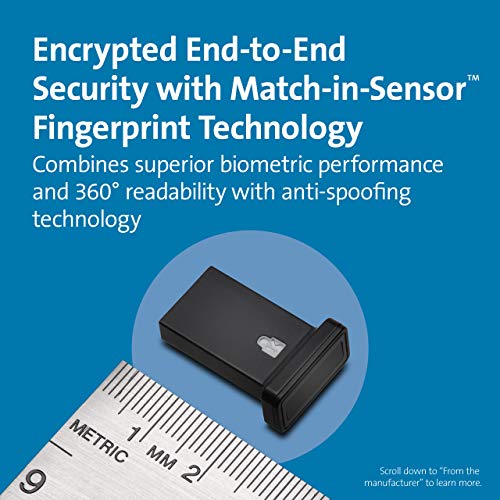
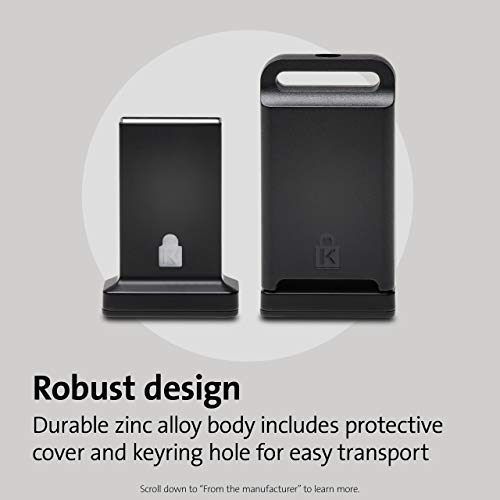
The Kensington K64708WW presents a utilitarian and durable design ethos focused on daily portability and resilience. Its compact form factor is engineered to fit comfortably on a keychain, aided by the included tether, or to remain discreetly in a docking station or USB hub. The device features a metal construction, suggesting a build quality intended to withstand the rigors of regular use. A protective cover is included to shield the USB-A connector from physical damage and debris when not in use, a practical addition for a device meant to be carried. The overall design prioritizes function over flair, aligning with its role as a professional security tool rather than a consumer gadget. Its black finish and minimalist branding keep it unobtrusive in any professional setting.
Performance and Features
Core Security Protocols: FIDO2 and FIDO U2F
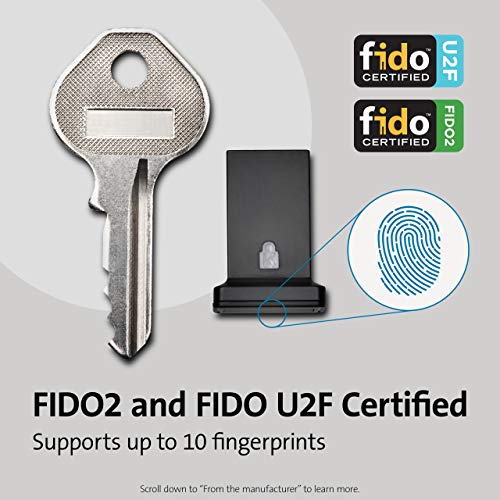
The cornerstone of the VeriMark Guard’s functionality is its dual certification for FIDO2 and the older FIDO U2F standard. FIDO2, encompassing the WebAuthn and CTAP2 protocols, enables true passwordless authentication. Users can log into supported services using only their fingerprint on the key, eliminating the password vector entirely. For services still utilizing the U2F standard, the device functions as a standard security key for the second factor in a two-factor authentication (2FA) scheme. This backward compatibility ensures it works with a wide range of existing web services, including major platforms like Google, Facebook, and Microsoft (though for Windows Hello, Kensington directs users to other VeriMark models). The key also supports “Tap-and-Go” for non-FIDO2 services, which combines a username/password with the physical key press for added security.
Biometric Fingerprint Authentication
Beyond being a simple physical token, the K64708WW integrates a fingerprint sensor. This allows for biometric single-factor authentication (passwordless) on FIDO2-supported sites and adds a biometric layer to multi-factor workflows. The manufacturer states the sensor exceeds industry standards for both False Acceptance Rate (FAR) and False Rejection Rate (FRR), aiming for a balance between security and convenience. The device can store templates for up to ten different fingerprints, allowing multiple users or multiple fingers for one user. It’s important to note a significant platform-specific requirement: for full biometric functionality on macOS and Chrome OS, users must first configure Windows Hello for Microsoft Services and Dropbox login authentication. Without this setup, the key will still work but only in its non-biometric “Tap-and-Go” mode on those operating systems.
Compatibility and Connectivity
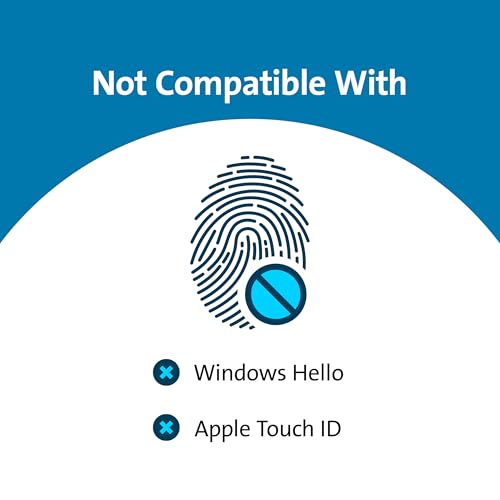
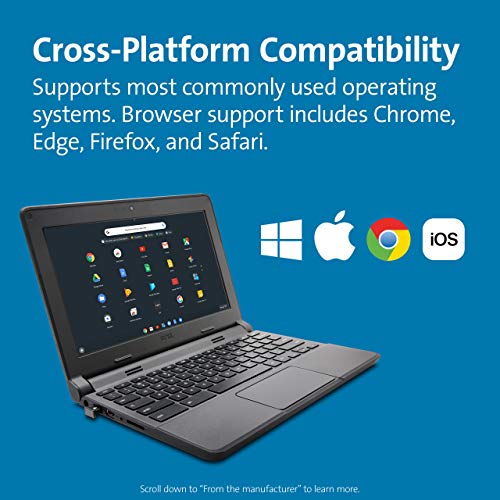
The key connects via a USB-A interface, ensuring broad compatibility with desktops, laptops, and hubs. However, this means users of modern devices with only USB-C ports will require an adapter. It is certified for use with Windows and macOS, and supports Chrome browsers across platforms. Specific browser support includes Chrome, Edge, Firefox, and Safari. The manufacturer notes that Windows ARM-based computers are currently not supported, and users should check for future updates. The device is explicitly not compatible with native biometric systems like Windows Hello or Apple Touch ID; it operates as a separate, FIDO-compliant security key. It is also Google and Apple Passkeys compatible, integrating with these emerging cross-platform authentication standards.
Compliance and Enterprise Features
The Kensington K64708WW is designed with institutional use in mind. It is TAA-compliant, making it eligible for use in U.S. Federal Government institutions and organizations that must adhere to the Trade Agreements Act. This compliance, coupled with its support for GDPR requirements, positions it as a viable option for enterprise and government procurement. The ability to enroll multiple fingerprints and its robust metal build suit shared or managed device scenarios.
Setup, Support and Ownership
Setup involves plugging the key into a USB-A port and following the enrollment process for the desired services and fingerprints. The cross-platform experience varies: Windows users can leverage the biometric features directly with FIDO2-compliant websites, while macOS and ChromeOS users face the additional prerequisite of configuring Windows Hello for certain services to unlock biometric functionality. The device comes with a two-year warranty and, notably, lifetime technical support from Kensington, which is a significant commitment for a hardware security product. The manufacturer emphasizes users should visit their support site for an up-to-date list of compatible software and services, as FIDO2 adoption continues to grow. No information is provided by the manufacturer regarding firmware update procedures or long-term upgrade paths for the hardware.
What Owners Say
Owner feedback reflects a mixed experience centered on setup complexity and platform-specific behavior. A majority of reviewers award the highest rating, suggesting satisfaction with the core security functionality and build quality when it works as intended. However, a notable portion of lower ratings highlights points of friction. Common themes among critical reviews include challenges with the initial setup and enrollment process, particularly around the specific requirements for biometric use on macOS, which can be non-intuitive. Some users expected seamless integration with native OS biometric systems like Windows Hello, which this key does not provide, leading to disappointment. The feedback underscores that the K64708WW is a powerful tool for those willing to navigate its specific configuration needs, but may present a steeper learning curve compared to simpler, non-biometric security keys.
Pros and Cons
Pros
- Enables strong passwordless authentication via FIDO2
- Adds biometric verification to the security key possession factor
- Wide browser and web service compatibility (FIDO2 & U2F)
- Durable, compact metal build with protective cover
- TAA-compliant for government and enterprise procurement
- Includes lifetime technical support from Kensington
Cons
- Biometric setup on macOS/ChromeOS requires Windows Hello configuration
- No compatibility with Windows Hello or Apple Touch ID
- USB-A connector requires an adapter for USB-C-only devices
- Not compatible with Windows on ARM computers
- Setup process can be complex for non-technical users
- Some user expectations mismatched with product’s specific use case
Who Should Buy It (and Who Should Skip It)
The Kensington K64708WW is a strong candidate for specific user groups. It is ideal for cybersecurity professionals, IT administrators, or government contractors who need TAA-compliant hardware and want to implement FIDO2 passwordless or biometric multi-factor authentication within their organizations. It’s also suitable for tech-savvy individuals deeply invested in the FIDO ecosystem who want to consolidate a physical security key and a biometric authenticator into one device and are comfortable with its platform-specific setup requirements.
Conversely, users seeking simple plug-and-play compatibility with their laptop’s built-in fingerprint reader for Windows Hello or Apple Touch ID should skip this key, as it does not integrate with those systems. Those who primarily use devices with only USB-C ports and do not want to manage an adapter may find it inconvenient. Individuals looking for the absolute simplest two-factor authentication experience might prefer a standard, non-biometric FIDO U2F key or a solution that integrates more seamlessly with their primary operating system’s native security features.
Final Verdict
The Kensington VeriMark Guard (K64708WW) is a specialized tool that successfully merges FIDO2 passwordless capabilities with biometric authentication in a sturdy, portable form factor. Its strengths are clear: robust support for modern authentication standards, a build quality suited for enterprise use, and compliance certifications that open doors for government and institutional deployment. When configured correctly for its intended use cases—particularly on Windows systems or with the specific macOS prerequisites met—it delivers a high level of security that moves beyond passwords.
However, its value is tempered by its complexity. The platform-dependent biometric setup, lack of integration with popular native OS biometrics, and USB-A connector can be significant hurdles. It is not a universal key for every user, but rather a potent solution for a niche that values its specific blend of FIDO2, biometrics, and compliance above all else. For those whose needs align with its feature set, it represents a secure hardware investment in the passwordless future. Others may find that exploring different cybersecurity tools or key models leads to a more straightforward user experience.
FAQs
Does the Kensington K64708WW work with Windows Hello or Apple Touch ID?
No, it does not. The Kensington K64708WW is explicitly not compatible with Windows Hello or Apple Touch ID. It functions as an independent FIDO2/FIDO U2F security key and fingerprint reader. It authenticates directly with supported websites and web applications using the FIDO protocols, not through the operating system’s native biometric framework.
Can I use the fingerprint feature on a Mac?
Yes, but with a critical prerequisite. To enable biometric fingerprint authentication (not just Tap-and-Go) on macOS, you must first configure Windows Hello for Microsoft Services and Dropbox login authentication. Without completing this specific Windows Hello configuration, the key will still function on a Mac but only in its non-biometric “Tap-and-Go” mode for supported services.
What does TAA-compliant mean?
TAA stands for the Trade Agreements Act. A TAA-compliant product, like the Kensington K64708WW, is manufactured or substantially transformed in a country that has a trade agreement with the United States. This designation is a requirement for products purchased by U.S. Federal Government agencies and many other government contractors, making the key eligible for use in those institutional settings.
How many accounts can I secure with this key?
The Kensington K64708WW does not have a fixed limit on the number of accounts in the same way a software token might. As a FIDO2 security key, it can be registered with an unlimited number of supporting websites and services. Its internal storage is used to hold the private cryptographic keys for each registered service, along with fingerprint templates for up to ten different fingers. The practical limit is defined by its internal storage capacity, which the manufacturer does not specify, but it is designed to support a high number of registrations for typical user needs. For more insights into securing your digital life, consider exploring our other security device reviews.
About the author

Elvis Dicki writes reviews and buying guides for CyberSecLabs.