Akaso WT50 Mini Review: A Portable DLP Projector with Android 9.0
The Akaso WT50 Mini is a highly portable projector with a built-in Android system and battery, designed for casual home and outdoor use where ambient light is low.
 By Elvis Dicki
Updated October 22, 2026
The Akaso WT50 Mini represents a specific niche in the projector market: ultra-portable entertainment. It’s a pocket-sized DLP projector that integrates a full Android 9.0 operating system and a rechargeable battery, aiming to be a self-contained media hub you can take anywhere. This product is targeted at users who prioritize portability and simplicity over raw, high-brightness performance—think movie nights in a backyard, presentations on the go, or projecting images for hobbies like cookie decorating or art tracing. For the right user, it offers a compelling mix of features in a remarkably small package, but its performance is inherently tied to its compact design.
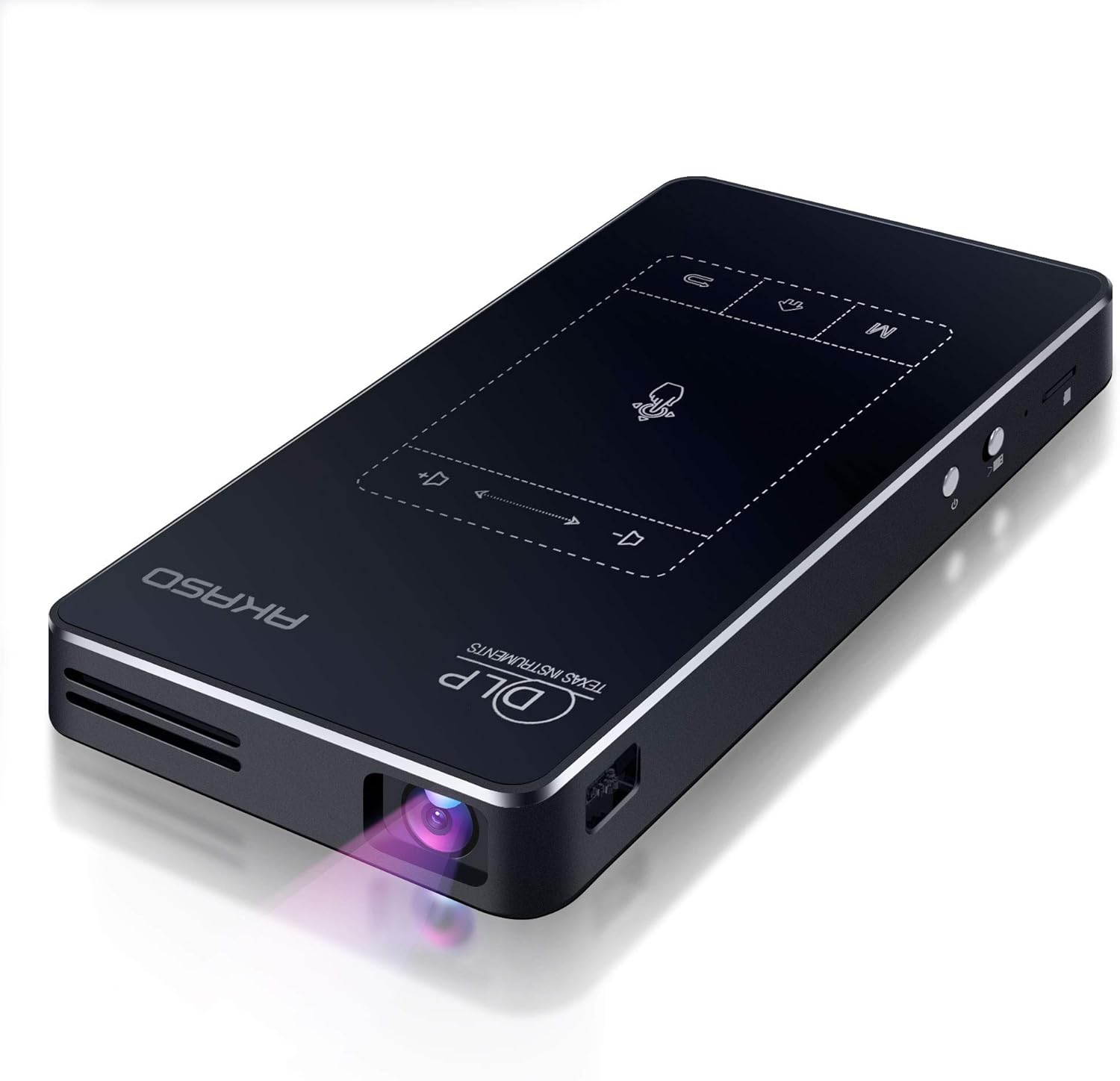
At its core, the WT50 Mini is designed for cord-free, flexible projection in controlled lighting conditions. It leverages DLP technology for its image quality and diffuse reflection principle, which is marketed as being easier on the eyes. With built-in Wi-Fi and multiple screen mirroring protocols, it promises easy connectivity from smartphones and other devices. The bottom line: if you need a projector that can truly fit in a bag and run without a power outlet for a couple of hours, the Akaso WT50 Mini is a solid contender, provided you manage expectations around its brightness and understand the limitations of wireless streaming for copyrighted content.
AKASO WT50 Mini Projector 1080P DLP Portable WiFi



As an Amazon Associate we earn from qualifying purchases. Product prices and availability are accurate as of the date/time indicated.
Akaso WT50 Mini at a Glance
| Specification | Detail |
|---|---|
| Display Technology | DLP (0.2″ DMD chip) |
| Native Resolution | 854 x 480 (WVGA) |
| Supported Resolution | Up to 1920 x 1080 |
| Brightness | 50 ANSI Lumens |
| Projection Size | 30 to 120 inches |
| Built-in OS | Android 9.0 |
| Battery | 5000mAh (approx. 2 hours) |
| Connectivity | Wi-Fi (2.4G/5G), Bluetooth, HDMI, USB, Micro SD, 3.5mm Audio |
| Key Feature | Automatic Keystone Correction |
| Dimensions | 5.71″L x 3.15″W x 0.79″H |
| Weight | 0.64 lbs |
Design and Build
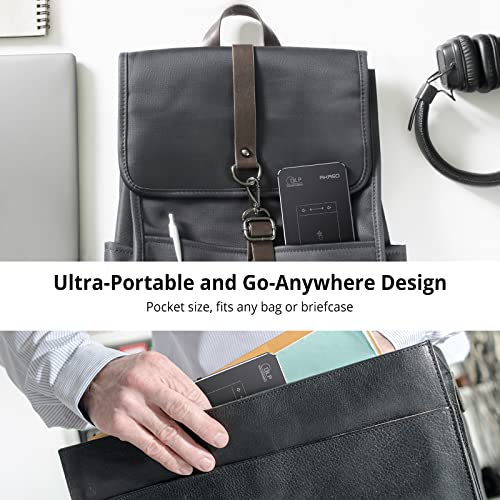
Portability is the defining characteristic of the Akaso WT50 Mini’s design. With dimensions slightly larger than a typical smartphone and a weight under two-thirds of a pound, it lives up to its “mini” and “cookie projector” monikers. The compact, rectangular aluminum body is built to be tossed into a backpack or luggage without adding significant bulk. The manufacturer emphasizes this lightweight, travel-ready form factor as a core selling point for home, travel, and outdoor use.
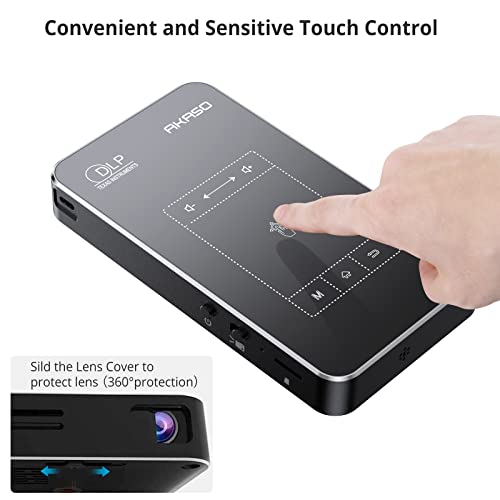
Control is managed through a combination of a touchscreen panel on the device itself and an included remote control, allowing for adjustments whether you’re next to the projector or across the room. The unit includes a 360-degree rotatable support bracket, providing flexibility in positioning it on a table or other surfaces. The build appears focused on minimalism and function, with the small size directly influencing other performance aspects like speaker size and thermal management, as noted in some user experiences.
Performance and Features
Image Quality and Projection
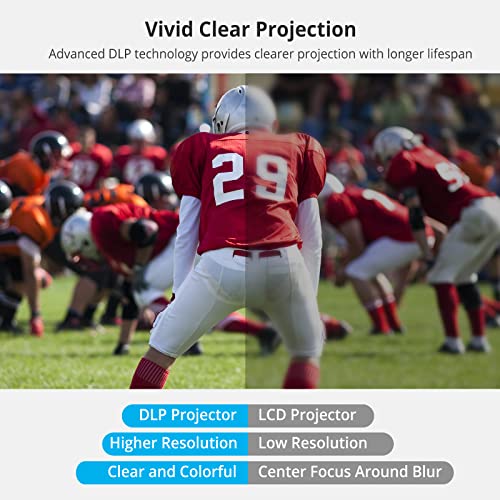
The Akaso WT50 Mini uses a DLP (Digital Light Processing) display system with a 0.2-inch DMD chip. The manufacturer states this technology provides a clearer image compared to LCD projectors, avoiding pixelation or a “screen door effect” and offering richer colors. Its native resolution is WVGA (854 x 480), but it can accept a 1080p signal. The brightness is rated at 50 ANSI lumens, which is sufficient for dark rooms but is a limiting factor in environments with ambient light. The projector uses a diffuse reflection imaging principle, which scatters the light rather than projecting it directly, marketed as a healthier, eye-friendly viewing experience that reduces fatigue.
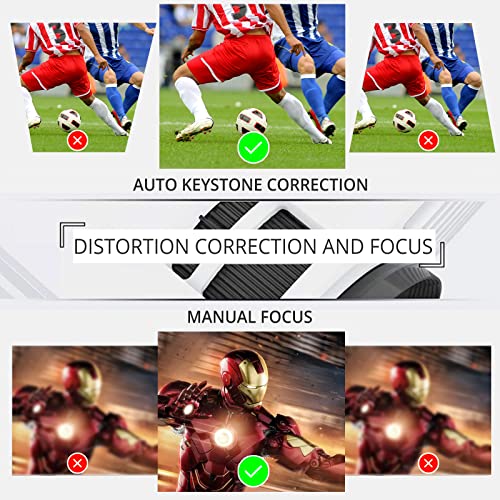
The projection size ranges from 30 inches up to 120 inches diagonally, with a projection ratio of 1.19:1. This makes it a short-throw projector, capable of producing a large image from a relatively short distance. A key convenience feature is the automatic keystone correction, which automatically adjusts the image to appear square when the projector is placed at an angle, simplifying setup.
Connectivity and Ports
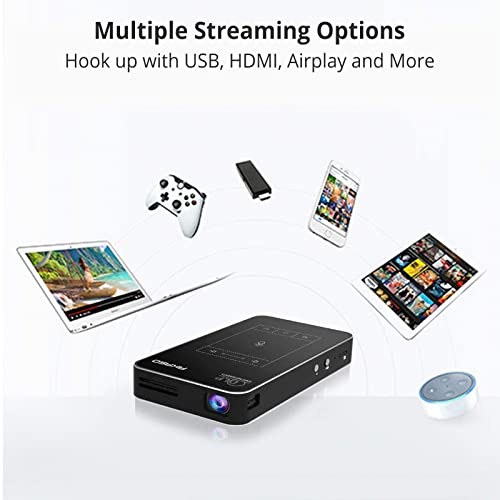
Connectivity is a major strength of the WT50 Mini. For wireless connections, it supports dual-band Wi-Fi (2.4G and 5G) and Bluetooth. It offers multiple screen mirroring protocols: AirPlay for iOS devices, Miracast (Wi-Fi Display), EShare, and DLNA for Android and other compatible devices. This allows smartphones to connect without cables in many scenarios.
For wired connections, the projector is equipped with a solid selection of ports: an HDMI input for connecting laptops, gaming consoles, or streaming sticks; two USB 2.0 ports and a Micro SD card slot (supporting up to 32GB) for playing local media files; and a 3.5mm audio jack for connecting external speakers or headphones. This flexibility supports use cases for entertainment, education, or light business purposes.
Software and Operating System
A standout feature is the built-in Android 9.0 operating system. This transforms the projector into a standalone smart device, providing access to the Google Play Store and the ability to install apps directly. You can browse the web or stream content via apps like YouTube without needing an external source. However, the manufacturer includes a crucial note: copyrighted content from services like Netflix, Hulu, and Disney+ cannot be mirrored or screencast wirelessly due to digital rights management (DRM). To watch such content, you must either use the service’s app directly on the projector’s Android system (if available) or connect an external device like a Fire Stick or laptop via the HDMI cable.
Battery and Portability
The integrated 5000mAh rechargeable battery is central to its portable proposition. The manufacturer estimates it supports approximately two hours of projection on a single charge, which aligns with user reports of watching a couple of movies. This makes it viable for outdoor movie nights, camping, or other situations where access to a power outlet is limited. The lamp life is rated for 30,000 hours, ensuring longevity for the light source itself.
Setup, Support and Ownership
Setup involves initial configuration of the Android system and connecting to Wi-Fi. The automatic keystone correction significantly reduces the manual adjustment typically required to get a rectangular image. Users should note the manufacturer’s advice to use only the provided original charging cable to avoid potential compatibility or damage issues. The package includes the projector, remote control, power adapter, and charging cable.
For support, Akaso provides a two-year manufacturer’s warranty. They encourage customers to check accessories upon arrival and contact their after-sales service with any questions or if items are damaged in transit. As with many Android-based devices, the long-term software update policy for the built-in OS is not specified in the provided data. For more insights on getting the most from your tech setup, explore our guides on the best ultra-wide monitors and best desk chairs for gaming to complement your viewing station.
What Owners Say
With a rating of 4.2 out of 5 stars, owner feedback is generally positive. The majority of reviews are 5-star (65%), with 4-star reviews at 16%. The remaining reviews are split between 3, 2, and 1 stars. Praise frequently highlights the projector’s portability, good image quality for its size, and versatility for specific uses like art projection and cookie decorating. Owners appreciate the multiple connectivity options and the convenience of the built-in Android system.
Common points in the feedback include the confirmation of good picture clarity even at larger sizes, with one user noting a successful 15-foot diagonal projection without distortion. The battery life is reported as meeting expectations, roughly two movies long. Criticisms often center on the built-in speaker quality, described as having static, which leads many to recommend using external Bluetooth or wired speakers. Some users report instability with wireless screen mirroring, which can depend on Wi-Fi conditions. A notable concern mentioned in a review involves a battery expansion issue in a unit that was left plugged in, though this was reportedly resolved by the manufacturer with a replacement.
Pros and Cons
Pros
- Exceptionally portable and lightweight design
- Built-in Android 9.0 system allows for standalone app use
- Integrated battery enables cord-free operation for about two hours
- Multiple wireless mirroring options (AirPlay, Miracast, etc.)
- Automatic keystone correction for easy setup
- Comprehensive port selection including HDMI and USB
- DLP diffuse reflection technology is marketed as eye-friendly
Cons
- Low brightness (50 lumens) limits use to very dark rooms
- Built-in speaker quality is poor
- Wireless mirroring for copyrighted streaming apps (Netflix, Hulu) is blocked
- Screen mirroring stability can vary with Wi-Fi network
- Native resolution is only 854 x 480 (WVGA)
- Battery charging indicators can be unclear
Who Should Buy It (and Who Should Skip It)
The Akaso WT50 Mini is an ideal fit for a specific user. Buy it if you need maximum portability above all else—for camping, backyard movies, or mobile presentations. It’s excellent for hobbyists like artists or cookie decorators who need a small, precise projector for tracing. Families looking for a child-friendly, eye-comfort projector for occasional bedroom movie nights in the dark will also find it suitable. Its built-in Android system is a major boon for users who want a simple, all-in-one device without fiddling with external media players.
Skip the Akaso WT50 Mini if you plan to use it in a living room with any ambient light, as the 50-lumen output will be washed out. Home theater enthusiasts seeking high-definition, cinematic picture quality should look at projectors with higher native resolution and brightness. Users who primarily want to wirelessly cast Netflix or Disney+ from their phones will be frustrated by the DRM restrictions, making a standard HDMI connection necessary. For those interested in other smart home entertainment options, our expert picks for the best AI smart home devices might offer complementary technology.
Final Verdict
The Akaso WT50 Mini successfully delivers on its core promise of ultra-portable, battery-powered projection with smart features. It carves out a niche by combining a DLP projector, an Android media player, and a power bank into a device that fits in your hand. The image quality is respectable for its class and size, particularly in pitch-black conditions, and the connectivity options are impressively comprehensive. The automatic keystone correction and touch controls add to the user-friendly experience.
However, its strengths are counterbalanced by inherent trade-offs. The low brightness and modest native resolution are direct consequences of its miniaturized design, firmly anchoring it as a casual-use device rather than a primary home theater component. Potential buyers must go in with clear expectations: this is a projector for creating fun, portable viewing experiences in the dark, not for replacing your TV. If your use case aligns with its portable, plug-and-play philosophy—and you’re prepared to use an external speaker and possibly an HDMI cable for certain streaming services—the Akaso WT50 Mini is a unique and capable tool. For broader tech insights, check out more in-depth reviews on our site.
FAQs
Can I watch Netflix on the Akaso WT50 Mini?
Yes, but not through wireless screen mirroring from your phone. Due to copyright protection (DRM), Netflix and similar services block wireless casting. You can watch Netflix by either downloading the Netflix app directly from the Google Play Store on the projector’s built-in Android system, or by connecting an external device like a laptop, Roku, or Amazon Fire Stick to the projector’s HDMI port.
How long does the battery last on a single charge?
The built-in 5000mAh battery provides approximately two hours of projection time. This is based on the manufacturer’s specification and is corroborated by user reviews, which report it being sufficient for watching a couple of movies before needing a recharge.
Is the Akaso WT50 Mini good for daytime use?
No, it is not suitable for use in rooms with significant ambient light. With a brightness of only 50 ANSI lumens, the image will appear very faint and washed out unless used in a completely or near-completely darkened environment. It is designed for use at night or in very dark rooms.
What is the difference between native and supported resolution?
The native resolution is the actual number of physical pixels on the projector’s imaging chip, which for the WT50 Mini is 854 x 480 (WVGA). The supported resolution (up to 1920 x 1080) means the projector can accept a 1080p signal from a source device, but it will downscale it to fit its native 480p chip. The final displayed image will be clearer than a native 480p source but not as sharp as a true 1080p projector.
About the author

Elvis Dicki writes reviews and buying guides for CyberSecLabs.