Dionlink ES-4GRT-220105 Review: 4G LTE Backup for Homes Without Broadband
The Dionlink ES-4GRT-220105 is an unlocked modem router designed to provide internet access in areas with weak or no broadband by converting 4G LTE signals to WiFi.
 By Elvis Dicki
Updated October 22, 2026
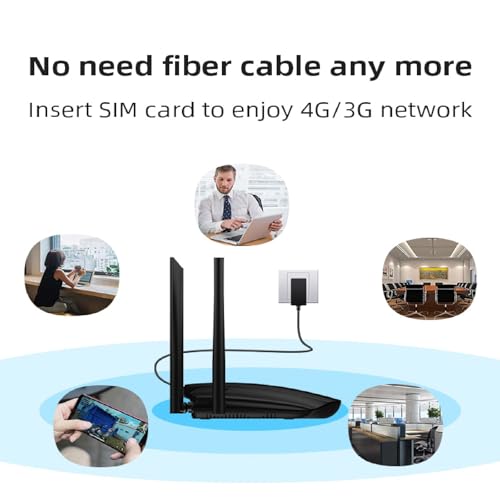
The Dionlink ES-4GRT-220105, also known as the LT216J, is an unlocked 4G LTE modem router that aims to solve a specific connectivity problem. It is engineered for users in locations where traditional broadband options like cable or fiber are unavailable or unreliable, converting a cellular signal into a local WiFi network. This device is squarely targeted at rural households, remote cabins, or as a reliable backup connection for small offices that cannot afford downtime. At its core, this router offers a straightforward proposition: plug in a compatible SIM card and get online without complex setup, making it a niche but potentially vital tool for those underserved by conventional internet providers.

The bottom line is that the Dionlink ES-4GRT-220105 provides a functional bridge to the internet for areas where options are limited, though its performance is inherently tied to the strength and quality of the available 4G LTE network. It’s a purpose-built device that prioritizes accessibility and failover capability over cutting-edge WiFi speed or extensive smart features.
Dionlink LT216J N300 4G LTE Router Unlocked SIM




As an Amazon Associate we earn from qualifying purchases. Product prices and availability are accurate as of the date/time indicated.
Dionlink ES-4GRT-220105 at a Glance
| Specification | Detail |
|---|---|
| Model | ES-4GRT-220105 / LT216J |
| Primary Function | Unlocked 4G LTE Modem Router |
| Maximum LTE Download Speed | Up to 150 Mbps |
| Maximum LTE Upload Speed | Up to 50 Mbps |
| Converted WiFi Speed | 300 Mbps (802.11n) |
| WiFi Frequency Band | Single-Band |
| Simultaneous Device Support | Up to 32 devices |
| Ports | 1 WAN, 2 Ethernet (100 Mbps LAN) |
| Key Feature | Automatic 4G Failover |
| Compatible Carriers | AT&T, T-Mobile (Not Verizon or Sprint) |
Design and Build
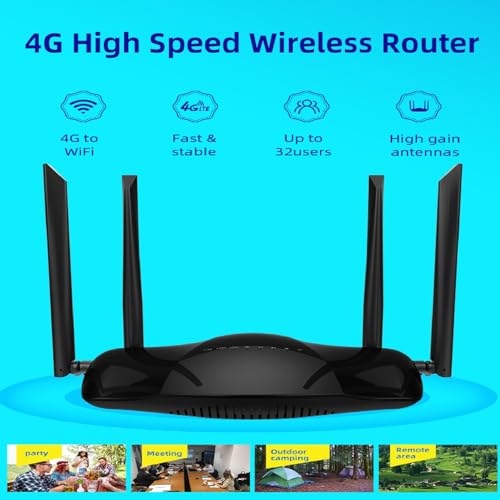
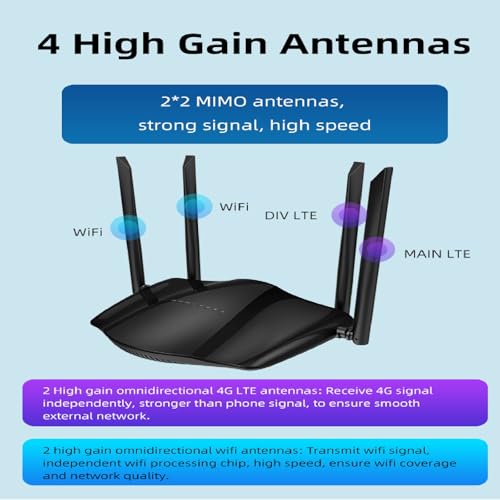
The Dionlink ES-4GRT-220105 adopts a compact, black rectangular form factor typical of basic routers. Its design is utilitarian, focusing on housing the necessary hardware rather than making a stylistic statement. The unit is equipped with two external, fixed 5dBi high-gain antennas intended to improve the reception of cellular signals, which is crucial for its primary function. The antenna location is on the router body itself. The included components are listed as just the router body, meaning no SIM card, Ethernet cables, or power adapters beyond the essentials are mentioned by the manufacturer. The build uses materials described by one owner as “great quality,” though specific details on construction materials or dimensions are not provided in the available data. The design prioritizes a plug-and-play experience, with all connectivity ports and the SIM card slot presumably located on the rear or sides for straightforward access.
Performance and Features
Cellular Connectivity and Speed
The heart of the Dionlink ES-4GRT-220105 is its 4G LTE modem. Manufacturer claims state it allows for download speeds of up to 150 Mbps and upload speeds of up to 50 Mbps over the cellular network. It’s critical to understand that these are theoretical maximums under ideal conditions; real-world speeds will be governed by local signal strength, network congestion, and the specific data plan from the carrier. The device is unlocked, but compatibility is limited to AT&T and T-Mobile networks in the United States. It is explicitly not compatible with Verizon or Sprint, a significant limitation that prospective buyers must verify before purchase. The router converts this incoming 4G LTE signal into a local WiFi network with a maximum data transfer rate of 300 Mbps.
WiFi and Wired Connectivity
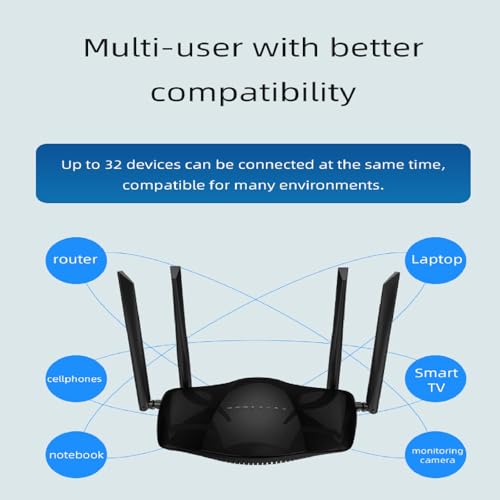
The generated WiFi network operates on the single-band 802.11n standard. While this provides adequate speed for general web browsing, standard-definition video streaming, and basic tasks, it may be a limiting factor in environments with many competing wireless networks or for users demanding the highest possible throughput for activities like 4K streaming or competitive gaming. The router supports connecting up to 32 wireless devices simultaneously. For wired connections, it offers three ports: one WAN port to connect to an external modem (for its failover function) and two 10/100 Ethernet LAN ports. The LAN port bandwidth is specified as 100 Mbps, which matches the older Fast Ethernet standard rather than Gigabit Ethernet, another indication of its positioning as a budget-conscious, connectivity-bridging device rather than a performance powerhouse.
Key Operational Features
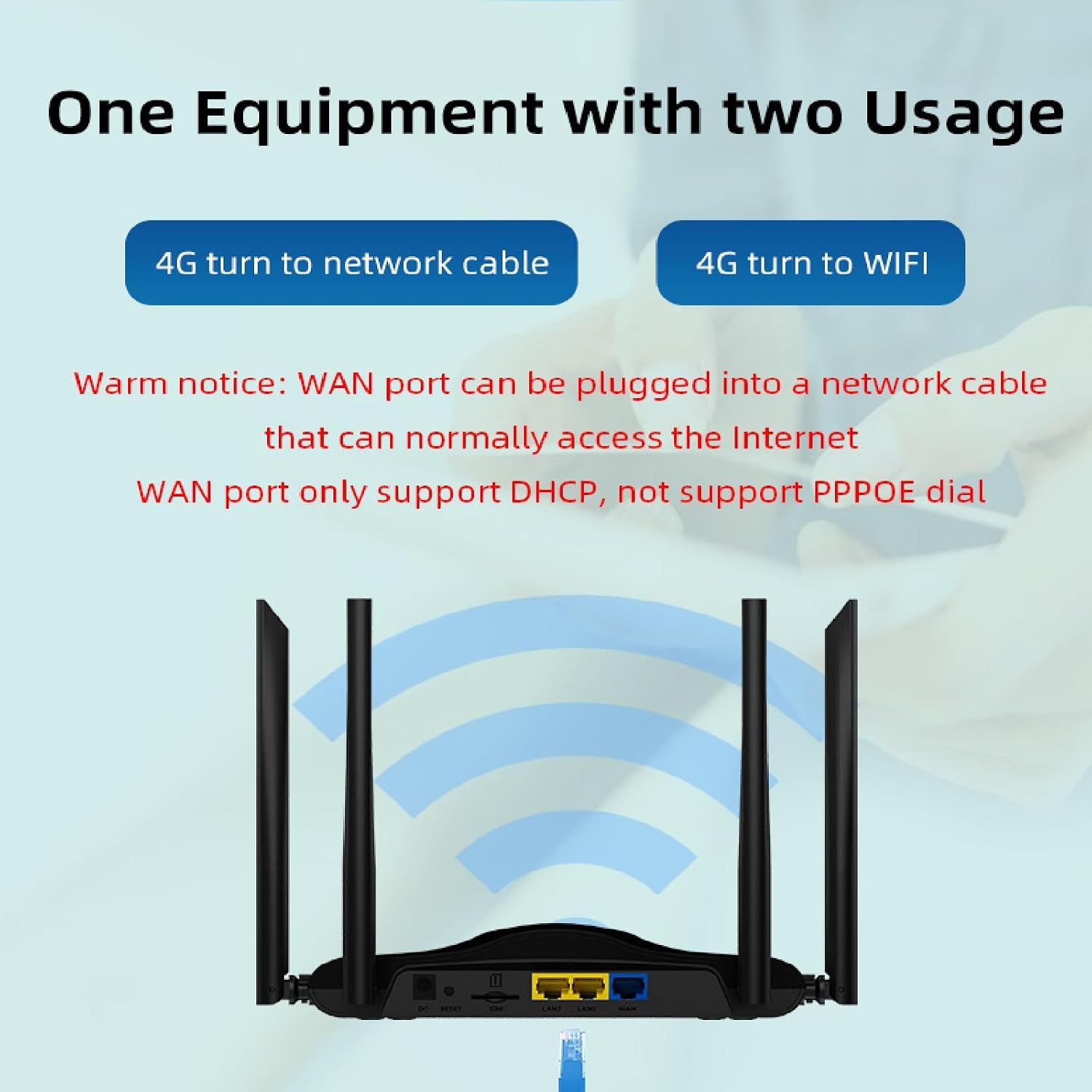
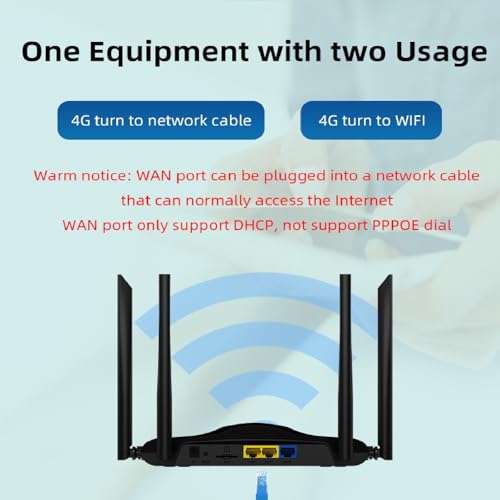
A standout feature is the automatic network failover. When configured with both a broadband connection via the WAN port and an active 4G SIM card, the router can automatically switch to the 4G LTE network if the primary broadband connection fails. This ensures uninterrupted service, which can be vital for security systems, basic remote work, or maintaining a constant connection. The router also includes support for VPN (Virtual Private Network), listed under its special features as “Internet Security.” This built-in VPN support allows for more private browsing on all connected devices, though the specific VPN protocols or client support details are not specified by the manufacturer. The security protocols for the WiFi network itself are WPA2 and WPA3, providing modern encryption standards.
Setup, Support and Ownership
Setup is highlighted as a major selling point. The manufacturer describes it as “extremely easy” and “user-friendly,” requiring no technical skills. The process involves inserting a standard 4G SIM card into the slot and then keying in a password, with no extra equipment needed. This plug-and-play approach is ideal for the non-technical user in a remote setting. The device runs on a Linux operating system, which typically allows for stable operation. In terms of support and ownership, the manufacturer offers a one-year warranty. There is no information provided regarding firmware update policies, the availability of a management app, or the longevity of software support. As a product focused on a specific, stable function, its upgrade path is limited; it’s a device you set up and use as-is. The router is designed as a standalone solution, and no accessory options like additional antennas or external battery packs are mentioned in the provided data.
For those needing a robust home network with advanced features, exploring options like the best routers for multiple devices or the best routers for large homes may be more appropriate. Similarly, users in areas with gigabit internet available would be better served by devices featured in our guide to the best routers for gigabit internet.
What Owners Say
Owner feedback presents a mixed but generally positive picture. The device holds a rating of 4.1 out of 5 stars. The distribution shows strong approval from a majority, with nearly half (49%) of reviewers giving it 5 stars and another 33% awarding 4 stars. Positive reviews highlight the ease of use, with one owner calling it “easy to use and easy connect” and praising its design and “great quality materials.” They found it “very useful” for its intended purpose. However, a notable segment of users (8%) gave it a 1-star rating, and a 3-star review explicitly complains that speeds were “too slow” and not as advertised. This underscores the critical point that satisfaction is highly dependent on local cellular network conditions. There were no 2-star reviews in the provided distribution, suggesting users either find it works well for their needs or are significantly disappointed.
Pros and Cons
Pros
- Provides internet access in areas without broadband options
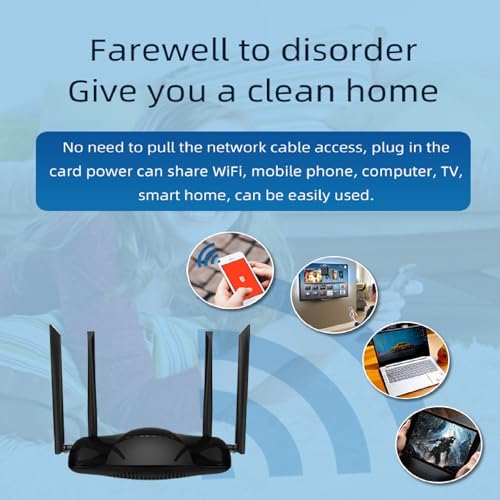
- Simple plug-and-play installation with standard SIM cards
- Automatic network failover ensures uninterrupted service
- Supports multiple wired and wireless connections for flexibility
- Built-in VPN support enhances security and privacy
- High-gain antennas improve signal reach in weak coverage areas
Cons
- Not compatible with Verizon or Sprint networks
- Single-band WiFi may limit performance in crowded environments
- Real-world speeds are entirely dependent on cellular signal strength
- SIM card and data plan must be sourced separately
- LAN ports are limited to 100 Mbps Fast Ethernet
- No information on long-term firmware support
Who Should Buy It (and Who Should Skip It)
The Dionlink ES-4GRT-220105 is an ideal solution for a specific user. You should consider it if you live in a rural area, cabin, or any location where DSL, cable, or fiber internet is unavailable or prohibitively expensive, and you have confirmed good AT&T or T-Mobile 4G LTE coverage. It is also a sensible purchase for urban users who need a reliable, automatic internet backup solution for critical connectivity to avoid downtime from primary broadband outages. Small offices or home offices in remote locations can use it as a primary connection for basic tasks.
You should skip this router if you have access to reliable, high-speed broadband. It is not designed to replace a modern dual-band or tri-band WiFi 6 router for gaming, 4K streaming in a crowded household, or managing a smart home with dozens of devices. Users on Verizon or Sprint networks cannot use it. Those who require the latest in network technology, such as support for advanced open-source firmware, should look elsewhere. If your local cellular signal is weak, this device will not magically create a fast connection.
Final Verdict
The Dionlink ES-4GRT-220105 succeeds within its narrow but important niche. It does not pretend to be a high-performance home router. Instead, it is a pragmatic tool that fulfills the essential function of bringing internet connectivity to places where other options fail. Its strengths are its straightforward setup, the valuable automatic failover feature, and its ability to create a WiFi network from a cellular signal. Its limitations—carrier compatibility, single-band WiFi, and speed dependency on network conditions—are clear and important to acknowledge upfront.
For the right user, this device can be a lifeline. It offers a viable path to online access for remote work, education, communication, and entertainment where traditional infrastructure is lacking. However, it demands realistic expectations. It is best viewed as a connectivity enabler rather than a speed demon. Before purchasing, diligent research into local carrier coverage and data plan options is an absolute necessity. For those in its target scenario, it represents a sensible and functional solution to a real-world problem.
FAQs
Does the Dionlink ES-4GRT-220105 come with a SIM card or data plan?
No, the SIM card is not included. You must purchase a compatible SIM card and an active data plan separately from a supported carrier like AT&T or T-Mobile. The manufacturer advises checking with your preferred carrier for plan details and limitations before purchase.
Can I use this router as a backup if I already have broadband?
Yes, this is one of its key features. By connecting your primary broadband modem to the router’s WAN port and inserting an active 4G SIM card, the router can automatically switch to the 4G LTE network if your main internet connection fails, providing uninterrupted service.
What is the real-world WiFi speed I can expect?
The router converts the cellular signal to a WiFi network with a maximum speed of 300 Mbps using the 802.11n standard. However, your actual speed will be limited by the slower of two factors: your cellular network speed (up to 150 Mbps down) and the WiFi environment. In practice, with a strong 4G signal, speeds suitable for HD video streaming and general browsing are achievable, but they will not match dedicated fiber or cable broadband.
How many devices can connect to this router at once?
The manufacturer states the router supports up to 32 devices connecting simultaneously over its wireless network. It also has two Ethernet LAN ports for wired connections. Keep in mind that as more devices share the connection, the available bandwidth per device will decrease, and performance is ultimately constrained by the underlying 4G LTE signal strength and data plan limits.
About the author

Elvis Dicki writes reviews and buying guides for CyberSecLabs.