msi EdgeXpert13S Review: 1000 TOPS AI Desktop with Arm Software Considerations
The msi EdgeXpert13S delivers data center-level AI performance for local model processing but its specialized Arm architecture and compact form factor require careful workflow evaluation.
 By Elvis Dicki
Updated October 20, 2026
The msi EdgeXpert13S is a compact AI supercomputing desktop built on the NVIDIA DGX Spark platform, designed to bring powerful AI capabilities directly to your workspace. It targets developers, researchers, and enterprise professionals who need to run large AI models locally for reasons of speed, data privacy, or cost efficiency, moving away from reliance on cloud infrastructure. This review examines whether this specialized mini desktop can deliver on its promise of petaflop performance in a space-saving form factor.
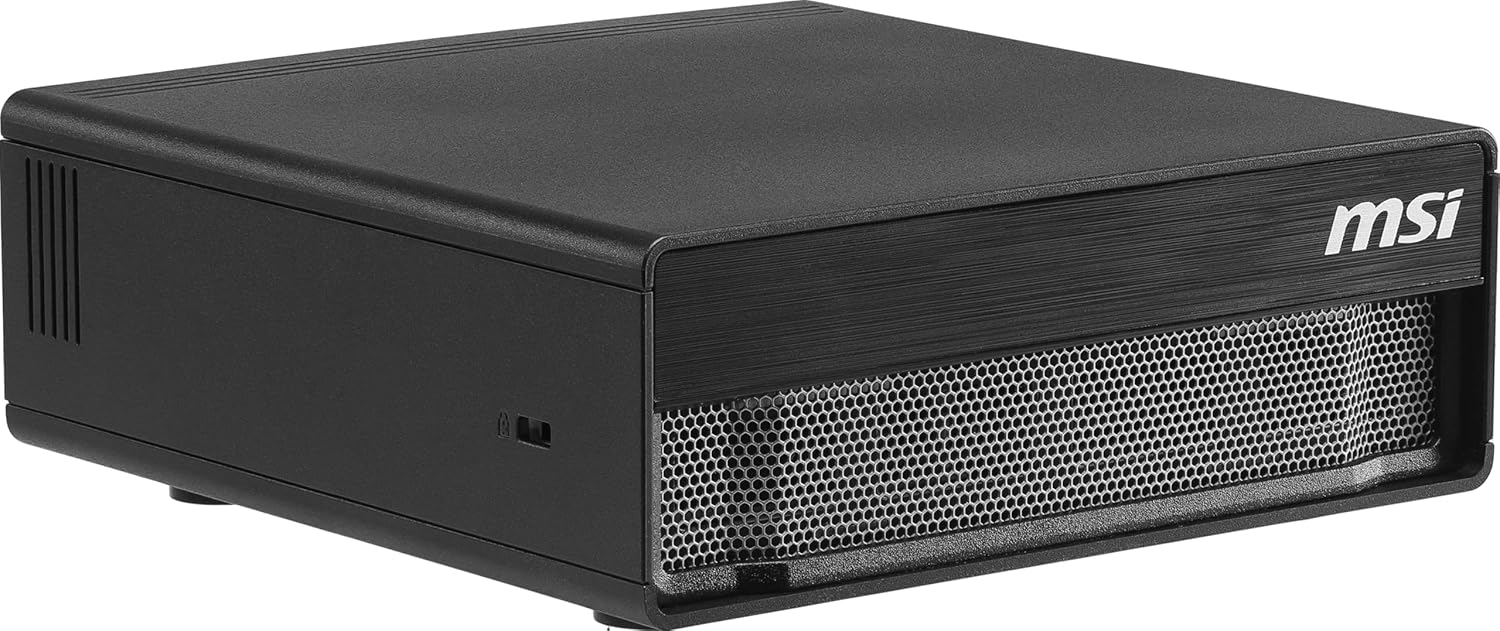
Equipped with the NVIDIA GB10 Grace Blackwell architecture, 128GB of high-bandwidth unified LPDDR5 memory, and a 4TB PCIe Gen5 NVMe SSD, the EdgeXpert13S is engineered to handle demanding generative AI, large language models (LLMs), and advanced edge computing workloads. It comes pre-installed with NVIDIA DGX OS, a Linux-based operating system tuned for machine learning and AI development. The bottom line: this is a highly specialized tool that excels in its intended niche but is not a general-purpose desktop computer.
MSI EdgeXpert AI Mini Desktop NVIDIA GB10 Grace


As an Amazon Associate we earn from qualifying purchases. Product prices and availability are accurate as of the date/time indicated.
msi EdgeXpert13S at a Glance
| Specification | Details |
|---|---|
| Processor | NVIDIA GB10 Grace Blackwell Superchip (20-core Arm: 10 Cortex-X925 + 10 Cortex-A725) |
| AI Performance | Up to 1000 TOPS, supports models up to 200B parameters locally |
| Memory | 128GB LPDDR5X Unified Memory (up to 273 GB/s bandwidth) |
| Storage | 4TB PCIe Gen5 NVMe SSD (up to 10,000 MB/s) |
| Operating System | NVIDIA DGX OS (Ubuntu Linux-based) |
| Connectivity | WiFi 7, Bluetooth 5.3, USB4 Type-C, Ethernet, ConnectX-7 networking |
| Video Output | HDMI |
| Power Consumption | 240 Watts |
| Dimensions | 5.94 x 5.94 x 2.05 inches |
| Weight | 2.65 Pounds |
Design and Build
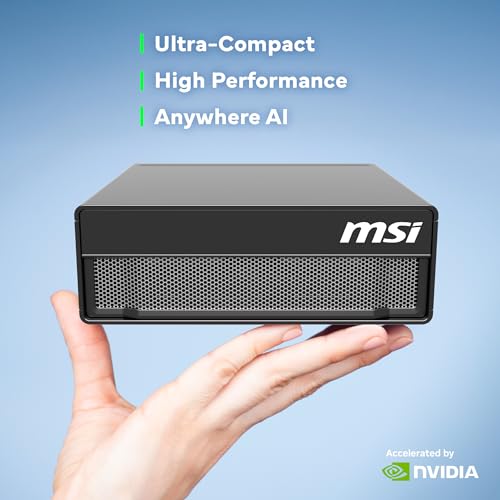
The msi EdgeXpert13S adopts a classic mini PC form factor, measuring just under six inches square and two inches tall, making it exceptionally space-efficient for a system with its computational profile. Its black chassis is designed for professional environments, research labs, or edge deployments where desk or rack space is at a premium. The compact design is a significant advantage for integration into existing setups, but it inherently limits internal expansion options beyond the pre-configured hardware.
The build appears focused on delivering maximum performance per cubic inch, prioritizing thermal management and component integration over user-serviceable parts. The small footprint belies the substantial 240-watt power draw, indicating a dense concentration of high-performance silicon within. This design philosophy makes it ideal for stationary, always-on AI inference or development workstations where physical size matters more than future internal upgrades.
Performance and Features
AI and Compute Performance
The heart of the EdgeXpert13S is the NVIDIA GB10 Grace Blackwell Superchip. This architecture combines high-performance Arm CPU cores with Blackwell GPU technology, delivering up to 1000 TOPS (Trillions of Operations Per Second) of AI performance. This enables users to run and fine-tune large language models with up to 200 billion parameters entirely locally. The system leverages NVLink-C2C technology for high-bandwidth interconnect between the CPU and GPU, which is critical for minimizing latency in AI workloads. For even larger models, the platform supports a dual-system configuration to handle up to 405 billion parameters.
The 128GB of unified LPDDR5X memory, with bandwidth up to 273 GB/s, is a cornerstone feature. Unified memory allows both the CPU and GPU to access the same data pool efficiently, eliminating bottlenecks when shuffling massive datasets and model weights. This is essential for smooth operation of generative AI, computer vision pipelines, and complex machine learning training sessions without constant data transfer lag.
Storage and Data Access
Storage performance is another highlight, centered on a 4TB PCIe Gen5 NVMe SSD capable of sequential read/write speeds up to 10,000 MB/s. This ultra-fast storage drastically reduces model load times, dataset ingestion periods, and checkpoint saving/loading during training. The drive also features self-encrypting capabilities, adding a layer of data security for sensitive research or proprietary models. The combination of high-bandwidth memory and Gen5 storage creates a balanced platform where data can flow quickly between storage, memory, and processors.
Connectivity and Ports
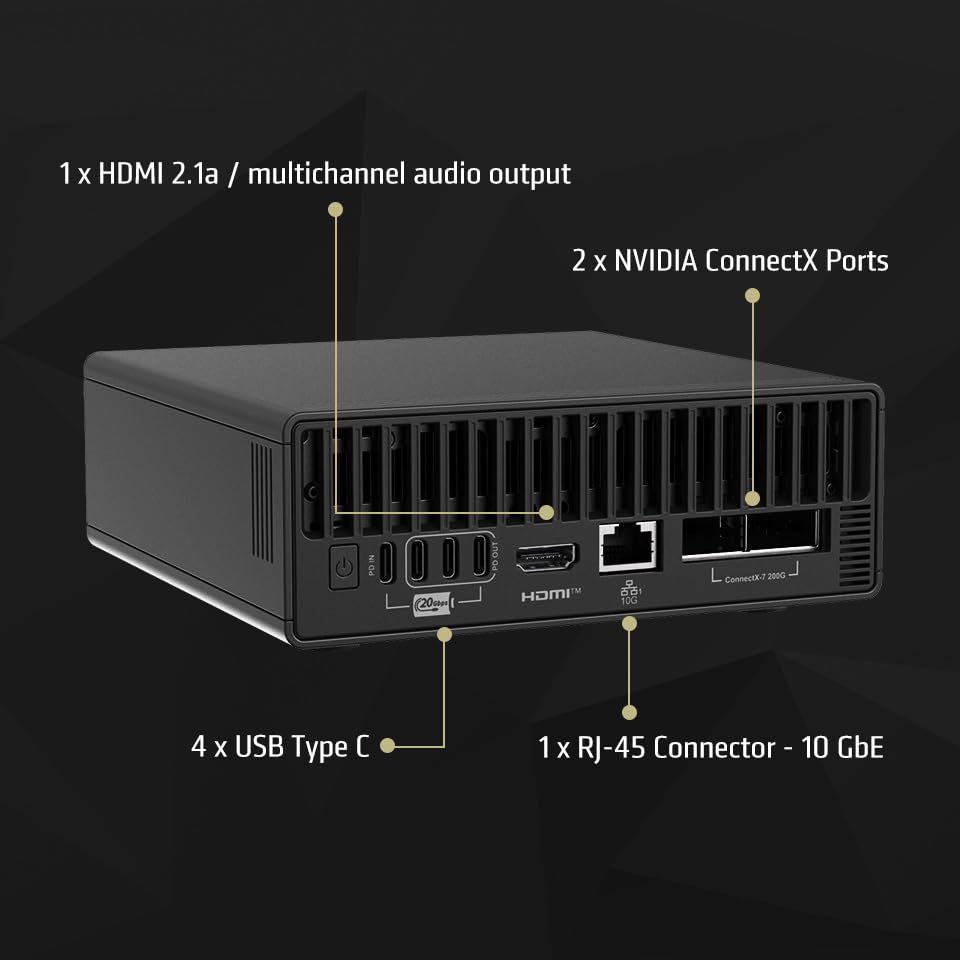
Connectivity is geared towards modern, high-speed environments. It includes next-generation WiFi 7 and Bluetooth 5.3 for wireless peripherals and network access. Wired networking is supported via Ethernet, with the inclusion of ConnectX-7 for high-speed, low-latency networking options crucial for clustered setups or connecting to high-performance storage. Video output is handled by HDMI, and USB4 Type-C ports provide high-speed data transfer and peripheral connectivity. This suite of connections ensures the EdgeXpert13S can integrate into both cutting-edge and traditional enterprise IT environments.
Software and Platform
The system ships with NVIDIA DGX OS pre-installed, a Linux distribution based on Ubuntu that is specifically tuned and optimized for AI development and deployment. This includes drivers, libraries, and frameworks like CUDA and TensorRT pre-configured for the underlying Grace Blackwell hardware. This optimized stack allows developers and researchers to start working immediately without spending days on system configuration and software compatibility troubleshooting. However, the Arm-based CPU architecture means users must verify compatibility for any specific AI tools, libraries, or custom software not yet ported to Arm, which can be a consideration for some workflows.
Setup, Support and Ownership
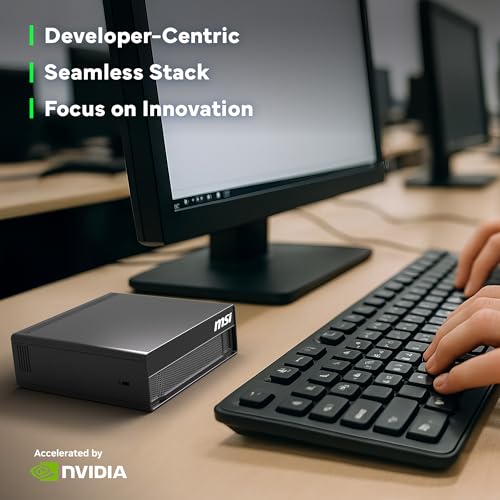
Setup should be straightforward for the target audience. The pre-installed and tuned DGX OS means the system is designed to boot into a ready-to-code AI development environment. Users will need to connect a monitor via HDMI, attach a keyboard and mouse (compatible via Bluetooth or USB), and establish a network connection. The compact, integrated design means there are no user-serviceable internal upgrades listed by the manufacturer; the system is intended to be used as configured.
Support is provided via a one-year manufacturer’s warranty. Given the specialized nature of the hardware and software, users will likely rely on NVIDIA’s and MSI’s documentation and developer communities for ongoing support. The use of a standard, actively maintained Linux base (Ubuntu) for the DGX OS should aid in long-term software updates and security patches. Ownership is centered on a stable, high-performance platform for AI tasks rather than on upgradability or customization.
What Owners Say
Owner feedback, as reflected in the rating distribution, is overwhelmingly positive. The vast majority of reviews are highest-rated, with no critical low ratings reported. This suggests that for buyers whose needs align with the product’s specialized capabilities—running large AI models locally—the msi EdgeXpert13S meets or exceeds expectations. The absence of mid or low-tier ratings indicates a product that is successfully satisfying a specific, technical user base who understand its purpose and limitations. For more insights on specialized AI hardware, see our guide on the best computer servers for AI research.
Pros and Cons
Pros
- Exceptional local AI compute power in a compact desktop form factor.
- Massive 128GB high-bandwidth unified memory efficiently handles large datasets and models.
- Ultra-fast Gen5 SSD storage accelerates data access and model prototyping.
- Next-generation connectivity (WiFi 7, ConnectX-7) for low-latency enterprise setups.
- Pre-installed, optimized DGX OS for AI development reduces setup time.
- Enables full data privacy and instant response times by running models locally.
Cons
- Arm-based architecture may require software compatibility verification for some tools.
- Compact design offers limited internal expansion options.
- Specialized platform best suited for experienced AI users, not general computing.
- Higher power consumption (240W) for a mini PC form factor.
- Video output limited to HDMI, with no listed multi-display or high-refresh-rate support.
- Investment is significant for a single-purpose, non-upgradable system.
Who Should Buy It (and Who Should Skip It)
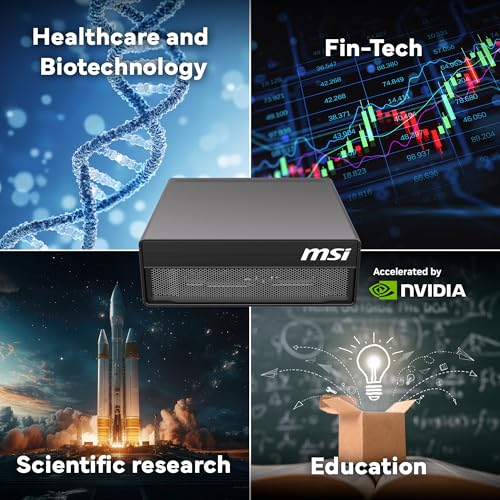
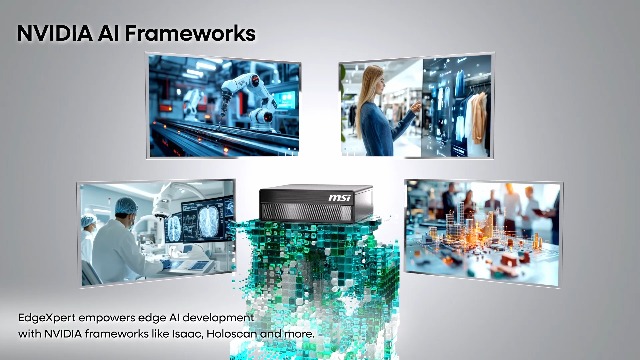
The msi EdgeXpert13S is an ideal purchase for AI developers, data scientists, and researchers in enterprise or academic settings who need to run, fine-tune, or deploy large AI models (up to 200B parameters) on-premises. It’s perfect for workloads where data privacy, low-latency inference, or cloud cost avoidance is paramount. It also suits edge computing deployments in fields like healthcare (with NVIDIA Holoscan), retail, or smart cities where space and local processing power are key. If your work involves generative AI, LLMs, or complex machine learning and you value a pre-configured, space-saving system, this desktop is a compelling solution. For those exploring other compact AI options, our review of the GMKtec Evo X2 AI Mini PC offers an alternative perspective.
This product is not recommended for general users, gamers, or office workers. Its value is almost entirely in its AI acceleration capabilities. Those who need a versatile desktop for gaming, content creation, standard business applications, or who anticipate needing to upgrade components like RAM or GPU should look elsewhere. Similarly, developers whose workflows depend on x86-specific software or who are not comfortable with a Linux-based, Arm-optimized environment should verify compatibility thoroughly before purchasing. For broader technology insights, our Tech Gear section covers a wider range of devices.
Final Verdict
The msi EdgeXpert13S successfully packages data center-class AI performance into a mini desktop, achieving its core mission. The integration of the NVIDIA GB10 Grace Blackwell Superchip, copious high-speed unified memory, and Gen5 storage creates a balanced system capable of tackling demanding local AI tasks that typically require cloud resources or bulky servers. For the target professional, the benefits of data sovereignty, instant response, and a pre-tuned software stack are significant and justify the platform’s specialized nature.
However, this is not a product for everyone. Its strengths are narrow and deep. The Arm architecture and limited upgrade path mean it demands a deliberate purchase decision aligned with a specific technical workflow. Within the niche of local AI model development and edge inference, the EdgeXpert13S stands out as a powerful, integrated solution. Outside of that niche, it offers little advantage over more conventional desktops. It represents a focused tool for a focused task, executed with high-grade components and engineering.
FAQs
What kind of AI models can the msi EdgeXpert13S run?
The system is designed to run large AI models locally, supporting models with up to 200 billion parameters on a single unit. This includes large language models (LLMs) from organizations like DeepSeek, Meta, and Google. For even larger models, a dual-system configuration can handle up to 405 billion parameters. It is optimized for generative AI, inference workloads, and machine learning training at the edge.
What operating system does it use, and can I install Windows?
The msi EdgeXpert13S comes pre-installed with NVIDIA DGX OS, which is a Linux distribution based on Ubuntu that is specifically tuned for AI development and the underlying Grace Blackwell Arm architecture. The manufacturer does not list official support for Windows or other operating systems. The Arm-based CPU may present compatibility challenges with standard desktop Windows distributions.
Can I upgrade the RAM or storage later?
The compact, integrated design suggests limited internal expansion options. The manufacturer specifications list the RAM as 128GB installed with a maximum size also listed as 128GB, indicating it is likely soldered and not user-upgradable. While the storage is a standard NVMe SSD, the ultra-compact form factor and specialized motherboard may make user upgrades difficult or unsupported. It is best viewed as a pre-configured appliance.
Is this suitable for gaming or general home use?
No, the msi EdgeXpert13S is not designed for gaming or general home use. Its hardware and software are optimized exclusively for AI and machine learning workloads. It uses an Arm-based CPU and a Linux OS tuned for developers, not a standard x86 Windows environment for games and consumer applications. Its video output is listed as HDMI without specifications for high refresh rates or advanced gaming features. For more on devices suited for different needs, explore our Blog.
About the author

Elvis Dicki writes reviews and buying guides for CyberSecLabs.