Ugreen DXP2800 Review: A Capable 2-Bay NAS for Enthusiasts
The Ugreen DXP2800 offers strong pro-spec performance with an Intel N100 processor and 2.5GbE networking in a user-friendly NAS package, ideal for those moving away from cloud services.
 By Elvis Dicki
Updated October 22, 2026
In the expanding market for personal network-attached storage, the Ugreen DXP2800 emerges as a contender aimed at enthusiasts and content creators looking to centralize their data. This 2-bay desktop NAS positions itself as an all-round solution, promising professional specifications wrapped in accessible software. With a focus on moving users away from scattered cloud storage and external drives, it aims to provide a secure, private platform for managing digital assets. For those seeking control over their data without recurring subscription fees, the DXP2800 presents a compelling one-time investment.

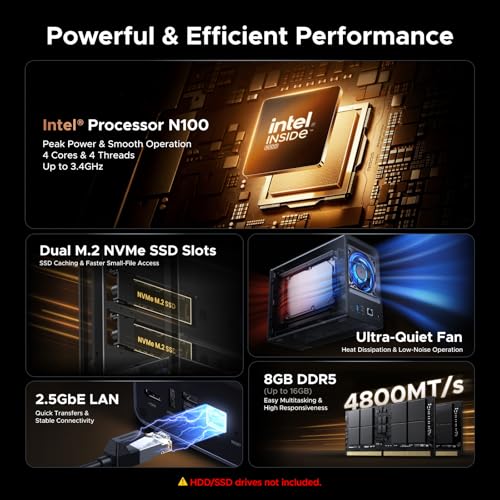
The device is a diskless enclosure, meaning users must supply their own hard drives, but it comes equipped with an Intel N100 quad-core processor, 8GB of DDR5 RAM, and a 2.5-gigabit Ethernet port for faster network transfers. It also includes two M.2 NVMe slots for caching or storage expansion and a 4K HDMI output, broadening its potential uses beyond simple file serving. This review examines whether the DXP2800’s blend of hardware and user-friendly features delivers on its promise of being an intuitive and powerful private cloud for home and small team use.
Prime UGREEN NAS DXP2800 2-Bay Desktop NAS Intel N100






As an Amazon Associate we earn from qualifying purchases. Product prices and availability are accurate as of the date/time indicated.
Ugreen DXP2800 at a Glance
| Specification | Detail |
|---|---|
| Model | DXP2800 |
| Form Factor | 2-Bay Desktop |
| CPU | Intel N100 Quad-Core |
| Memory | 8GB DDR5 |
| Networking | 1x 2.5GbE Port |
| Expansion Slots | 2x M.2 NVMe |
| Video Output | 4K HDMI |
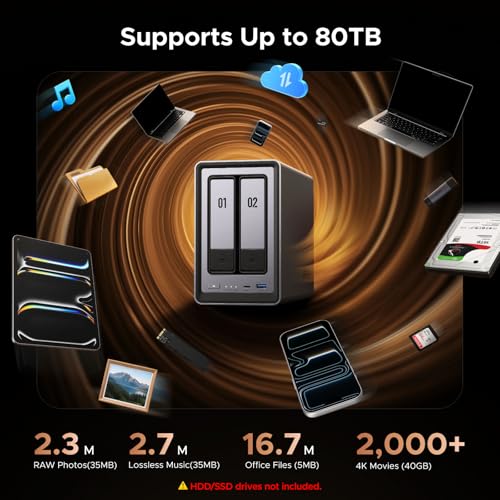
| Max Advertised Capacity | 80TB |
| Drive Interface | SATA |
| Compatible Drive Form Factor | 3.5-inch |
Design and Build
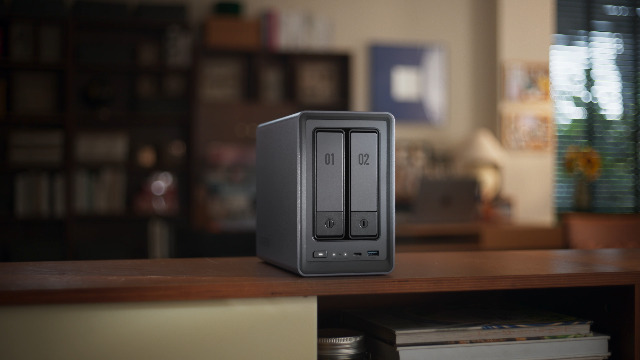
The Ugreen DXP2800 adopts a desktop form factor designed to fit discreetly into a home office or studio setup. The unit is listed as being grey in color, with a design that presumably prioritizes function and cooling for the internal components. As a diskless system, its build is centered around the chassis, power supply, and mainboard, with users expected to install their own 3.5-inch SATA hard drives. The inclusion of two M.2 NVMe slots internally offers flexibility for adding fast cache drives or additional SSD storage, a feature that enhances the NAS’s performance potential beyond the primary drive bays.
The manufacturer notes the device supports a wide range of third-party hard drives from brands like Western Digital, Seagate, and Toshiba, though users are advised to check a compatibility list. The physical construction is described as including a dust-resistant feature, which can help maintain system longevity in typical home environments. The overall design philosophy appears focused on providing a robust platform for the capable internal hardware, rather than standout aesthetics, positioning it as a practical workhorse for data storage tasks.
Performance and Features
Processing and Network Performance
At the heart of the DXP2800 is a 12th Generation Intel N100 processor, a quad-core CPU designed for efficient performance in compact devices. This is paired with 8GB of DDR5 RAM, a combination the manufacturer claims allows the NAS to comfortably run multiple applications simultaneously without slowdowns. For network connectivity, a single 2.5-gigabit Ethernet port is provided, which UGREEN states can transfer a 1GB file in as little as three seconds under ideal conditions. The manufacturer clarifies that actual transfer speeds will vary depending on the user’s router, the CPU of connected devices, the drives used, and file sizes. This wired-only networking approach means the DXP2800 does not support Wi-Fi, requiring a physical Ethernet connection to the local network.
Storage Capacity and Configuration
The NAS supports a maximum advertised storage capacity of 80 terabytes. It is crucial to note that this figure is based on using a RAID 0 configuration with compatible high-capacity drives, which stripes data across disks for capacity but offers no redundancy. The device is sold diskless, so the total available storage and the chosen RAID configuration (for redundancy or performance) are entirely dependent on the user’s purchased hard drives. The dual M.2 NVMe slots add further flexibility, allowing users to install fast SSDs for caching, which can accelerate access to frequently used data, or to host applications and virtual machines.
Software and Platform Features
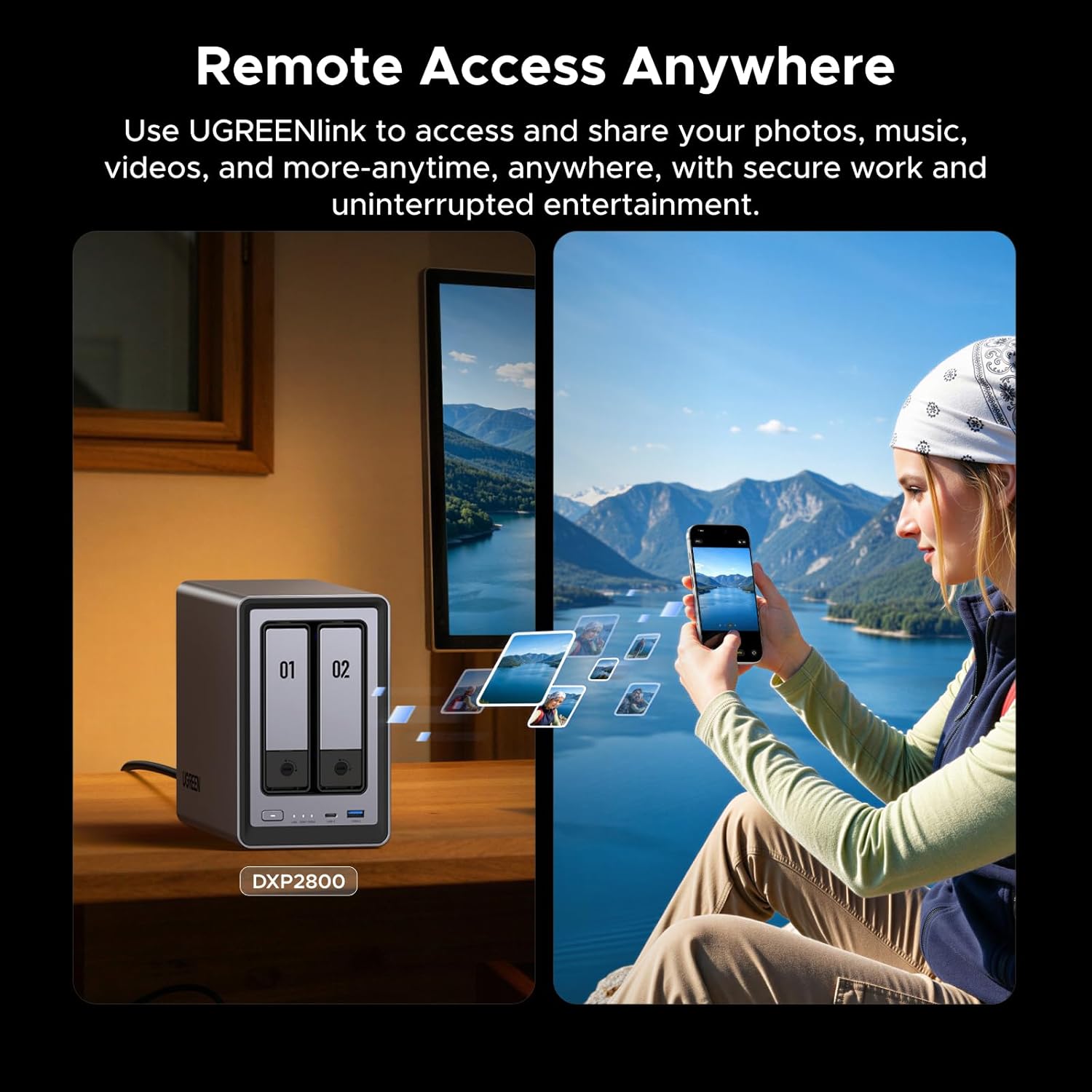
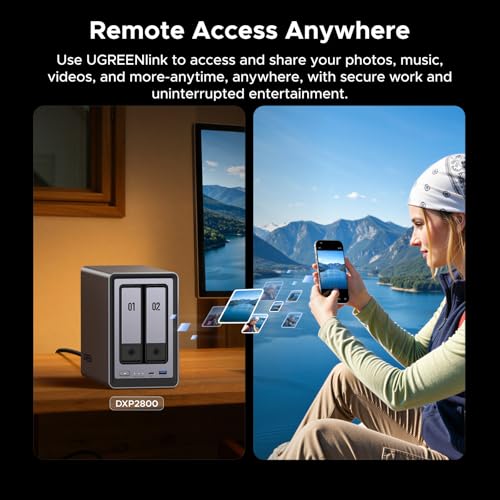
UGREEN promotes the DXP2800’s software as being intuitive, particularly for users transitioning from cloud storage or external drives. A user-friendly app enables simple setup and file sharing across Windows, macOS, Android, iOS, web browsers, and smart TVs. A standout software feature is an AI-powered photo album that automatically organizes photos by recognizing faces, scenes, objects, and locations, and can remove duplicates. The system also allows for the creation of a secure private cloud, with advanced encryption giving users full control over their data. For media enthusiasts, the 4K HDMI output enables direct connection to a display for media playback, turning the NAS into a potential media center hub.
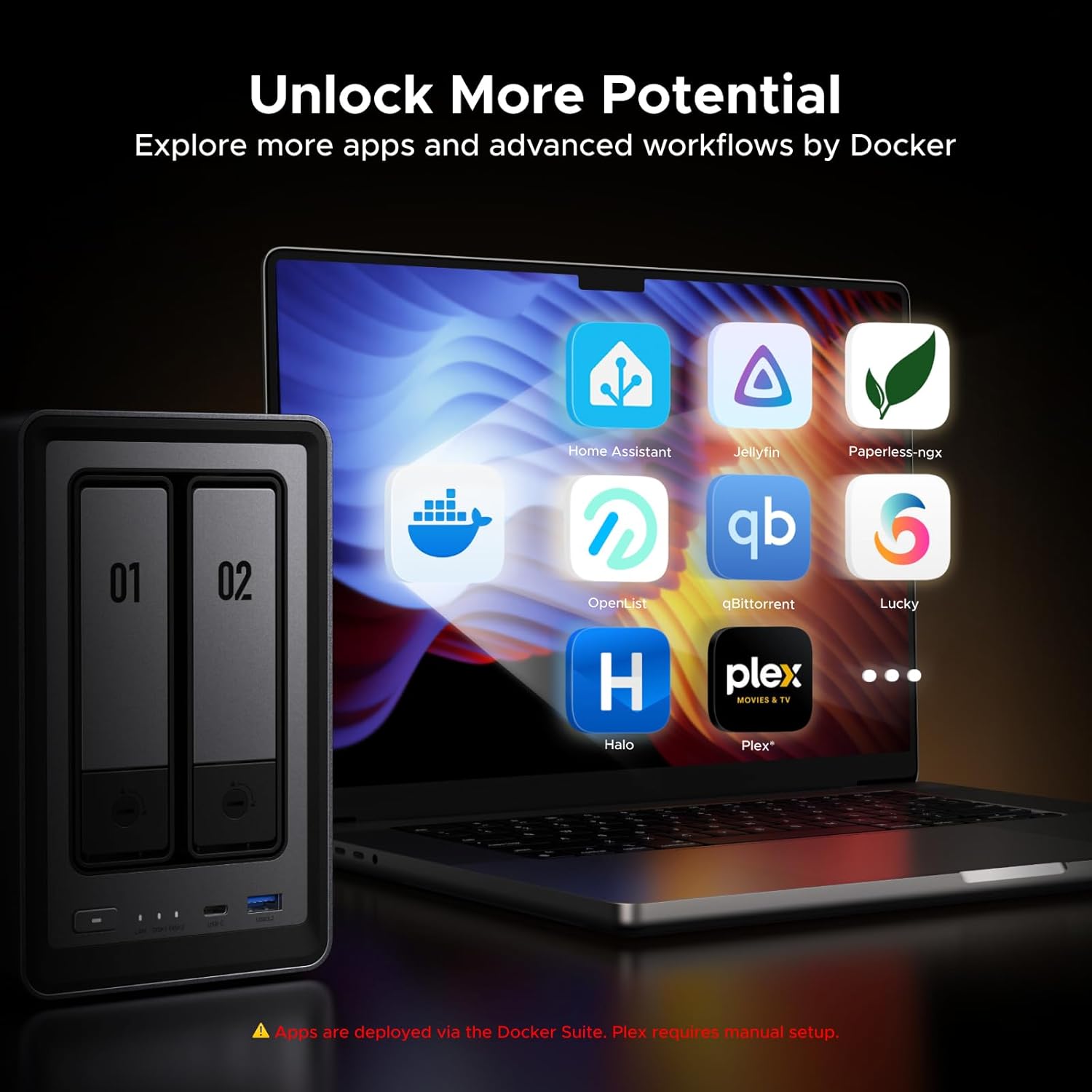
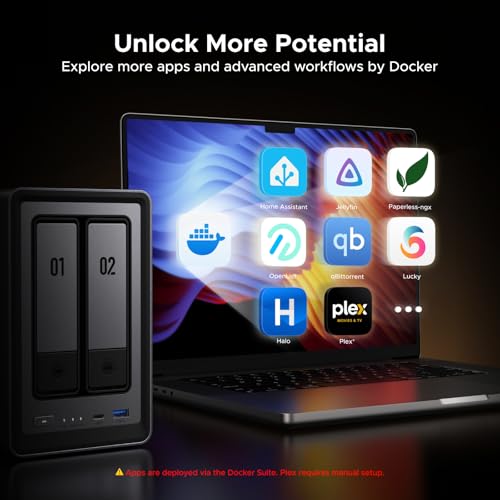
The platform supports Docker and virtual machines, according to the manufacturer, which significantly expands its functionality for tech-savvy users. Services like Plex Media Server can be run via Docker. This makes the DXP2800 not just a file server but a potential lightweight home server for running various self-hosted applications, a topic often explored in AI & Software discussions for home labs.
Setup, Support and Ownership
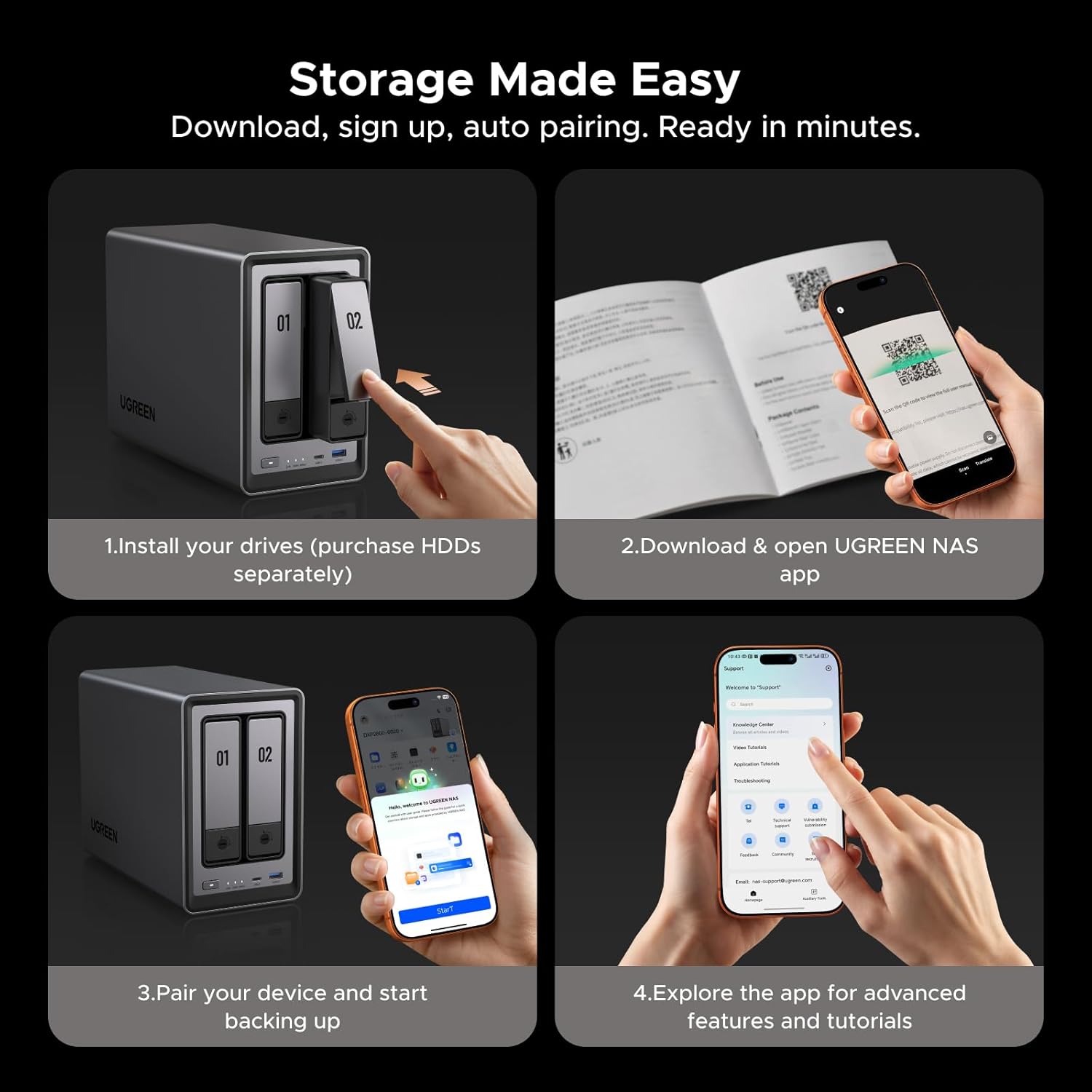
Setup begins with the user installing their own compatible 3.5-inch SATA hard drives into the bays. The manufacturer emphasizes a simple setup process through their app, which is designed to guide users through initialization. Since the unit is diskless, the total cost of ownership includes the price of the drives, which must be purchased separately. UGREEN offers a two-year warranty on the DXP2800 unit itself and mentions 24/7 specialist support, indicating a commitment to post-purchase assistance. The absence of recurring fees is a key ownership benefit highlighted by UGREEN, positioning the NAS as a cost-effective long-term alternative to cloud storage subscriptions.
Owners have the flexibility to upgrade the hard drives in the future to increase capacity or performance. The compatibility with major third-party drive brands gives users a wide choice in selecting storage that fits their budget and performance needs, whether focusing on high capacity for archives or faster drives for active projects. The support for Docker and VMs also means the device’s functionality can evolve with the user’s skills, much like how one might configure a server for network security management in a professional setting, albeit at a smaller scale.
What Owners Say
Based on the available data, the Ugreen DXP2800 has garnered a high rating from users, indicating general satisfaction with its performance and value proposition. The consensus among owners likely reflects appreciation for the capable hardware specifications—such as the Intel N100 processor and 2.5GbE networking—at this price point for a diskless NAS. Users moving from basic external drives or cloud services probably find the centralized storage and private cloud features to be a significant upgrade. The intuitive software and AI photo management are features that would resonate with content creators and photography enthusiasts looking to organize large media libraries.
Potential points of feedback from owners would logically include the necessity of buying drives separately, which adds to the initial cost and complexity. The wired-only design, lacking Wi-Fi, may also be noted as a limitation for some home setups where running an Ethernet cable is inconvenient. However, the overall positive rating suggests that for its target audience—enthusiasts and creators willing to invest in a local storage solution—the DXP2800 delivers on its core promises of performance, capacity, and data control.
Pros and Cons
Pros
- Strong multitasking performance from Intel N100 and 8GB DDR5 RAM
- Fast 2.5-gigabit Ethernet port for quick network file transfers
- Flexible expansion via dual M.2 NVMe slots
- Intuitive software and setup ideal for users switching from cloud storage
- AI-powered photo organization and duplicate removal
- Advanced encryption keeps data under user control in a private cloud
- No recurring fees, offering long-term value versus cloud subscriptions
- Wide compatibility with third-party hard drives
Cons
- Hard drives must be purchased separately, adding to cost
- Supports wired Ethernet only with no built-in Wi-Fi option
- Maximum advertised 80TB capacity requires RAID 0 configuration (no redundancy)
- Initial setup requires drive installation and configuration
- Performance dependent on user-purchased drive quality
- Physical size requires desktop space and wired network connection
Who Should Buy It (and Who Should Skip It)
The Ugreen DXP2800 is an excellent fit for content creators, photography enthusiasts, and home lab users who have outgrown scattered external drives or expensive cloud subscriptions. Its AI photo management, 4K HDMI output, and support for Docker make it particularly appealing for those who want to organize large media libraries or run self-hosted applications. It’s also a solid choice for small teams or households needing a centralized, secure repository for files that can be accessed from any device. Users comfortable with installing their own hard drives and seeking a one-time purchase for long-term, high-capacity storage will find great value here.
This NAS is less suitable for users seeking an absolutely plug-and-play solution, as it requires purchasing and installing drives. Those without a convenient Ethernet port near their setup should skip it due to the lack of Wi-Fi. Users requiring massive, redundant storage out of the box might prefer a pre-configured system, though the DXP2800 can be set up for redundancy with the right drive configuration. It may also be overkill for someone with very basic backup needs who would be satisfied with a simple external drive or a lower-cost, lower-performance NAS.
Final Verdict
The Ugreen DXP2800 successfully carves out a space in the enthusiast NAS market by offering pro-spec hardware in a user-friendly package. The combination of the Intel N100 processor, generous DDR5 RAM, and a 2.5GbE network port provides a foundation for snappy performance, whether serving files, running multiple apps, or organizing photos with AI. The inclusion of M.2 slots and HDMI output adds valuable flexibility for future expansion and direct media playback. For the target audience of content creators and tech enthusiasts, it represents a powerful tool to gain control over their digital assets.
While the diskless nature and wired-only connectivity are important considerations, they are trade-offs for the performance and value offered. For those willing to make the initial investment in drives and network setup, the DXP2800 delivers a capable and secure private cloud that eliminates monthly fees. It stands as a compelling alternative to both consumer cloud services and more complex enterprise-grade solutions, much like how specialized VPN routers offer advanced features for specific security needs. If you’re looking to centralize your data with room to grow and experiment, the Ugreen DXP2800 is a strong contender worthy of consideration.
FAQs
Does the Ugreen DXP2800 come with hard drives?
No, the Ugreen DXP2800 is sold as a diskless system. This means the enclosure, processor, RAM, and networking hardware are included, but you must purchase 3.5-inch SATA hard drives separately and install them yourself. UGREEN states compatibility with drives from Western Digital, Seagate, Toshiba, and others, but recommends checking their compatibility list.
Can I use the DXP2800 wirelessly?
No, the DXP2800 supports wired Ethernet connectivity only via its 2.5-gigabit Ethernet port. It does not have built-in Wi-Fi. This means you must connect it directly to your router or a network switch using an Ethernet cable to integrate it into your home network and access it from other devices.
What is the maximum storage capacity?
The manufacturer advertises a maximum capacity of 80 terabytes. It is important to understand that this figure is based on using a RAID 0 configuration with compatible high-capacity drives. RAID 0 combines drive capacities but offers no data redundancy. Your actual maximum capacity will depend on the size and number of drives you install and the RAID configuration you choose.
Can I run Plex Media Server on the DXP2800?
Yes, according to the manufacturer’s specifications, you can run Plex Media Server on the Ugreen DXP2800. The device supports Docker, and Plex can be installed and run via a Docker container. The Intel N100 processor and hardware transcoding support should provide sufficient performance for streaming media to various devices on your network.
About the author

Elvis Dicki writes reviews and buying guides for CyberSecLabs.