Nvidia Tesla P40 Review: A 24GB Pascal GPU for Deep Learning Inference
The NVIDIA Tesla P40 is a data center GPU offering high-throughput deep learning inference with 24GB of ECC-protected memory, though it requires specific setup for consumer systems.
 By Elvis Dicki
Updated October 22, 2026
In the landscape of artificial intelligence and machine learning, deploying trained models efficiently is as critical as training them. The Nvidia Tesla P40 is a professional-grade GPU accelerator built specifically for this inference phase, leveraging the Pascal architecture to deliver high computational throughput. This product is not a consumer graphics card but a specialized compute card designed for data center and server environments, targeting users who need to run complex AI models at scale with low latency.

For engineers, researchers, and IT professionals managing virtualization or AI inference servers, the Tesla P40 presents a compelling proposition with its large memory footprint and INT8 performance. The bottom line is that the Tesla P40 excels at accelerating deep learning inference workloads in supported server environments, but its passive cooling and specific power requirements make it a challenging fit for standard desktop PCs without modification and technical know-how.
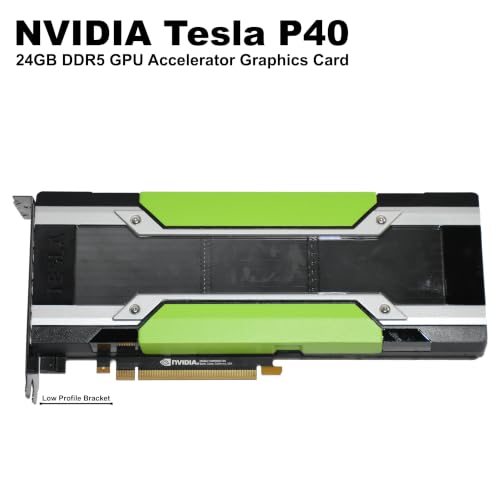
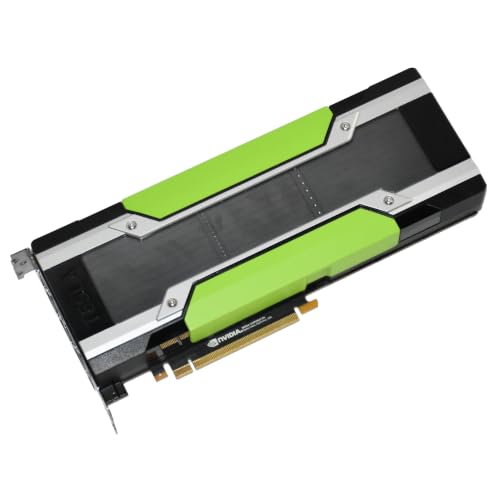
NVIDIA Tesla P40 24GB GDDR5 PCIe 3.0 x16 GPU


As an Amazon Associate we earn from qualifying purchases. Product prices and availability are accurate as of the date/time indicated.
Nvidia Tesla P40 at a Glance
| Specification | Detail |
|---|---|
| GPU Architecture | NVIDIA Pascal |
| Memory | 24 GB GDDR5 |
| Memory Bandwidth | 346 GB/s |
| Single-Precision Performance | 12 TeraFLOPS |
| INT8 Performance | 47 TOPS |
| System Interface | PCI Express 3.0 x16 |
| Max Power | 250W |
| ECC Protection | Yes |
| Cooling | Passive (requires active airflow) |
| Key Feature | Page Migration Engine |
Design and Build
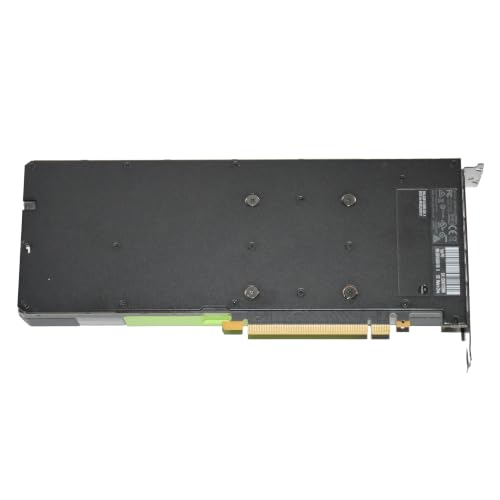
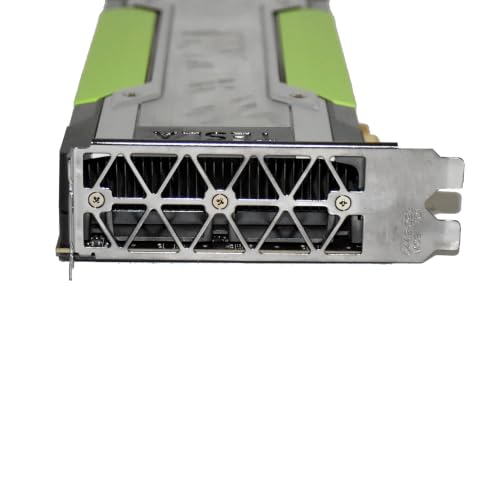
The Tesla P40 adopts a server-optimized form factor with a fully passive heatsink, a design choice intended for chassis with high-velocity front-to-back airflow typical in data center racks. This means the card itself has no fans, relying entirely on the system’s cooling infrastructure to dissipate heat. The build is professional and robust, in line with its data center deployment purpose. It is not listed by the manufacturer as being designed for consumer desktop cases, which is a crucial consideration for potential buyers. The card requires specific power connectors; according to user feedback, it needs a CPU-style power cable rather than standard PCIe power cables, and some bundled adapters have been reported as unreliable.
Performance and Features
Compute Performance for AI
The core value of the Tesla P40 lies in its inference capabilities. With 47 Tera-Operations Per Second (TOPS) of INT8 performance and 12 TeraFLOPS of single-precision (FP32) performance, it is engineered to handle deep learning models with high throughput. NVIDIA’s data suggests a single server equipped with multiple P40s can deliver performance equivalent to over 140 CPU servers for inference tasks, with over 30 times lower latency than a CPU. This makes it suitable for deploying large, complex models where real-time responsiveness is critical.
Memory and Data Integrity
A standout feature is the 24GB of GDDR5 memory, coupled with a 346 GB/s bandwidth. This large, high-bandwidth memory pool is essential for holding extensive neural network models without constant data swapping. The inclusion of Error-Correcting Code (ECC) protection is a key data center feature, ensuring reliability for continuous operation by detecting and correcting memory errors. The Page Migration Engine enhances programmability and efficiency in memory management, which is beneficial for virtualization workloads.
Virtualization and Video Engines
The Tesla P40 is server-optimized for data center deployment and supports virtualization for multi-user environments, such as in a vDWS (Virtual Desktop Workstation) setup. It also includes a hardware-accelerated video engine with one decode and two encode engines, supporting tasks like video transcoding. This combination of compute and media acceleration makes it applicable for scenarios like AI-powered video analysis or cloud gaming streaming services, as noted in user reviews.
Setup, Support and Ownership
Setting up the Tesla P40 in a non-server environment requires technical effort. User reviews indicate that “Above 4G Decoding” must be enabled in the system BIOS for proper operation. The passive cooling design necessitates adding an external blower fan unless installed in a server chassis with directed high airflow. Driver support is a consideration; newer NVIDIA drivers have reportedly dropped support for the Pascal-based Tesla series, potentially limiting future software updates. For ongoing support, users must rely on NVIDIA’s enterprise channels or community forums, as this is not a consumer GeForce product. For those building dedicated systems, exploring options for the best computer server for AI research may provide a more compatible foundation.
What Owners Say
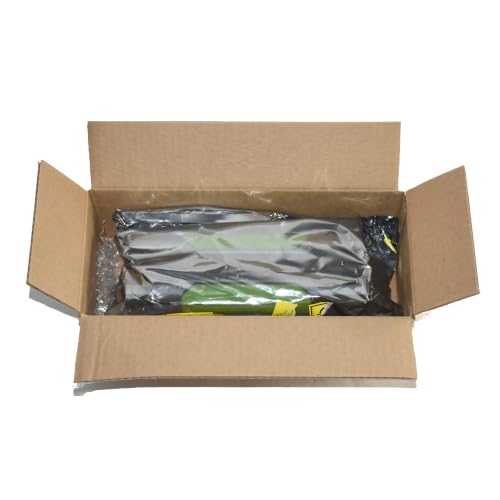
Owner feedback highlights both the card’s potential and its complexities. The overall rating is mixed, with a significant portion of reviews being highly positive and another portion being critical. Positive reviews praise the card’s performance for AI inference and virtualization when set up correctly, with one user stating it “works if you really know what you’re doing” and another confirming it’s “made for virtualization.” Critical reviews mention issues with damaged units upon arrival and hazardous power cables, with one report of a bundled cable burning. The rating distribution shows most users who left reviews had a positive experience, but there is a notable segment reporting significant problems, underscoring the importance of purchasing from a reputable seller and being prepared for a hands-on setup process.
Pros and Cons
Pros
- High-throughput performance for deep learning inference
- Large 24GB memory capacity for complex models
- ECC protection ensures data integrity for server use
- Passive design ideal for dense, managed server racks
- Supports server virtualization for multi-tenant environments
- Hardware-accelerated video encode/decode engines
Cons
- Requires specific BIOS settings (Above 4G Decoding)
- Passive cooling needs added airflow in non-server cases
- Uses non-standard CPU power cables, not typical PCIe
- Newer drivers may lack support for Pascal architecture
- Not designed for plug-and-play consumer desktop use
- Risk of receiving faulty accessories like power cables
Who Should Buy It (and Who Should Skip It)
The Nvidia Tesla P40 is a strong buy for professionals with the right infrastructure. This includes IT administrators building or maintaining inference servers for AI applications, researchers needing a cost-effective compute accelerator with large memory for model deployment, and developers working in virtualized environments like NVIDIA vDWS. It is also suitable for those building specialized systems for video processing or cloud streaming where its combined compute and media engines are utilized.
Conversely, most users should skip this card. It is not intended for gamers, general PC enthusiasts, or anyone seeking a straightforward upgrade for a desktop computer. Individuals without experience in server hardware, BIOS configuration, or managing active cooling solutions will likely encounter significant hurdles. Those looking for a simpler path to AI development might consider a dedicated AI mini PC instead. For cutting-edge AI training, researchers would be better served investigating the latest high-performance servers for AI applications.
Final Verdict
The Nvidia Tesla P40 is a specialized tool that excels in its intended domain. Its 24GB of ECC memory and high INT8 throughput make it a potent accelerator for deploying demanding deep learning models, offering tangible performance benefits over CPUs in latency-sensitive inference scenarios. When integrated into a proper server environment with adequate cooling and power, it delivers on its promise of scalable, reliable compute for AI and virtualization workloads.
However, its value is heavily contingent on the user’s technical capability and infrastructure. The need for BIOS modifications, active cooling solutions, and careful attention to power cabling transforms what could be a simple component installation into a project. It is not a consumer product, and treating it as one leads to frustration. For the right user with a compatible server rack or a willingness to engineer a custom cooling solution, the Tesla P40 represents significant computational power. For everyone else, it serves as a reminder that data center hardware belongs in the data center.
FAQs
Can I use the Tesla P40 for gaming?
No, the Tesla P40 is not designed for gaming. It is a compute accelerator lacking standard display outputs and consumer graphics drivers optimized for games. Its purpose is for computational workloads like AI inference, scientific computing, and virtualization in server environments.
What do I need to cool the Tesla P40 in a desktop case?
The Tesla P40 has a passive heatsink and requires active airflow over its fins to cool. In a standard desktop case, this typically means installing a dedicated PCIe slot blower fan to push air across the card. Without such active cooling, the GPU will overheat quickly.
Does the Tesla P40 support the latest NVIDIA drivers?
Support may be limited. User feedback and editor notes indicate that newer NVIDIA drivers have dropped support for the Pascal-based Tesla series. Users will likely need to seek out and install older, compatible enterprise or data center drivers to operate the card.
Is the power cable included with the card safe to use?
Owner reviews report mixed experiences with included power cables, with at least one instance of a cable burning. It is advised to exercise caution and consider sourcing a high-quality, compatible CPU-style 8-pin power cable or a verified adapter from a reputable manufacturer to ensure safe operation.
About the author

Elvis Dicki writes reviews and buying guides for CyberSecLabs.