Synology 2.2GHz Review: Rackmount NAS for Backup & Virtualization
The Synology RackStation RS1221+ is a powerful, high-capacity NAS server designed for business-critical roles like backup, file storage, and virtualization, featuring ECC memory and a comprehensive software suite.
 By Elvis Dicki
Updated October 22, 2026
In the realm of enterprise data management, a reliable and versatile network-attached storage (NAS) solution is a cornerstone of operational security and efficiency. The Synology 2.2GHz, formally the RackStation RS1221+, enters this space as a pre-configured rackmount server designed to tackle a variety of demanding server roles. This unit is positioned for small to medium businesses or IT departments requiring a centralized system for backup, file storage, email servers, domain controllers, and virtualization. With its substantial hardware specifications and the renowned Synology DiskStation Manager (DSM) operating system, it aims to be an all-in-one workhorse for data-centric environments.

Targeting users who need to consolidate services and ensure data integrity, this NAS server bundles a powerful AMD Ryzen CPU, a significant amount of Error-Correcting Code (ECC) memory, and a massive amount of raw storage capacity. The inclusion of a sliding rail kit underscores its design for professional data center or server rack installation. For organizations looking to streamline their infrastructure with a tool that can handle both storage and application hosting, the Synology RackStation RS1221+ presents a compelling, if premium, package that merits a close look at its specifications and intended use cases.
Prime Synology RackStation RS1221+ NAS Server Ryzen CPU


As an Amazon Associate we earn from qualifying purchases. Product prices and availability are accurate as of the date/time indicated.
Synology 2.2GHz at a Glance
| Specification | Detail |
|---|---|
| Model | Synology RackStation RS1221+ |
| CPU | AMD Ryzen V1500B 4-Core, 2.2GHz |
| Memory | 32GB DDR4 ECC SODIMM |
| Pre-installed Storage | 80TB (8 x 10TB SATA 3.5″ HDDs) |
| Network Ports | 4 x RJ-45 1GbE LAN (Link Aggregation/Failover) |
| Expansion Ports | 2 x USB 3.2, 1 x eSATA |
| File Systems | EXT4, Btrfs |
| Form Factor | Rackmount NAS Server |
| Included Accessory | Sliding Rail Kit |
| Primary Use Cases | Backup, Virtualization, File Storage, Email & Domain Servers |
Design and Build
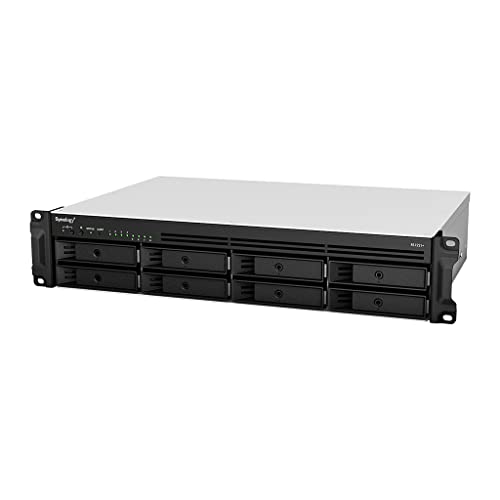
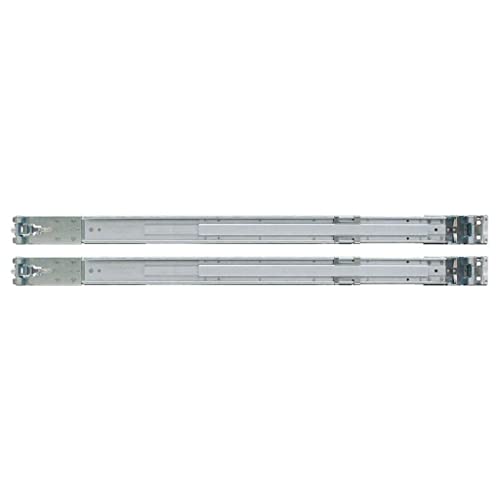
The Synology RackStation RS1221+ is built with a standard rackmount form factor, designed for integration into professional server environments. Its construction is focused on utility and standard compatibility rather than consumer aesthetics. A key design consideration highlighted by the manufacturer is the inclusion of a sliding rail kit, which is bundled to facilitate what is described as “effortless server installation” into a standard server rack. This detail is significant for IT administrators, as it removes the need for a separate purchase and simplifies the physical deployment process in a data center or server closet.
It is important to note a specific aspect of the build and packaging as stated in the product details: the NAS chassis arrives in a sealed box, with the hard drives and memory upgrades included separately and not pre-installed. This means the end user or IT staff must perform the installation of these core components. While this allows for verification of components and potential customization at setup, it adds a manual step to the deployment process that requires technical familiarity. The design supports eight 3.5-inch SATA drive bays, which are populated with the included drives to achieve the advertised 80TB capacity.
Performance and Features
Processing Power and Memory
At the heart of this system is an AMD Ryzen V1500B processor, a quad-core CPU with a base clock speed of 2.2GHz. This embedded-grade processor is designed for efficiency and reliability in always-on systems. Paired with this CPU is 32GB of DDR4 ECC (Error-Correcting Code) SODIMM memory. ECC memory is a critical feature for business and server applications, as it can detect and correct common types of internal data corruption, thereby protecting against crashes and data errors in mission-critical environments. This combination provides a solid foundation for running multiple virtual machines, database applications, and the extensive suite of Synology software services.
Storage Capacity and Connectivity
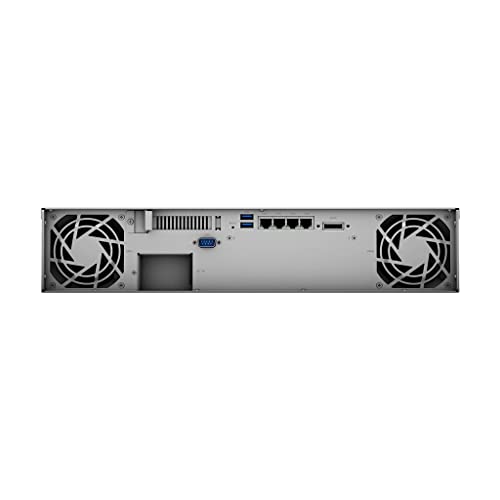
The primary offering here is massive raw storage. The system is bundled with eight 10TB SATA hard drives, providing a total of 80TB of capacity. This high-capacity storage is aimed at handling growing enterprise data demands for files, backups, and archives. For network connectivity, the device is equipped with four 1-gigabit Ethernet (1GbE) LAN ports. These ports support link aggregation and failover protocols. Link aggregation allows multiple ports to be combined to increase total network bandwidth and throughput, while failover ensures network redundancy if one connection fails. For additional peripheral or expansion connectivity, the unit provides two USB 3.2 ports and one eSATA port.
Software and Security Ecosystem
The true power of any Synology NAS is unlocked through its DiskStation Manager (DSM) operating system. The RS1221+ leverages this platform to offer a vast array of features. It supports the Btrfs file system, which enables advanced data integrity features like snapshots and checksums. Key software roles and packages listed include iSCSI Target for creating block-level storage networks, Virtual Machine Manager for hosting VMs, and Synology High Availability for creating failover clusters. For security, it integrates AES 256-bit encryption for volumes, two-factor authentication (2FA) for user accounts, and a Security Advisor tool.
Beyond core storage, the software suite extends to comprehensive backup solutions like Active Backup for VMware, Windows, Office 365, and G Suite. Collaboration is facilitated through Synology Drive and the Collaboration Suite, while multimedia serving and surveillance are covered with 4K Multimedia Server and Surveillance Station roles. This makes the device exceptionally versatile, capable of acting as a unified platform for network security management, data backup, and team productivity tools.
Setup, Support and Ownership
The initial setup process involves the physical installation of the separately packaged hard drives and memory into the NAS chassis, as explicitly noted by the manufacturer. This requires opening the server, correctly seating the RAM modules, and installing eight 3.5-inch hard drives into the drive bays. Following this hardware assembly, the standard Synology DSM setup via a web browser would guide the user through configuring the storage pool, volumes, and network settings. The included sliding rail kit should be used to securely mount the unit in a standard 19-inch server rack.
For ongoing ownership, Synology provides regular updates to the DSM operating system, which include security patches, new features, and performance improvements. The manufacturer’s warranty details are not specified in the provided data, but Synology typically offers a standard limited warranty for its products. The depth of built-in software support—from Central Management System for overseeing multiple Synology devices to the extensive application suite—reduces the need for many third-party software licenses. However, users should be aware that some advanced packages within DSM may require separate licensing or subscription fees for full functionality, particularly for surveillance camera channels or advanced backup agents.
What Owners Say
As this is a newly listed or specialized product, there are no available buyer review excerpts or rating distributions from the provided data. This absence of user feedback means prospective buyers must rely solely on the manufacturer’s specifications, the reputation of the Synology brand, and the proven track record of the DSM software platform when evaluating this particular configuration. It underscores the importance of understanding the detailed specs and intended use cases before purchase. For insights on other critical tech infrastructure, readers often explore resources on topics like securing network traffic.
Pros and Cons
Pros
- Substantial 80TB raw storage capacity for large-scale data needs
- ECC RAM enhances data integrity and system reliability for critical workloads
- Comprehensive DSM software suite covers virtualization, backups, and collaboration
- Four 1GbE ports with link aggregation support for improved network throughput
- Included sliding rail kit simplifies professional rack installation
- Strong security features including AES 256-bit encryption and two-factor authentication
Final Verdict
The Synology 2.2GHz (RS1221+) is a formidable and fully-loaded rackmount NAS solution designed for businesses ready to invest in a consolidated, software-rich data hub. Its strengths are clear: a massive amount of pre-bundled storage, the data-protecting benefit of ECC memory, and the incredibly versatile Synology DSM ecosystem that can replace multiple standalone servers. The inclusion of the rail kit and support for network redundancy are thoughtful touches for professional deployment. It is best viewed as a premium, all-in-one foundation for IT infrastructure.
However, the requirement to physically install the drives and memory, coupled with a single power supply unit, introduces considerations for planning and uptime. The 1GbE network standard, while sufficient for many tasks, may become a bottleneck for extremely high-throughput applications. Ultimately, this Synology RackStation is an excellent fit for organizations that value the integrated software experience, need vast centralized storage, and have the technical resources for initial setup. It is less suited for those seeking a truly out-of-the-box appliance or for environments where 10GbE networking or dual power supplies are immediate requirements. For more insights on essential tools for professionals, consider reading about the best laptops for cybersecurity students.
FAQs
Are the hard drives pre-installed in the Synology RS1221+?
No, according to the manufacturer’s description, the hard drives and memory upgrades are included separately in the box and are not installed in the NAS chassis. The end user or IT administrator is required to install these components during the initial setup process.
What is ECC memory and why is it important for this NAS?
ECC (Error-Correcting Code) memory is a type of RAM that can detect and correct common types of internal data corruption. It is crucial for servers and NAS devices used in business or mission-critical environments because it helps prevent system crashes, data errors, and silent data corruption, thereby enhancing overall system reliability and data integrity.
Can the four 1GbE network ports be used together?
Yes, the four 1-gigabit Ethernet ports support link aggregation (also called port trunking). This feature allows you to combine two or more ports to create a single logical interface with higher aggregate bandwidth and provide failover redundancy if one network connection fails.
What kind of tasks can the Synology RS1221+ handle besides file storage?
Thanks to the Synology DSM operating system, this NAS can perform numerous server roles. As listed by the manufacturer, these include functioning as a backup server, virtualization host (running virtual machines), email server (via MailPlus), domain controller, iSCSI target, 4K multimedia server, and surveillance station. It also runs collaboration suites and offers comprehensive backup solutions for VMware, Windows, Office 365, and G Suite.
About the author

Elvis Dicki writes reviews and buying guides for CyberSecLabs.