GMKtec EVO-X3 Review: Does Its Unified LPDDR5X Memory Redefine Local AI?
The GMKtec EVO-X3 packs a staggering 128GB of blazing-fast unified memory into a compact chassis, delivering desktop-class AI processing and creative performance but faces questions about reliability.
 By Elvis Dicki
Updated October 21, 2026
The GMKtec EVO-X3 is a mini PC that defies its small stature with a hardware specification sheet worthy of a high-end desktop. Built around AMD’s cutting-edge Ryzen AI Max+ 395 processor and paired with an immense 128GB of LPDDR5X memory, it targets a niche but demanding audience: creative professionals, AI developers, and power users who need maximum local computational muscle in a footprint smaller than a textbook. This review analyzes whether its impressive on-paper specs translate into a viable AI workstation or high-performance gaming rig, or if its compromises and reported issues are significant hurdles for potential buyers.

In essence, the EVO-X3 is an ambitious attempt to bring workstation-level resources for local AI model inference, 3D rendering, and heavy multitasking into a compact form factor, leveraging the latest in CPU, NPU, and memory technology. Its bottom line is that it offers a unique combination of extreme memory capacity and bandwidth for specialized workloads, but its success hinges on reliable execution, which appears inconsistent according to user feedback.
GMKtec EVO-X3 Ryzen AI Max+ 395 Mini PC 128GB


As an Amazon Associate we earn from qualifying purchases. Product prices and availability are accurate as of the date/time indicated.
GMKtec EVO-X3 at a Glance
| Specification | Detail |
|---|---|
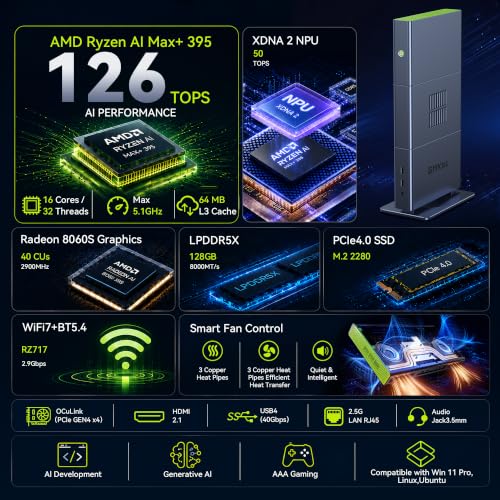
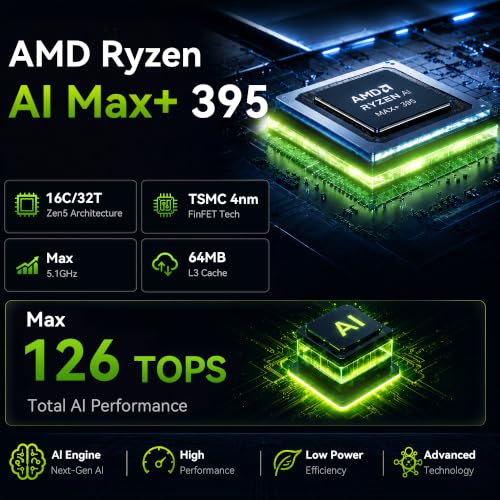
| Processor | AMD Ryzen AI Max+ 395 (16 cores / 32 threads, up to 5.1GHz) |
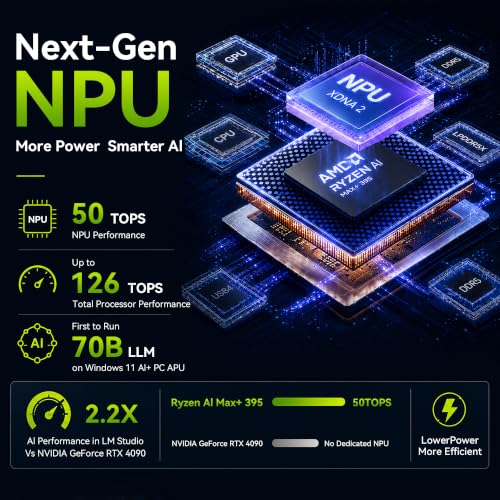
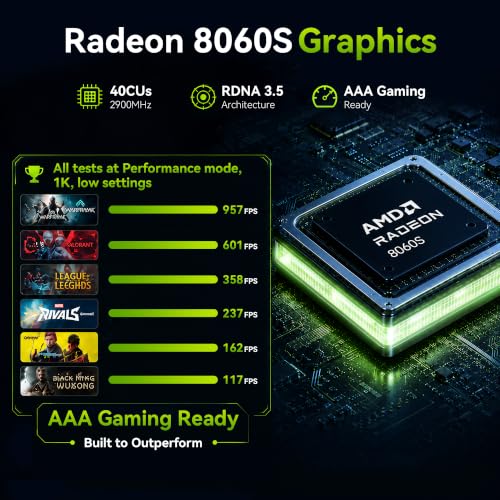
| Graphics | AMD Radeon 8060S (RDNA 3.5, 40 Compute Units) | AI Acceleration | AMD XDNA 2 NPU (50 TOPS), Total up to 126 TOPS |
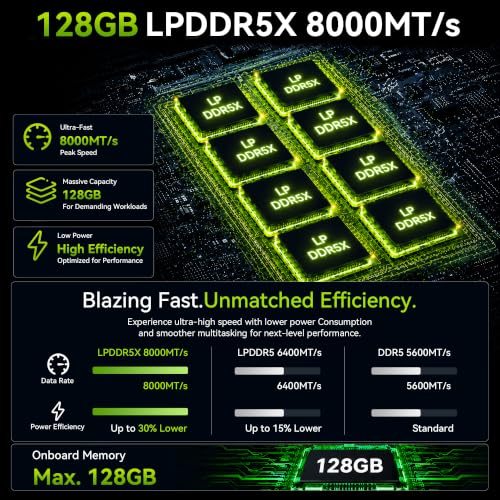
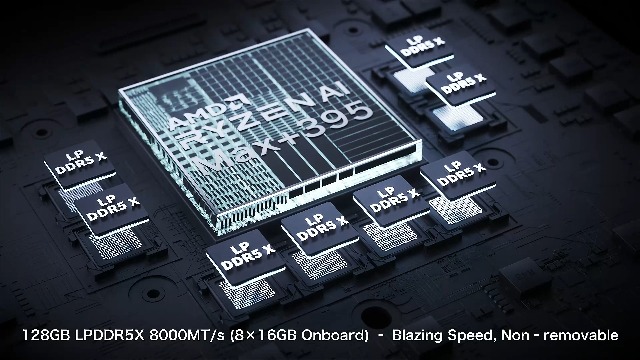
| System Memory | 128GB LPDDR5X 8000MT/s (soldered, eight-channel) |
| Storage | 2TB PCIe 4.0 M.2 SSD (Dual slots, support up to 16TB total) |
| Video Output | HDMI 2.1 (8K@60Hz), USB4 (8K support) |
| Key Connectivity | OCuLink (PCIe Gen4 x4), USB4 (40Gbps), 2.5G LAN, WiFi 7 |
| Cooling | Triple-fan system with triple copper heat pipes |
| Power Adapter | 330W |
| Operating System | Windows 11 Pro |
Design and Build
The GMKtec EVO-X3 adopts a compact, all-metal chassis built with a CNC design, aiming for a premium feel. Its physical dimensions allow it to be easily transported in a backpack, making it portable for a device of its intended power class. The unit features a power mode button for quick switching between performance profiles and includes 13 different lighting modes on its cooling fan, adding a customizable aesthetic element. However, buyer feedback presents a mixed picture on build quality; while the specifications mention a metal chassis, one critical review describes the exterior as “very cheap plastic,” suggesting potential variance in materials or user perception. The included 330W power adapter is noted as being particularly large, which can affect desk footprint and portability. Port orientation is another point mentioned as potentially inconvenient, though specific details on the layout are not provided in the manufacturer data.
Performance and Features
Processing and AI Power
At the heart of the EVO-X3 is the AMD Ryzen AI Max+ 395 processor, built on Zen 5 architecture and a 4nm process. With 16 cores and 32 threads boosting up to 5.1GHz and 64MB of L3 cache, it is designed for demanding multitasking, professional creation, and AI applications. The standout feature is the integrated AMD XDNA 2 Neural Processing Unit (NPU), rated for 50 TOPS of dedicated AI acceleration, contributing to a claimed total system AI performance of up to 126 TOPS. This enables local processing of generative AI tasks, AI assistants, and content production workflows, potentially reducing cloud dependency and improving data privacy and response times.
Graphics and Gaming
The integrated AMD Radeon 8060S graphics, based on the RDNA 3.5 architecture with 40 compute units, is positioned as delivering performance comparable to an RTX 4070-class laptop GPU. This should enable smooth gaming at 1080p high-quality settings, accelerated video editing, and 3D rendering. The system employs a unified memory architecture, where the 128GB of LPDDR5X is shared between the system and the GPU. Through AMD software, users can allocate up to 96GB of this pool to serve as VRAM, which is a massive amount for an integrated solution and beneficial for GPU-accelerated AI and creative tasks.
Memory: The Centerpiece
The 128GB of eight-channel LPDDR5X memory running at 8000MT/s is arguably the EVO-X3’s most defining feature. LPDDR5X offers significantly higher bandwidth than traditional DDR5 SODIMMs, with manufacturer claims of 1.5x faster speeds and major performance uplifts in video conferencing, photo editing, and productivity applications. This immense, high-speed memory pool is crucial for running large AI models locally, heavy multitasking across professional creative software, and engineering applications. However, it is soldered onto the board and not replaceable or upgradable, which is a significant long-term consideration.
Connectivity and Expandability
Connectivity is a strong suit. The OCuLink port (PCIe Gen4 x4) is a notable inclusion, allowing connection to external GPU docks for additional graphics performance, though it does not support hot-plugging and requires the device to be powered off before connecting. For displays, it supports dual 8K output via HDMI 2.1 and the full-function USB4 port, which also supports 40Gbps data transfer and up to 100W PD input. Other ports include a 2.5G LAN, multiple USB-A ports (3.2 Gen2 and 2.0), a 3.5mm combo jack, and the DC power input. Wireless connectivity is top-tier with WiFi 7 and Bluetooth 5.4.
Cooling and Power Management
The EVO-X3 employs an advanced triple-fan cooling system with three copper heat pipes designed to handle a peak power of up to 140W. It offers three user-selectable performance modes: Silent (54W), Balanced (85W), and Performance, allowing a balance between acoustics and power. Owner reviews indicate that noise levels under load are manageable, with one user stating it was “less noise than expected” and barely audible.
Setup, Support and Ownership
The GMKtec EVO-X3 comes with Windows 11 Pro pre-installed and includes a power adapter, HDMI cable, and user manual in the box, suggesting a straightforward setup process for most users. However, the data indicates a potential driver compatibility nuance, as one owner reported losing WiFi 7 functionality after reinstalling Windows 10, though the LAN continued to work. This highlights the importance of using the intended operating system for full feature support. The device includes features like Wake-on-LAN and Auto Power On. For storage expansion, it offers dual M.2 PCIe 4.0 slots, supporting up to a theoretical maximum of 16TB. GMKtec provides a one-year limited warranty covering defects in design and workmanship. The presence of a professional after-sales team is mentioned by the manufacturer, which is a relevant point given the mixed reliability feedback from users.
What Owners Say
Owner reviews present a polarized experience. The product holds a rating of 4.2 out of 5, with the distribution showing 60% of ratings are five-star, 23% are four-star, and a combined 17% are three-star or lower. Positive reviews consistently praise the system’s exceptional speed, compact size, and impressive video quality, with users calling it “amazing” and “incredible value.” One user highlighted its performance as a significant upgrade over an older system, noting smooth gameplay. Another positively noted the low noise levels even under full load.
However, critical feedback raises serious concerns. A one-star review details a unit that was Dead on Arrival, criticizing the build quality as “cheap plastic” and expressing deep disappointment, contrasting the manufacturer’s metal chassis claims. Another user initially faced confusion and nearly returned the unit due to the shared memory architecture between the system RAM and VRAM, a critical detail that prospective buyers must understand. This feedback underscores potential issues with quality control and the importance of clear technical communication.
Pros and Cons
Pros
- Exceptional unified memory bandwidth from 128GB LPDDR5X for AI and content creation.
- Compact form factor housing desktop-class CPU and powerful integrated graphics.
- Comprehensive connectivity including OCuLink for eGPU expansion and USB4.
- Dedicated NPU enables efficient local AI processing for enhanced privacy and speed.
- Flexible power modes and robust triple-fan cooling for performance tuning.
- Dual 8K display support for high-resolution multi-monitor setups.
Cons
- Soldered, non-upgradable RAM shared with VRAM limits long-term flexibility.
- Inconsistent reliability with reports of units dead on arrival or with stability issues.
- Large power adapter and potentially inconvenient port orientation.
- Premium price point for a mini PC form factor.
- Potential driver/OS compatibility issues, as seen with Windows 10 and WiFi 7.
- Build quality perceptions vary, with some reports of cheaper materials than advertised.
Who Should Buy It (and Who Should Skip It)
The GMKtec EVO-X3 is ideally suited for a specific professional user. It is an excellent choice for AI researchers and developers who need to run large language models or complex AI inference locally on their desks, benefiting from the massive, fast memory and dedicated NPU. Creative professionals in video editing, 3D animation, and engineering simulation who are severely space-constrained but require high memory bandwidth and strong integrated graphics will also find it compelling. Power users seeking an ultra-compact but capable gaming and productivity system, especially those who might leverage the OCuLink port for future eGPU upgrades, are also in the target audience.
Conversely, general users and typical home office workers should skip this device. Its capabilities are vastly overkill for everyday tasks like web browsing and document editing, and its cost cannot be justified for such use. Users who prioritize long-term upgradeability and the ability to replace individual components like RAM should look to traditional desktops or mini PCs with socketed memory. Those with low risk tolerance for hardware failures may be wary given the reports of DOA units and should consider brands with more established track records in reliability, though the one-year warranty is a mitigating factor.
Final Verdict
The GMKtec EVO-X3 is a fascinating and technically impressive proposition that pushes the boundaries of what’s possible in a mini PC. Its combination of AMD’s latest Ryzen AI Max+ silicon, a colossal 128GB pool of ultra-fast LPDDR5X memory, and thoughtful connectivity like OCuLink creates a unique package for local AI development and memory-intensive professional work. When functioning as intended, it delivers a level of performance that can legitimately replace bulkier desktops for specialized workloads, justifying its position in the market for high-performance AI applications.
However, this ambition is tempered by significant caveats. The user feedback reveals worrying inconsistencies in quality control and reliability, which cannot be ignored for a device at this price point. The soldered memory and shared VRAM architecture, while powerful, represent a fixed configuration that buyers must accept. Therefore, the EVO-X3 is a high-risk, high-reward option. It is best recommended for technically adept users who specifically need its unparalleled memory configuration and AI capabilities in a small box, who are comfortable within the constraints of its design, and who value the one-year warranty as a safety net. For most others, especially those looking for a general-purpose or reliably trouble-free mini PC, more conventional and proven alternatives in the AI mini PC category may be a wiser choice.
FAQs
Can the RAM be upgraded or replaced in the GMKtec EVO-X3?
No, the 128GB of LPDDR5X memory is soldered onto the motherboard and is not user-replaceable or upgradable. This is a permanent configuration for the life of the device. The memory also operates in a unified architecture, meaning it is shared between the system and the integrated Radeon graphics.
What is the OCuLink port used for, and how do I use it?
The OCuLink port is a PCIe Gen4 x4 interface designed primarily for connecting external GPU (eGPU) docks. This allows you to add more powerful discrete graphics cards to the system for enhanced gaming or professional 3D rendering performance. It is crucial to note that OCuLink does not support hot-plugging; you must completely power off the EVO-X3 before connecting or disconnecting any OCuLink device.
Is the GMKtec EVO-X3 good for gaming?
Yes, for its form factor, it is quite capable for gaming. The integrated AMD Radeon 8060S graphics are cited by the manufacturer as delivering performance comparable to an RTX 4070-class laptop GPU, which should enable smooth gameplay at 1080p resolution with high-quality settings for most titles. For more demanding games or higher resolutions, the OCuLink port provides a path to connect an external GPU for a significant boost. It fits well into a category of tech gear designed for compact performance.
What kind of warranty does GMKtec offer with the EVO-X3?
GMKtec provides a one-year limited warranty for the EVO-X3 mini PC, starting from the date of purchase. The warranty covers defects due to design and workmanship. The manufacturer also mentions having a professional after-sales team to support customers, which is an important resource should any issues arise during the warranty period.
About the author

Elvis Dicki writes reviews and buying guides for CyberSecLabs.